


Rugging is one of the most common welfare questions asked on AskAnimalweb. Yet, as our research, studies, and podcasts make clear, horses’ real thermal needs often differ from what owners expect. Many horses are routinely over-rugged, while others are under-supported during genuinely challenging weather.
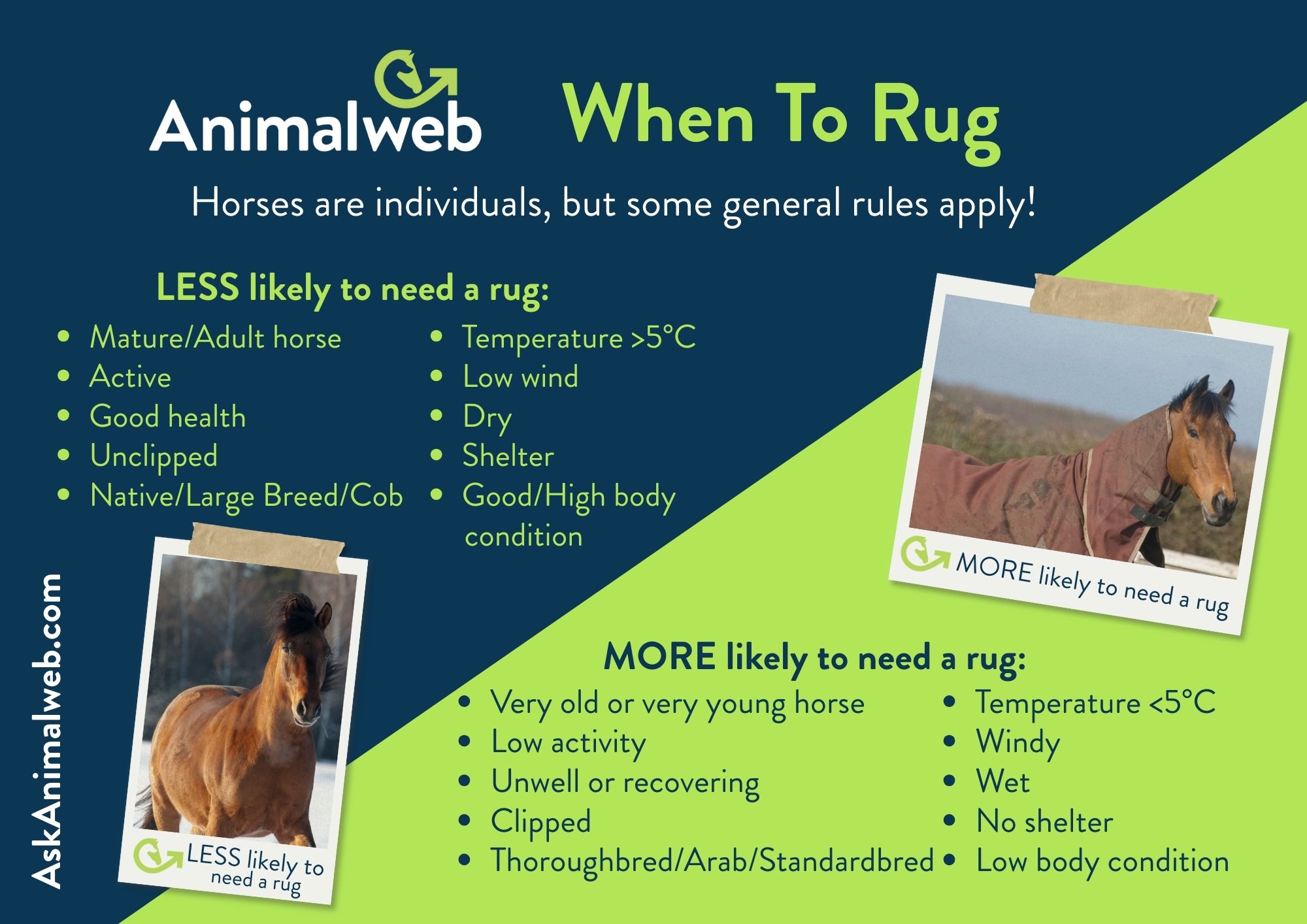
This article brings together key points from our Animalweb rugging resources, along with our When To Rug Guide, to help owners make safer, more informed decisions. You can download the When To Rug Guide and print it out for your yard and share it with friends.
CLICK HERE TO DOWNLOAD THE WHEN TO RUG GUIDE: A4 PDF GUIDE & A4 JPEG GUIDE
Horses Are Individuals, but some general rules apply
The When To Rug Guide offers a simple starting point based on AskAnimalweb discussions, studies and Q&A sessions.
Horses LESS likely to need a rug
- Mature/adult
- Active
- Good health
- Unclipped
- Native/large breed/cob
- Temperature above 5°C
- Low wind
- Dry conditions
- Field shelter available
- Good or high body condition
These horses naturally maintain heat more effectively and often cope extremely well without extra insulation unless weather conditions deteriorate.
Horses MORE likely to need a rug
- Very old or very young
- Low activity
- Unwell or recovering
- Clipped
- Thoroughbred, Arab, Standardbred
- Temperature below 5°C
- Windy conditions
- Wet conditions
- No shelter
- Low body condition
These horses lose heat more easily and may require rugging earlier or more consistently in adverse weather.
What Animalweb Research Tells Us About Rugging
1. Horses often cope with cold far better than owners expect
Research summaries repeatedly highlight that cold, dry weather alone rarely poses a welfare issue for healthy, unclipped, well-conditioned adult horses. Wind and rain, not just temperature, are far more significant factors.
2. Over-rugging is common and can be difficult to detect
Studies on the Short-Term Effects of Over-Rugging showed that:
- Horses can become too warm under rugs well before owners would expect
- Early signs of overheating may not be easy to detect externally
- Behaviour and basic vital signs may remain normal even when thermal load is inappropriate
This reinforces why rugging should be based on evidence and conditions, not tradition or human assumptions about cold.
3. Clipped horses genuinely have reduced natural protection
Clipping removes the weatherproofing and insulation characteristics of the natural coat. Horses that are fully or partially clipped will usually need rugs at milder temperatures and in conditions where an unclipped horse would cope perfectly well.
4. Body condition has a major impact
Good-doers with natural fat coverage and dense coats can cope with lower temperatures. Lean, older, or ill horses may struggle without additional support.
5. Rain and wind change everything
Wet + Wind = Heat Loss. A horse that does not need a rug at 6°C when it is dry may need one at 8°C if there is strong wind and persistent rain.
Putting It All Together: A Simple Animalweb Rugging Check
Use this process each time you consider rugging:
A. Check the horse
- Age (very young/old = more support needed)
- Health status
- Body condition
- Clipped vs unclipped
- Activity level
B. Check the environment
- Temperature relative to the 5°C guideline
- Wind strength
- Rainfall or expected rainfall
- Access to shelter
C. Adjust based on behaviour and known patterns
Animalweb does not recommend relying on feel alone to assess thermal state, especially in the context of avoiding over-rugging. Instead, look for clusters of indicators listed in our rugging signs article, such as:
- Changes in behaviour
- Posture
- Coat appearance
- Sweating or moisture under the rug (if checking)
- Shivering or discomfort in genuinely cold conditions
These signs are supporting indicators, not sole diagnostic tools.
AskAnimalweb Articles to Support Your Rugging Decisions
Below is a list of Animalweb rugging resources, each with a short note on why it is useful.
Article – Advice on Rugging Horses – When to Use and When NOT to!
A clear overview separating genuine rugging needs from common misconceptions. Includes factors such as clipping, weather, thermoregulation and body condition.
Article – Is It Time to Rug Your Horse
Summarises the key decision points for owners, including the 5°C reference point, risks of over-rugging and how different horses cope with cold.
Video – Rugging Round-Up
Brings together Animalweb’s major rugging content in one place, including science summaries, practical tips and video links.
Article – Signs Your Horse or Pony May Be Too Hot Under Their Rugs or Maybe Too Cold
A realistic look at what owners can and cannot detect. Helpful for avoiding both under- and over-rugging, and understanding limitations of surface checks.
Research – The Short-Term Effect of Over-Rugging Horses
A study summary showing how horses respond physiologically to over-rugging, and why relying on “they don’t look warm” is not good enough.
Podcast – Is It Time to Start Rugging Our Horses?
Dr David Marlin explains thermal tolerance, breed differences, and why owners often underestimate horses’ resilience.
Key Takeaway
There is no single rule for rugging that applies to all horses.
The best decisions come from:
- Understanding your individual horse
- Matching rugging to real conditions, not dates on the calendar
- Avoiding assumptions based on human comfort
- Using science rather than tradition
Animalweb’s aim is to give owners clear, up-to-date evidence to protect horse welfare all winter long.
