


The Short-Term Effect of Over-Rugging Horses – D.J.Marlin1, E. Bartlett2 & L. Cameron2
(1AnimalWeb Cambridge & 2University Centre Sparsholt)
Methods
- 6 Mature horses
- All horses clipped two weeks
before study - Stabled
- Air temperature 6-8°C
- iButton temperature loggers
under fly rugs - Left withers
- Right withers
- Left hip
- Right hip

Location of iButtons used to record under-rug temperature
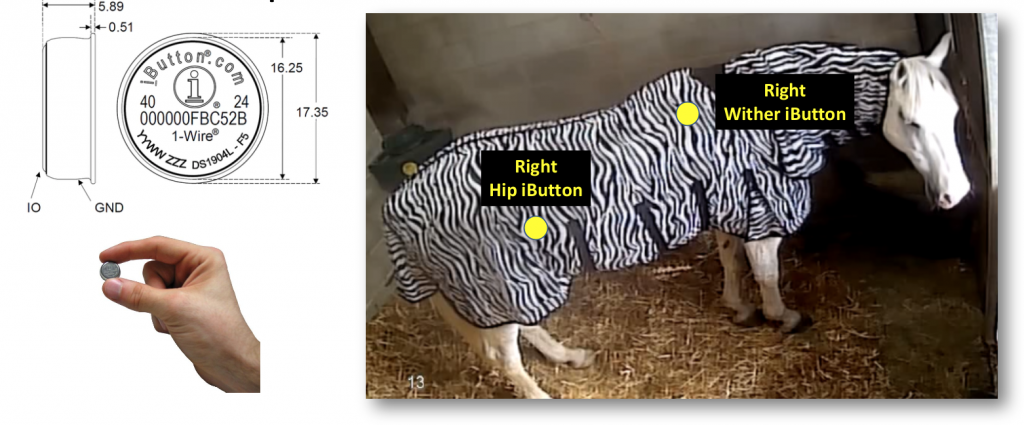
Horses started with a fly rug, and an additional fleece/rug was added each hour

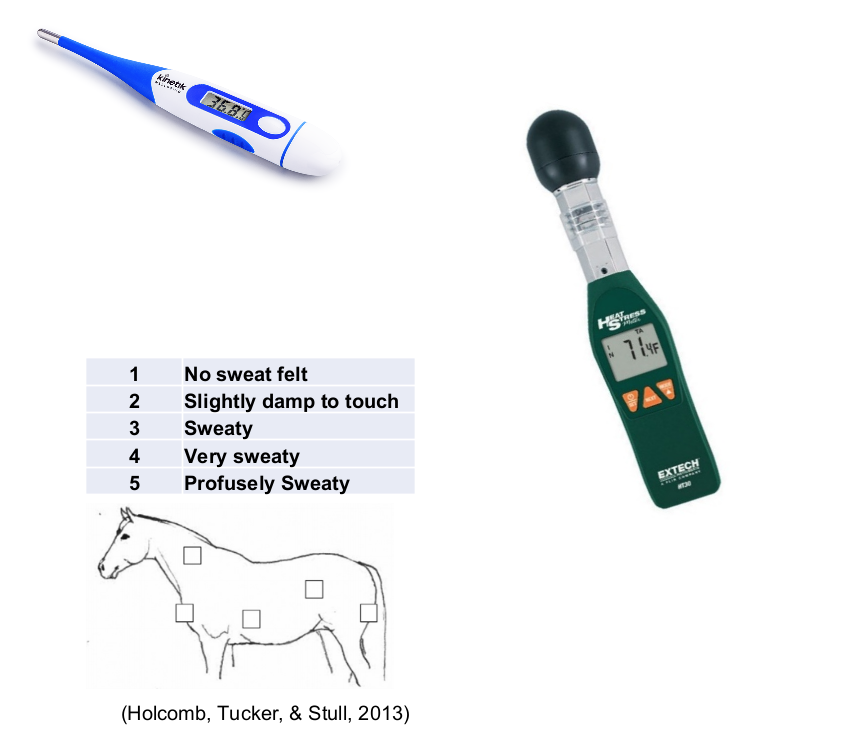
Measurements
Every hour we collected the following measurements:
- Rectal temperature
- Respiratory rate
- Sweat score
- Air temperature & humidity
- Behaviour
Results
- There were no changes is behaviour
- Sweat was not detectable by feel on any horses at any time
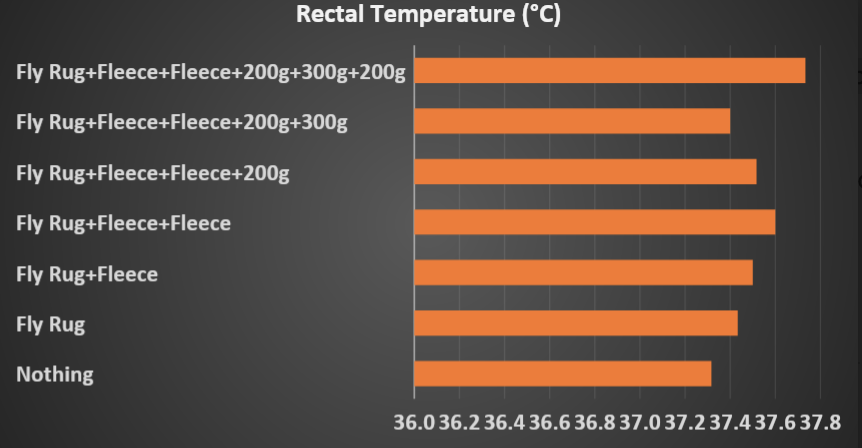
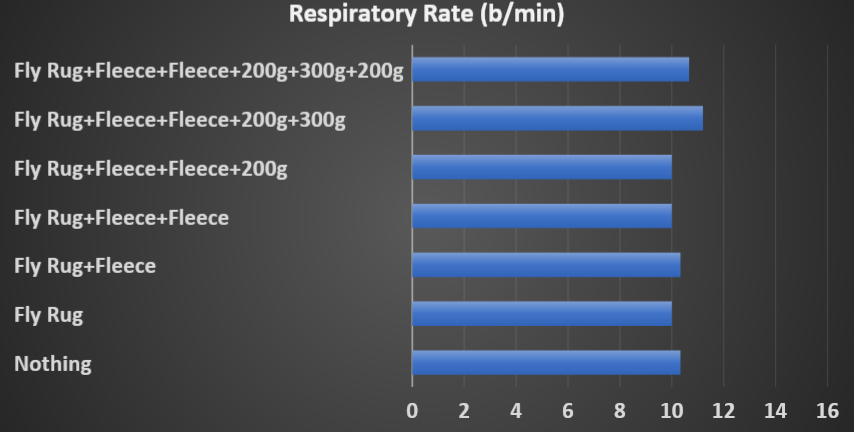
- There was no change in rectal temperature or respiratory rate
As more fleeces/rugs were added, the under-rug temperature increased.
By the end of the 6h the withers temperature had increased from ~29°C to ~36°C.
At a Withers temperature of between 31°C and 33°C ALL horses had started to accumulate moisture even though this was not detectable by feel.
Summary
At 6-8°C, clipped mature stabled horses began to show signs of moisture accumulation with a fly rug and 1 or 2 fleeces.
Moisture accumulation suggests sweating and thermal challenge.
The horse’s upper limit of its thermoneutral zone is ~25°C.
This occurred at a withers under-rug temperature of 31-33°C.
Feeling under the rug, measuring rectal temperature, respiratory rate nor behaviour reflected the onset of moisture accumulation.
