


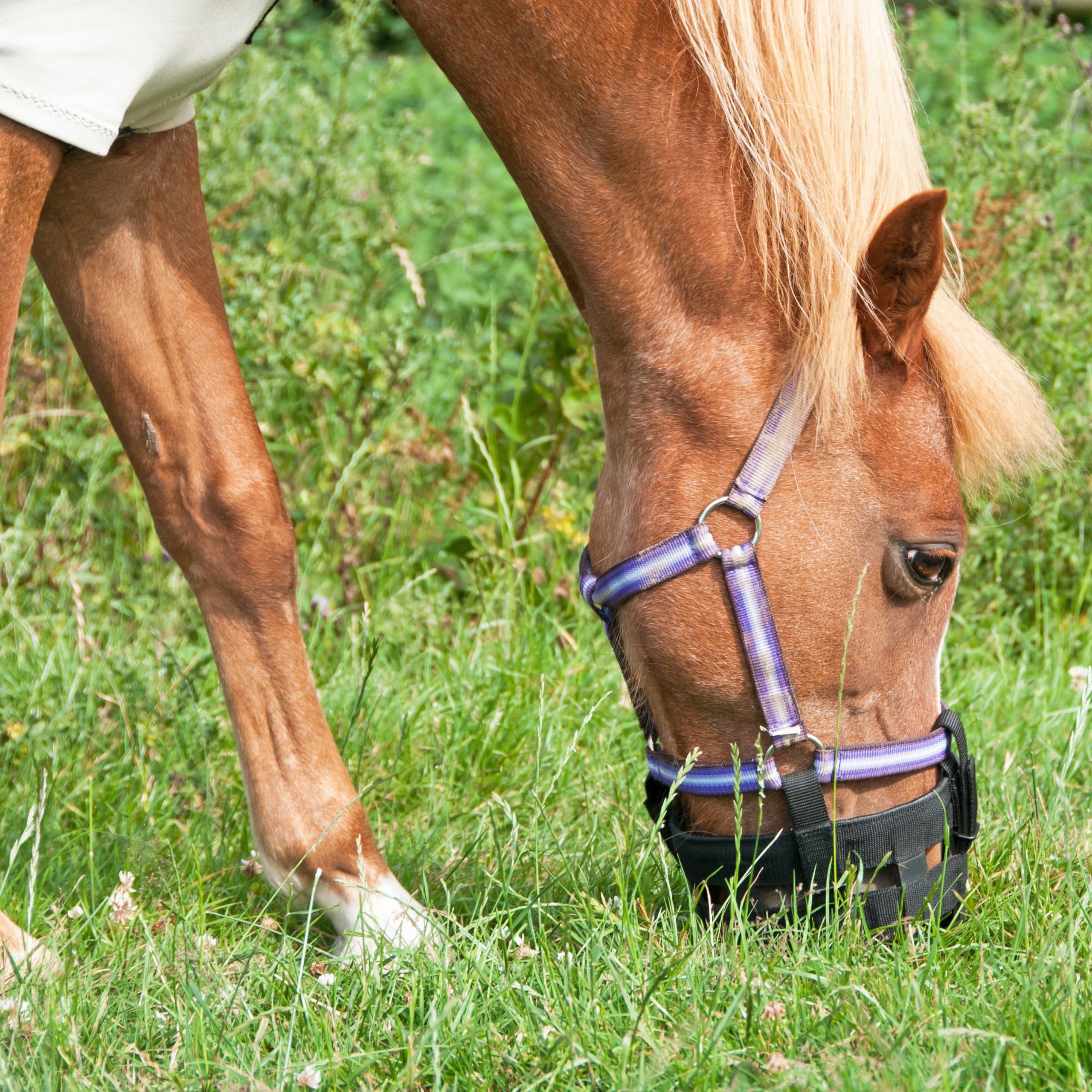
A new study has provided further evidence that grazing muzzles could play an important role in managing horses with insulin dysregulation (ID), helping to reduce insulin responses during summer grazing without preventing turnout.
The research, published in the Journal of Equine Veterinary Science, investigated how grazing muzzles affected insulin and glucose concentrations in horses with insulin dysregulation while grazing pasture over a 10-hour period.
Insulin dysregulation is one of the major risk factors for endocrinopathic laminitis. Management typically focuses on restricting access to pasture and feeding low non-structural carbohydrate (NSC) diets, but balancing these restrictions with good equine welfare can be challenging.
First study in insulin dysregulated horses
While grazing muzzles are widely used by horse owners, this is believed to be the first study to directly assess their effect on insulin responses in horses already diagnosed with insulin dysregulation.
Researchers from the University of Kentucky studied nine adult horses with insulin dysregulation in a replicated crossover trial. Each horse completed periods of grazing with and without a grazing muzzle, allowing direct comparison between the two management approaches. Blood samples were collected every two hours during 10-hour summer turnout sessions, alongside pasture analysis and environmental measurements.
Significant reduction in insulin
The researchers found that horses wearing grazing muzzles had significantly lower insulin concentrations than when grazing without a muzzle.
Peak insulin concentrations averaged around 24.3 µIU/mL in muzzled horses compared with 45.6 µIU/mL in the unmuzzled group, despite both groups grazing the same pasture. Glucose concentrations varied throughout the day but were not significantly different overall, although peak glucose levels were lower in horses wearing muzzles.
As pasture sugar concentrations increased during the day, insulin levels also rose in the unmuzzled horses, whereas this response was substantially reduced when grazing muzzles were used.
Practical management tool
The authors conclude that grazing muzzles may provide a practical management strategy for horses with insulin dysregulation by limiting pasture intake while still allowing turnout, social interaction and natural grazing behaviour.
However, they also caution that pasture conditions remain highly variable. During the study, non-structural carbohydrate concentrations ranged from 6.0% to 13.8% dry matter, and individual horses responded differently, highlighting the importance of monitoring both the horse and pasture rather than relying on a single management strategy.
Welfare considerations remain important
Restricting pasture access is often necessary for horses at risk of laminitis, but prolonged stabling or complete removal from grazing can have welfare implications.
Previous surveys have shown that although some owners have concerns about the welfare impact of grazing muzzles, they remain one of the most commonly used methods of restricting pasture intake because they allow horses to remain turned out with companions while reducing forage consumption. Earlier studies have shown grazing muzzles can reduce dry matter intake by between 30% in horses and up to 83% in ponies.
What does this mean for owners?
The findings suggest that grazing muzzles can be a valuable part of managing horses with insulin dysregulation, particularly during periods when pasture sugar levels rise. However, they should not be viewed as a complete solution.
Owners should continue to work with their veterinary surgeon to monitor insulin dysregulation, body condition and laminitis risk, while considering pasture quality, grazing duration and overall dietary management as part of an individualised plan.
The authors conclude that grazing muzzles may help reduce insulin responses during grazing, but emphasise that ongoing monitoring of both the horse and pasture remains essential for safe long-term management.
