


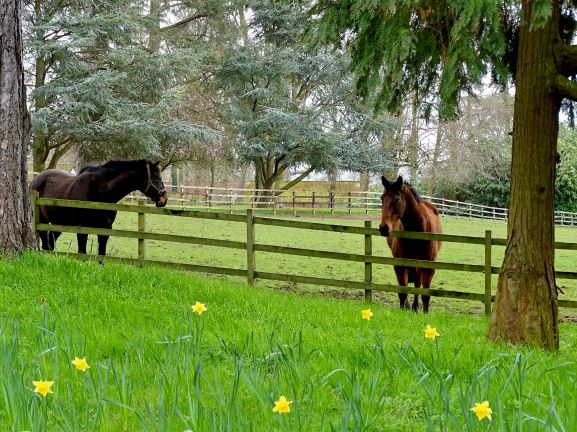
Spring is finally here in the UK, so many of our equines will be transitioning from their winter routines to spring/summer turnout, which will entail a huge change in diet for some of them, particularly for those that have had no pasture turnout and that have been fed just hay or haylage diets over the winter.
Forage is the basis of our horses’ diets, so it is really important that any changes in forage (hay/haylage/grass) are carried out slowly. This is more important than changes in feeds (although please do this slowly too!), as forage is what they eat the most of; it is this that imposes a far greater risk of digestive disturbance. Colic is particularly prevalent in the spring and autumn due to sudden changes in diet and management as is diarrhoea.

It can be very difficult to gradually introduce and increase our horses to new pastures with our own time constraints. Ideally, new pasture should be gradually introduced and increased over 2-4 weeks, and this is particularly important if your horse has had no grass at all over the winter months. Even for those that have had turnout all winter or that have lived out, going onto rested pastures is still a huge dietary change, so it would be best to introduce them gradually and restrict their grass intake however works best for you and for them. Ideally, introducing the new pasture at 20-30 minutes on the first day and increasing by the same daily would be ideal, but not always practical. Strip grazing, grazing muzzles and even grass tracks can be really useful in this case to help limit intake, but even if you use one of these methods to restrict their intake, it should still be done as gradually as you can.

If your horse has had no turnout at all over the winter months, replacing some of their hay/haylage with soaked grass nuts and plain grass chaff now will also help their transition to field turnout and start giving their digestive systems time to adjust to having grass in their diets. Hand grazing daily can also help with the change. If your horse has a particularly sensitive digestive system, a good quality gut balancer can be really useful whilst they are adjusting to the forage, field and management changes.
Feed changes should also be limited during the transition to grass. It would be best to keep the contents of their feeds the same to limit further dietary changes, but you could reduce the amount of chaff and/or mash you are feeding if needed. Please do keep feeding them their balancers or vitamin and mineral supplements, though, as UK grass at any time of the year does not provide them with all the nutrients they need!
Ensuring your horse or pony has had a feed and some hay before they are turned out, so they are not going out hungry, will help prevent them from gorging too much on the nice new grass! Anything you can do to support the gradual transition to field turnout is better than doing nothing at all, so please just do the best you can!
