


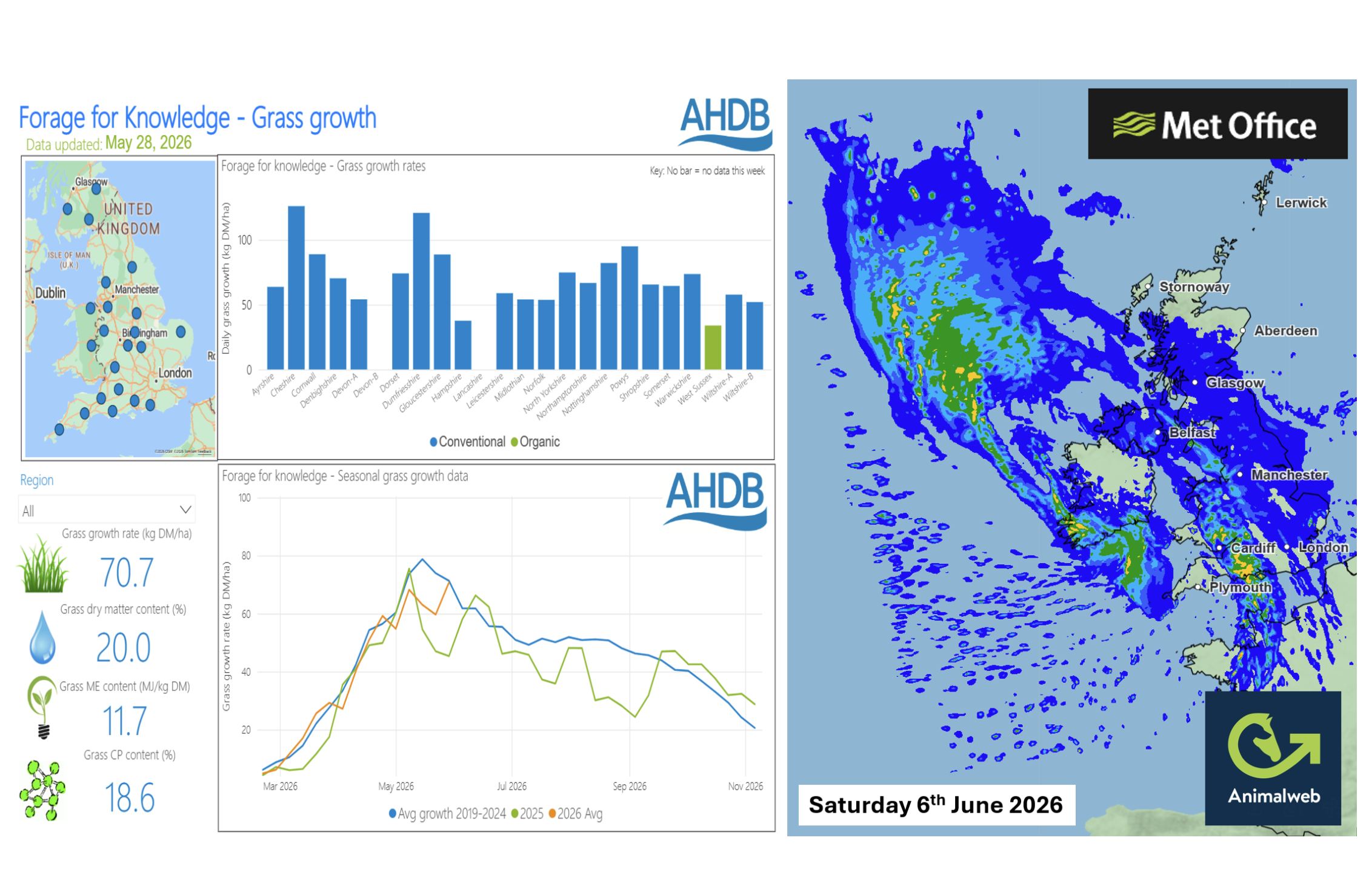
The good news is that after the dip in average grass growth rates across the UK in early May, the 2nd half of May has seen an increase back to the 5-year average for this time of year.
This is a very similar pattern to 2025. However, with significant amounts of rain forecast for the whole of the UK over the next 5 days and especially over the coming weekend, it’s quite likely that we will see a marked increase in grass growth rates which can be problematic for those managing laminitis or colic or obesity prone horses. So be prepared for next week, depending of course on what the weather does once/if the rain has passed.
Top Tips:
- Review turnout periods – Rapidly growing grass can contain high levels of readily available sugars and energy. Reducing turnout time, particularly for high-risk individuals, may help limit intake.
- Use a grazing muzzle – When correctly fitted and introduced gradually, grazing muzzles can significantly reduce grass intake while still allowing horses to move around, socialise and exhibit normal grazing behaviour.
- Reduce grazing area – Strip grazing or using a smaller turnout area can help control grass consumption, although it is important to remember that some horses may compensate by grazing more intensively.
- Monitor body condition closely – Small changes in weight can occur surprisingly quickly when grass growth accelerates. Regular body condition scoring and weight monitoring can help identify problems before they become serious.
- Keep horses moving – Where appropriate and following veterinary advice, regular exercise can help support weight management and metabolic health.
- Check feet frequently – For horses with a history of laminitis, early signs such as foot soreness, reluctance to move, increased digital pulses or changes in stance should never be ignored!
- Make changes gradually – Avoid sudden changes to turnout, forage or feeding routines. Gradual adjustments are generally safer for both digestive and metabolic health.
As always, every horse is an individual. Management strategies should be tailored to the horse’s health status, body condition, workload and veterinary advice.
Some helpful resources:
- Watch – Equine Metabolic Syndrome (EMS) and Laminitis – risk factors and prevention by Dr Shannon Pratt Phillips
- Read – Laminitis in 3 Steps by Dr Kieran O’Brien
- Review – Owners’ experiences of grazing muzzles – The Survey Results.
- Read – Feed Materials In Focus – Forage Management to Reduce the Risk of Health Problems
- Watch – Laminitis – A Vets Perspective by Dr Kirstie Pickles
- Read – Spring feeding – How should I turn my horse out or introduce grazing? By Nikki Meggison
- Read – Feeding the obese horse with insulin dysregulation – PT1, Forage & Pasture By Briony Witherow
- Read – Do Changes in The Weather Increase the Risk of Colic in Horses? By Dr David Marlin
