


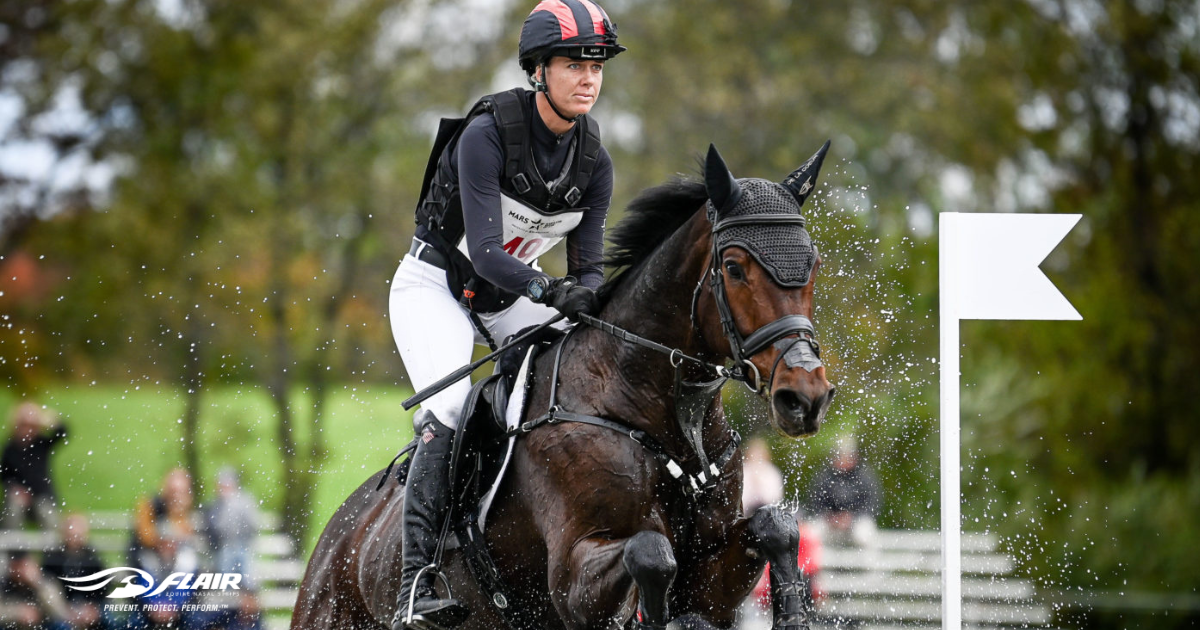
Event riders spend a great deal of time developing fitness, strength, and rideability, but one area that often receives far less attention is how effectively a horse can breathe.
In a sport that combines precision, stamina and recovery across three phases, respiratory efficiency quietly underpins performance from start to finish.
Three phases, one common demand
While dressage, cross-country and show jumping look very different, they all rely on the same fundamental requirement, efficient oxygen delivery.
In dressage, breathing limitations are unlikely to be obvious, but they can affect relaxation, focus, and the ability to maintain soft, consistent work. Subtle restrictions, whether from tension or posture, may affect the way of going more than riders realise.
Cross-country places the greatest strain on the system. Sustained galloping, changes in terrain and technical combinations all increase oxygen demand. Horses need to maintain rhythm and efficiency over several minutes, and even small limitations early in the round can contribute to fatigue towards the end.
By the time horses reach show jumping, they are often working on the edge of fatigue. At this point, efficient breathing becomes critical for maintaining coordination, power and accuracy, particularly when tight turns and careful jumping are required.
A system with limited adaptability
One of the challenges is that, unlike muscles and the cardiovascular system, the respiratory system has a limited ability to improve with training.
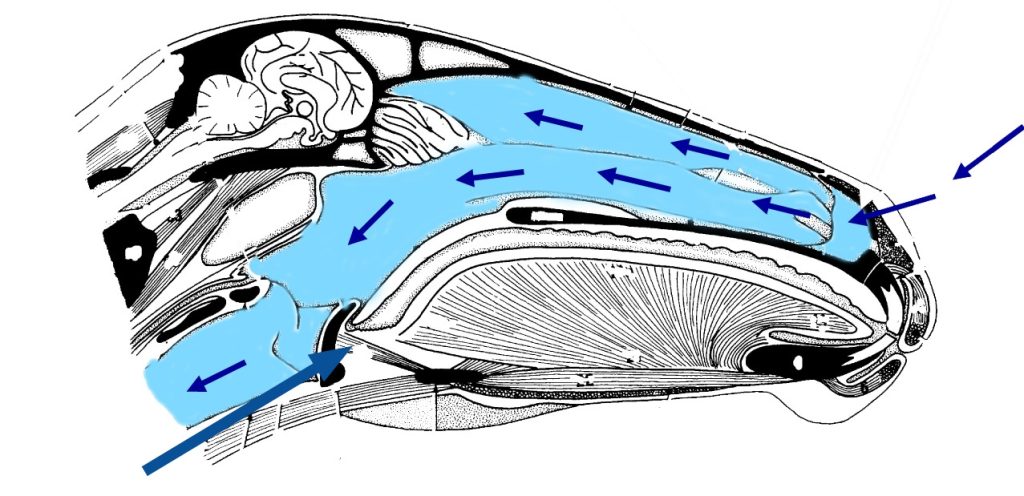
Horses are obligate nasal breathers, meaning all air must pass through the nasal passages. During exercise, the pressure created as the horse draws breath can cause soft tissues within these passages to narrow slightly, increasing resistance to airflow.
At faster paces, breathing is linked to stride, typically around 120 to 140 breaths per minute. This leaves very little time for effective oxygen exchange, particularly during intense efforts.
As the workload increases, so does the energy required just to breathe. In some cases, the muscles involved in respiration may use a notable proportion of the horse’s available oxygen, which can contribute to fatigue and reduced efficiency.
Jumping adds another layer
For eventers, jumping introduces an additional challenge. As the horse lifts and rounds over a fence, airway resistance can increase. Horses also tend to pause breathing briefly over a fence, only resuming on landing. Over a full course, especially cross-country, this creates repeated interruptions to airflow.
This makes the periods between efforts particularly important for oxygen intake and recovery.
Marginal gains across the whole picture
Eventing is often described as a sport of marginal gains, where small details add up to influence the final result.
Respiratory efficiency is one of those details. It doesn’t replace good training, fitness or management, but it can affect how well a horse maintains effort across country, how it copes with fatigue, and how quickly it recovers afterwards.
For riders, it highlights the importance of considering not just how a horse moves and performs, but also how easily it can breathe while doing so.
