


Why do trainers still resort to unproven treatments for bleeders? Bleeding is not good; it can happen to every horse, and it does matter!
Exercise Induced Pulmonary Haemorrhage (EIPH)
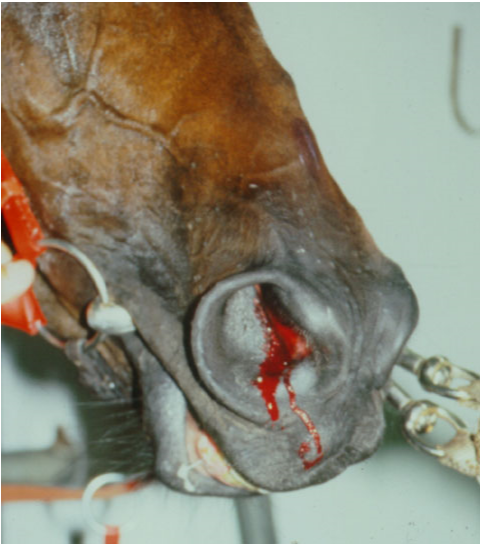
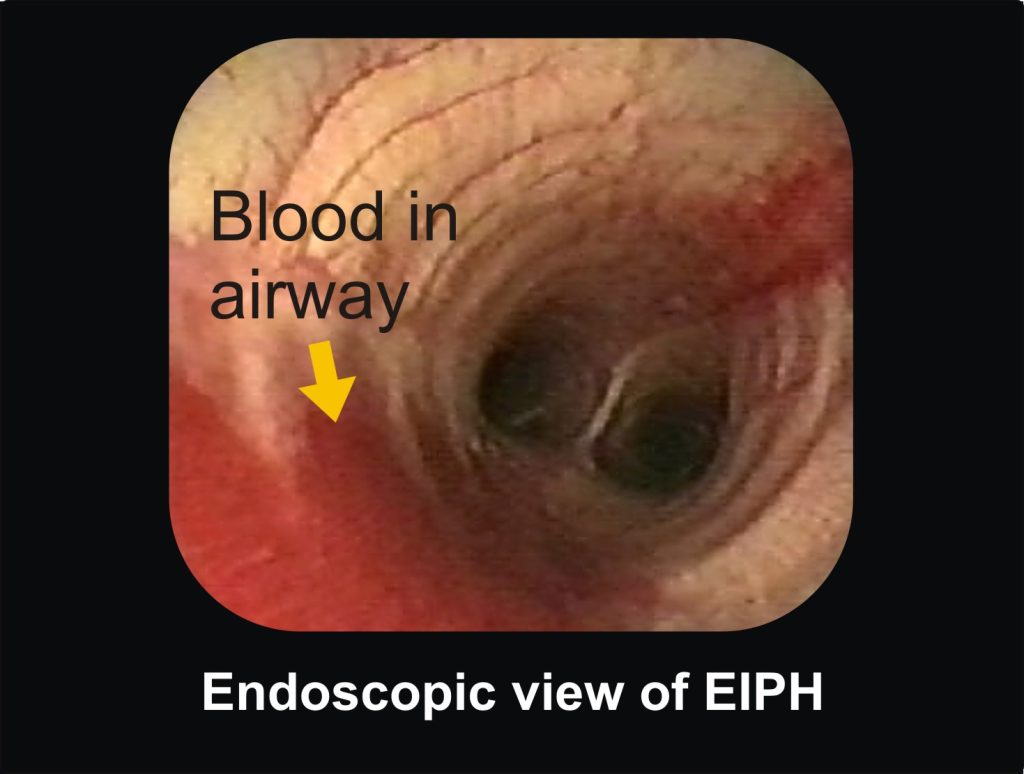
As long as horses have been raced, it is almost certain that they have “bled”. “Bleeding” or exercise-induced pulmonary haemorrhage (EIPH) to give it its scientific name, has become recognised as an extremely common and perhaps ubiquitous consequence of intense exercise in any animal, be it horse, greyhound, camel or human. What may be more surprising is that whilst the appearance of blood at the nostrils during or after exercise (epistaxis) has been documented for as long as we have been racing horses, the fact that the blood predominantly originates from the lungs is a more recent finding. It was not until around 30 years ago that we first visualised blood in the trachea (windpipe) of horses following hard exercise or racing. Today, endoscopy of the horses’ respiratory tract is commonplace and routine. We now know that when ‘scoped a single time after racing, somewhere around 40-60% of horses will have blood in the trachea. We also know that if a single horse is ‘scoped on three separate occasions, blood will be seen on at least one of those ‘scopings.
In surveys of trainers, bleeding is always high on the list of health/performance concerns, and with good reason. There is absolutely no doubt that severe bleeding from the nostrils has a marked negative effect on performance. However, only in recent years have studies, such as those by Ken Hinchcliff at The Ohio State University, shown that any amount of blood in the trachea after exercise or racing negatively affects performance. The worse the bleeding, the further behind the winner. This goes against the belief amongst some trainers that it’s not a bad thing for a horse to have a bleed, as it shows “he’s working hard“ or “putting in the effort”.
In these last 30 years, where have we come with the treatment or management of EIPH?
Today, we only have two treatments that stand the test of appropriate scientific scrutiny. The first is Lasix. The second is nasal strips. Lasix works by reducing the “stress” on the tiny capillaries (blood vessels) in the lung, which are under high pressure but are extremely thin and delicate. It does this by reducing the pressure inside these capillaries, pushing fluid out. A nasal strip works in a similar way but from the outside by reducing the pulling out force on the capillaries in the lung when the horse breathes in. Interestingly, both have been shown to be similarly effective, and running a horse with either does not have an additive effect, at least in terms of EIPH.
So what’s the difference, and should they be considered on an equal basis, especially when it comes to racing policy? Perhaps not. Lasix is a potent drug that reduces pressure by “tricking” the kidneys into dehydrating the horse. With less fluid in the circulation, the pressure is lower. But, with many drugs, there are unwanted side effects, and there is also the danger that, over time, the body may get used to the drug, and higher doses become necessary to achieve the same effect. The nasal strip is a mechanical device, and so it’s difficult to see how tolerance to its method of action could develop. It should be just as effective the hundredth time it’s used as the first, and there is potentially no reason why it could not be used daily, save perhaps cost! At present its not clear if the same applies to Lasix.
