Do Equestrians Want to Eliminate Ragwort from the Countryside?
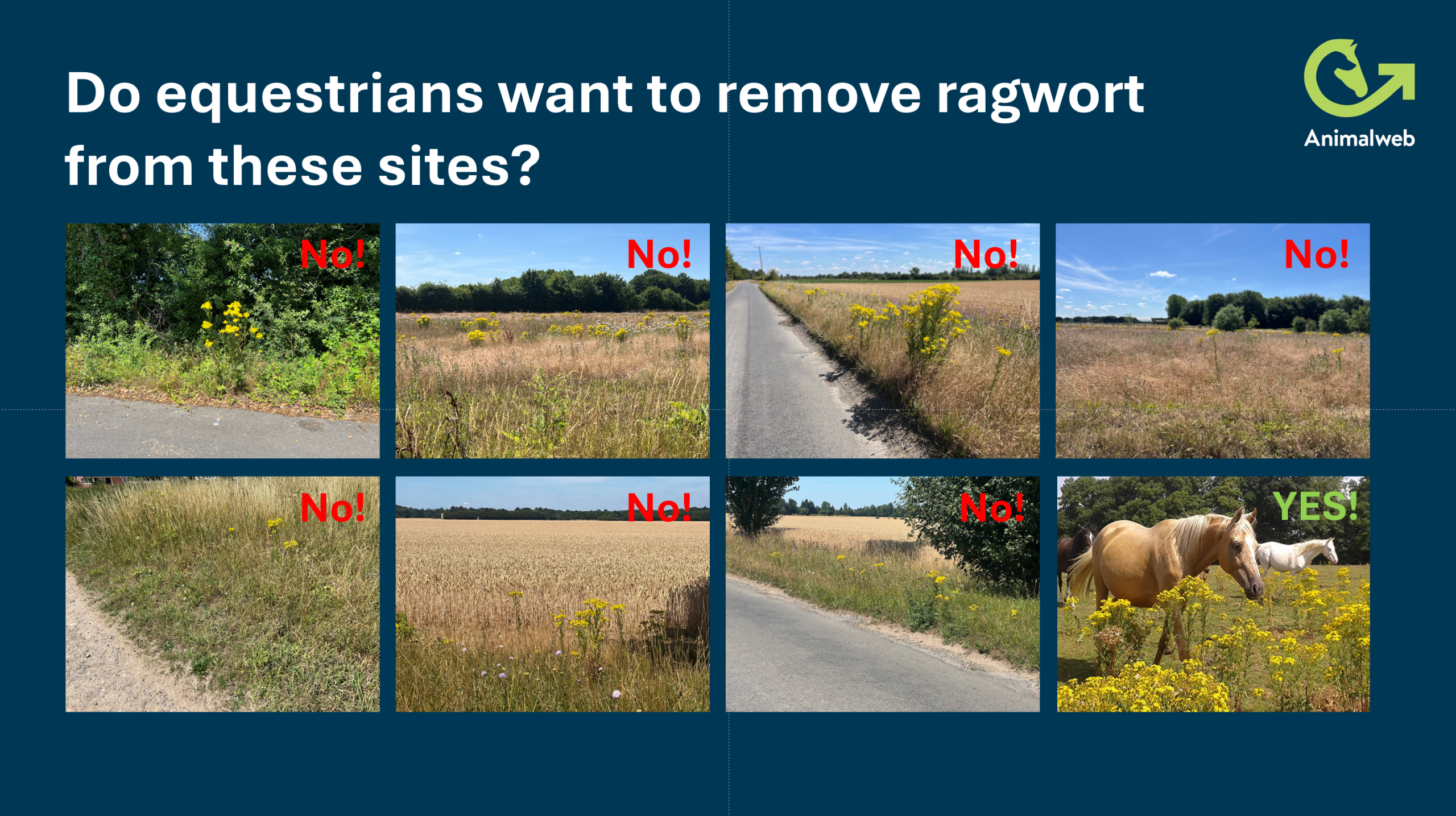
Short answer: No. Just from the places horses graze!
Once again, social media is ablaze with myths, misinformation, and misquotes about ragwort, fuelled most recently by the resurfacing of posts from groups like “Get Wild” and “Wildlife Conservation in Thanet”. The tone is familiar: accusations of scaremongering, claims that ragwort poses no threat, and a strong implication that equestrians are trying to wage war on a native wildflower and decimating insects such as the Cinnabar moth!
But let’s be absolutely clear.
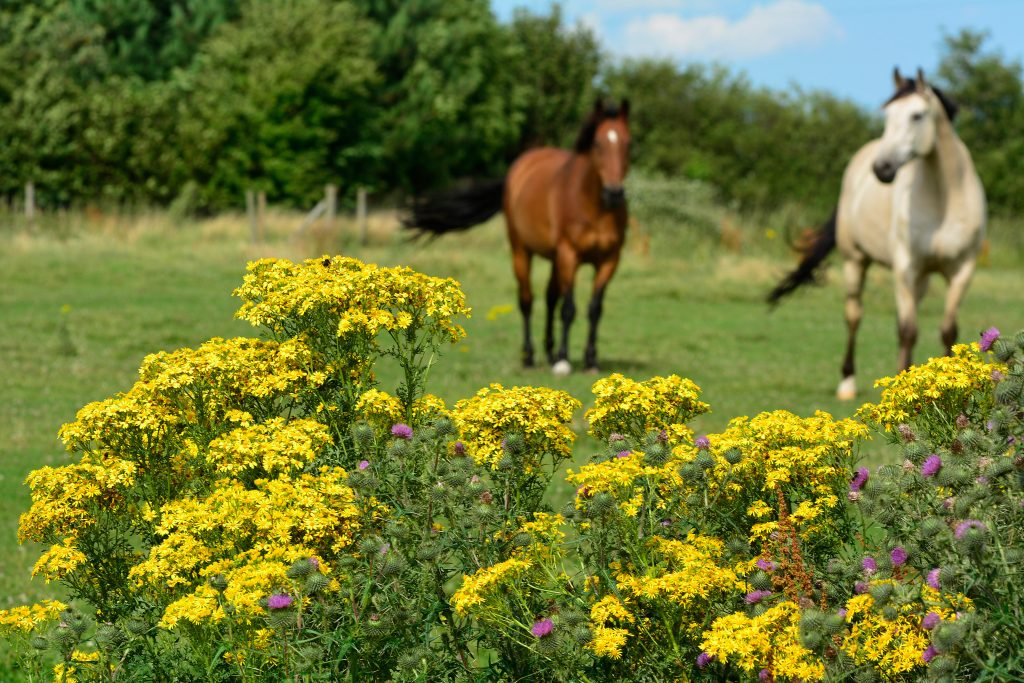
Most horse owners aren’t bothered about ragwort on verges, arable field margins, or in wild meadows, as the image above shows. We only want it removed from places where horses graze (or where hay and haylage for horses are being grown). That’s not scaremongering. That’s animal welfare.
Ragwort and Horses: What the Science Actually Says
- Ragwort contains pyrrolizidine alkaloids (PAs) — toxic compounds that cause irreversible liver damage in horses if ingested in sufficient amounts.
- This damage from PAs IS cumulative: While PAs are not stored, the liver damage caused by them is cumulative and irreversible.
- Ingestion of as little as 1% of bodyweight in ragwort, whether fresh or dried in hay, can prove fatal over time.
- It’s estimated that up to 8% of equine liver samples submitted to labs show signs of ragwort-related pathology.
- Vets across the UK continue to report suspected and confirmed cases of ragwort poisoning each year.
So no, this isn’t fake news or hysteria. It’s a fact, backed by published data, veterinary reports, and decades of pathology.
A Reminder About Ragwort and UK Law!
Ragwort is one of five “injurious weeds” covered by the 1959 Weeds Act. The other weeds covered by this act are Spear Thistle, Field Thistle, Curled Dock and Broad-Leaved Dock.
The law states that……
“If you own horses, ponies or livestock, you must not allow them to graze on land where you know ragwort is present.”
“You can be prosecuted if you allow animals to suffer by eating harmful weeds.”
LINK to Gov.uk – Stop ragwort and other harmful weeds from spreading
Mythbusting the “Native Superflower” Narrative
“It’s not a cumulative poison.”
WRONG. While PAs are not stored, the liver damage caused by them is cumulative and irreversible.
“It can’t penetrate human skin.”
Also WRONG. PA absorption through skin is low, but not zero, and handling ragwort regularly without gloves can cause liver damage.
“It’s not invasive.”
TRUE. It isn’t invasive by definition, BUT that doesn’t mean it can’t spread.
Each ragwort plant produces up to 200,000 wind-dispersed seeds, and these can travel many metres or even kilometres with secondary movement (e.g. water, animals, hay contamination).
Let’s Keep Perspective
Equestrians are simply asking for a common-sense, balanced approach. Let ragwort thrive where it’s safe, but not in fields where horses graze or where horse feed is grown.
Want to know more?
- Ragwort Poisoning in Horses
- DEFRA & BHS Survey: Ragwort Toxicity in the UK
- What Pathologists See in Ragwort Poisoning Cases