


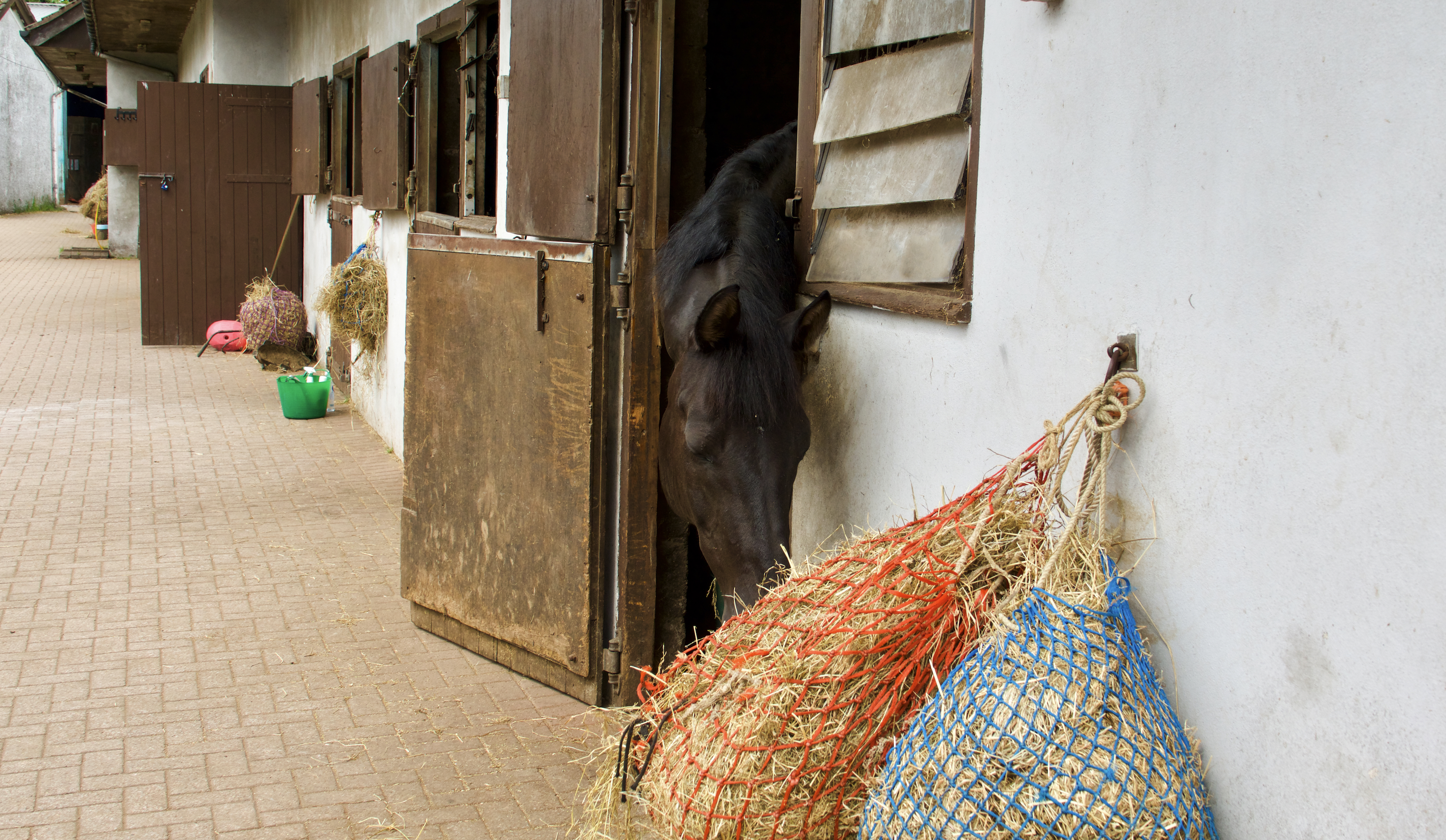
The webinar explores why we might look to provide enrichment for our horses, what this might look like, and where to start. We will discuss how different types of enrichment might align with our horse’s requirements and natural behaviours and propose a logical approach designed to provide species-specific individualised enrichment. We will also consider where (despite good intentions) enrichment is not so successful, what this might look like and practical steps to help optimise success.
LOG IN TO WATCH THE FULL WEBINAR BELOW:

To read the rest and learn how this will help you, join us by clicking the banner below.

Already a member? Log in here
Join us now to view this article PLUS 1000s of
- tips
- articles
- videos
- money saving ideas
- reviews
- webinars
- podcasts
- news
And so much more!
Science backed horse care at your fingertips - dip in for information when you need science to help you care for your horse.
Briony kindly took the time to answer a few questions we couldn’t get to on the webinar. Here are her responses:
What do you think about mixing hay with straw into a hay net to slow down eating time, and should we be preparing the straw in any way?
Mixing hay with straw in a net based on the research I have been involved with may be a useful solution to slow down eating time. While we are not yet sure on the exact mechanism behind this (whether consumption is slowed due to novelty, reduced palatability, or coarser structure of the straw) it appears to extend feeding time. It remains to be seen how long this effect may last and whether the effects wane over time, but regardless, if we are dealing with a good doer, replacing up to 50% of the forage ration with straw will reduce calorie intake.
In terms of preparing the straw for feeding, I would firstly try to select a straw that is free of mould and of good quality (bright and clean) and be sure to introduce gradually (with good dental health a prerequisite). As straw is preserved through dehydration, like hay, its high dry matter content often reduces the hygienic quality which means that in an ideal world, the straw should be steamed in a high temperature steamer or alternatively soaked for 10-20 minutes (as we would do with hay) prior to feeding. Note that a long period of soaking is unnecessary for straw as we are typically not looking to leach calories (sugars), we are just looking to dampen the straw to reduce the respirable particles.
Recently changed one of my horses on to straw. Have noticed that she now has a bit more hay left over. No change in weight, despite my initial concerns. So hearing this is encouraging!
This is interesting. We are yet to fully understand some of the intricacies and mechanisms behind satiety and how feeding straw impacts this. However, we know that behaviourally, having greater access to browsing/foraging opportunities can be key to enrichment.
Weight reduction with straw feeding….. does this depend on the type of straw? Some straw has high levels of seeds (grain), does this make this less suitable?
Generally speaking, all straws (oat, wheat and barley) tend to be lower in digestible energy (calories) and water-soluble carbohydrate than hay and haylage in the UK. You are correct that there is some variation in nutrient composition across the three straw types and this will also vary with growing conditions and environmental conditions at point of harvest. It is for this reason – much like with hay or haylage, if possible, to analyse straw before feeding. This way you can check in on the nutrient provision and adapt the ration accordingly.
Intact seed heads within straw should be avoided as this will increase the starch content of the forage and reduce the potential weight loss benefit of straw inclusion.
Broadly speaking wheat straw tends to be coarser and contain more indigestible fibre compared to oat and barley straw which often makes it the least desirable – however it is the most widely available. Oat and Barley straw tend to be softer; oat straw tends to be slightly higher in digestible energy in comparison to barley and wheat, but this does vary. Just like hay or haylage, I would tend to opt for the straw type that you can get a consistent supply of that is good quality (mould free, with minimal seedheads, bright in colour and clean) regardless of ‘cereal’ type – just like with hay or haylage, it is feasible for any straw type to be suitable in terms of nutritional content.
Does any of the research include horses who crib bite? If so, have any of these things been shown to help?
Please see a summary of research that I am aware of which included observation of a particular enrichment intervention and its impact on stereotypies.
| Reference | Key Findings/Conclusions |
| Cooper et al., 2005 | Dividing the concentrate ration over multiple meals reduced the incidence of crib biting. |
| McGreevy et al, 1995; Waters et al., 2002; Redbo et al. 1998; Bachmann et al., 2003 | Risk of crib-biting increased by low-forage, high-concentrate ration. |
| McGreevy et al, 1995; Christie et al., 2006; Sarrafchi and Blokhuis 2013 | Risk of crib-biting decreased using straw bedding. |
| Marsden, 2002; Henderson, 2007; Wickens and Heleski, 2010; Houpt and McDonnell, 1993; Cooper et al., 2000 | The proportion of time a horse spends performing a stereotypy may be reduced by increasing opportunities for foraging behaviour and social contact. |
| Jørgensen et al., 2011 | Provision of roughage may reduce passive behaviours like crib-biting in bare paddocks. |
| McGreevy et al., 1995; Goodwin et al., 2002; Thorne et al., 2005 | Provision of more than one type of forage has been shown to reduce the incidence of stereotypies more broadly. Horses provided with multiple forage diets performed foraging more frequently and spent longer foraging than those offered a single forage source. Stereotypical behaviour was only performed on the single forage treatment. |
| Rochais et al., 2018 | While haybags caused some frustration, they, along with the slow feeder increased the time the horse was feeding. The slow feeder also reduced the incidence of stereotypic behaviour. |
| Whisher et al., 2011; Moore-Colyer et al., 2016 | Toys that stimulate licking seem to reduce cribbing and prolonging chewing behaviour. Moore-Colyer et al., looked at the impact of a lick on crib biting activity. While the frequency of crib biting did not significantly change when the horse had access to the molasses lick, it did give them another activity to engage in, and possibly increased natural foraging behaviour. |
| Bulens et al., 2013 | Looked at non-edible enrichment (a plastic bottle filled with sand and a rope). The highest frequency of interaction was observed when no hay was available. Use of items tended to reduce undesirable oral behaviours such as licking and biting – it is possible horses were just redirecting these behaviours at the items. |
Note that many of these studies were short term (7 days) so it is unclear how these forms of enrichment may persist in the longer term. Where trying a new enrichment strategy, be sure to introduce only one change at a time so that you can monitor the response and attribute to that change.
Overall, the evidence we have to date is not conclusive and, in some cases, conflicting with further research required. A common theme throughout much of the findings is that there is likely to be significant individual variability. It should also be noted that where stereotypies are established, then can become divorced from the original cause after an extended period making resolution by means of environmental enrichment alone more challenging.
What are your views on lucerne?
Lucerne can be a useful forage source. In the UK we are more familiar with lucerne (also known as alfalfa) as a short chop/chaff, but it can be fed as a long fibre hay or haylage (and is commonplace as a long fibre in many countries).
Lucerne is a legume not a grass and comes from the same family as clover and peas. Legumes are typically higher in protein in comparison to grasses and therefore can be a useful addition to the diet to boost overall nutrient intake for performance/increased workload, growth or breeding status.
Crude protein level in legume forages typically exceed 14% on a dry matter basis (compared to grass hay/haylage between 4-12%). Overall calorie level of Lucerne forage tends to be on a par with grass hay and haylage (7-11MJ/Kg). The other notable difference between grass forage and legume forages is that legumes tend to be richer in minerals (calcium, zinc, copper and magnesium) which needs to be accounted for when considering any concentrate/supplementary feed (in order to preserve optimum calcium to phosphorus ratios and ultimately a balanced ration). Lucerne forages also tend to be lower in starch and water-soluble carbohydrates (WSC/simple sugars) in comparison to grass hay which can make them a suitable forage choice for those requiring a low starch and sugar ration.
I have seen horses that have been given greedy feeder haynets and small portions of hay that appear to become very depressed and then angry with humans and horses around them, surely this is going to lead to gastric stress issues and is not conducive for a healthy minded horse, how can this be explained to the owners so they have better satisfying enrichment
I think this is a real problem and what we absolutely do not want to do when introducing a nutritional intervention for weight loss, is to in trying to avoid one problem, inadvertently causing another (colic, ulcers, behavioural changes). I think this is often a product of frustration in the owner as weight loss requires perseverance (significant reduction in body condition taking 9-12 months to achieve safely) and is slow to be apparent. I think some interventions may also be slightly ‘knee-jerk’ reactions which can mean very severe restriction or significant change is brought about too quickly. Going back to the basics of making all changes one step at a time and gradually is always key.
I think it also comes down to education and going back to the basics of how horses have evolved and starting there when it comes to enrichment. Approaching it gradually and with element of choice and variation can make these interventions more successful and less likely to cause frustration. Ensuring we are starting with a suitable amount of forage is key and often not fully understood by some owners – particularly the factor of accounting for dry matter and if the hay is being soaked. Also starting with the species-specific enrichment and optimising basic management for example selection of a more appropriate forage can really help reduce severe restriction and keep the horse more enriched. However, as we know this is not always possible, if owners are using slow feeders such as greedifeeders, a simple adjustment which can help fulfil their need to express appetitive behaviour is to provide a small amount of hay on the floor to eat first. This tends to reduce frustration. Similarly, provision of multiple different slow feeders or nets hung at slightly different heights or positions can also help.
You can also use some practical exercises like timing how long it takes the horse to eat a set amount of hay from a particular feeder. This approach is a little crude but can be useful and have a two-fold benefit of the owner firstly spending time observing their horse and their behaviour while using a slow feeder and secondly it can highlight where the ration is unlikely to be lasting a sufficient period – or perhaps the opposite and the management can be adjusted. I also think a better awareness of horse behaviour and what they are communicating to us is essential here. The research in this area is growing rapidly and hopefully will help us to be more aware where interventions are not working in the horse’s best interest.
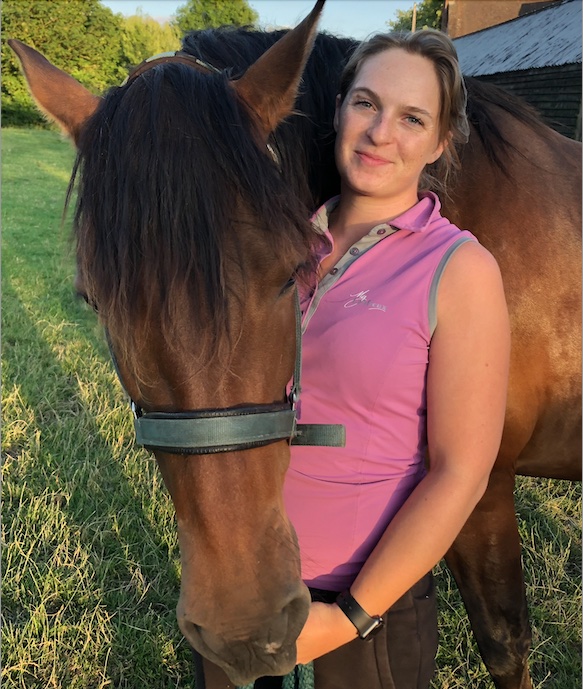
Who is Briony Witherow?
Briony Witherow Briony Witherow BSc MSc RNutr. PGCHEP FHEA
A graduate of Aberystwyth University (2010) and the Royal Agricultural College (2011), the early part of Briony’s career was spent in the commercial sector as senior nutritionist at one of the UK’s major feed companies. In 2016 Briony went on to achieve registered nutritionist status with the Association for Nutrition (AfN) and started her own equine nutrition consultancy, Practical Equine Nutrition. Based in Cambridge, Briony lectures in Equine and Animal Science at Writtle University College alongside maintaining some independent nutrition consultancy.
Briony has her own horses (both good doers!) who she rides and drives and is very passionate about research having a clear and tangible practical application. Briony’s involvement with horse owners through her nutrition consultancy and own horses provide a constant reminder of the challenges horse owners face and helps to fuel her key research interests and projects.
In her academic career Briony has supervised various student pilot studies focussing on equipment to extend chew time (e.g., slow feeders) and the impact of feed type and management on chew parameters. Her current research projects include advancing the validation of the RumiWatch headcollar for use in horses to measure chew parameters. Data collection for this project took place over Summer 2023. We aimed to measure the accuracy of visually observing and counting chew frequency versus the accuracy of the RumiWatch headcollar across different forages, presentation, and head shapes. If measures of accuracy are consistent with previous smaller scale validation studies, further research will be undertaken, using these headcollars to gather more data on how chew rate differs between individuals, the impact of different forages and presentations (e.g., nets, feed balls etc.). The hope is that these head collars may allow us to collect greater quantities of data over longer periods, potentially more accurately than the current method, opening up the opportunity to research the longer-term impact of feeding equipment and enrichment upon health, behaviour and welfare. Briony has written for many publications including Horse & Hound and Equine Health Magazine as well as peer-reviewed papers for UK-Vet Equine.
