I have been involved with advising the FEI/IOC on what we refer to as “Climate Mitigation” – essentially managing competitions taking into account how “hot” it’s likely to be – since the 1996 Atlanta Olympic Games. Having attended Atlanta 1996, Athens 2004, Beijing 2008 and Tokyo 2020(1) in person, it has been decided by the Paris organising committee that I can overseas to Paris remotely. I am in regular daily contact with the FEI and Helen Reynolds, who oversees the cooling facilities.
The first step in planning is to look at historic climate/weather records for the site in question. Usually, we aim to go back at least ten years. The next stage is to put climate monitoring stations (see below) on the actual site and record the climate over the proposed competition period. This is important for several reasons. Firstly, sometimes the nearest stations with historical records are perhaps 20-30km away from the competition venue. This could be significantly different to the conditions at the venue if there are hills or the station is nearer the sea, or there are more trees, for example. Secondly, weather stations are often sited high off the ground whereas we are more interested in the microclimate at the level of the horse – around 1.5m above the ground. Finally, even within a venue, there can be quite significant differences in thermal conditions due to factors such as different surfaces or shielding by buildings or trees.
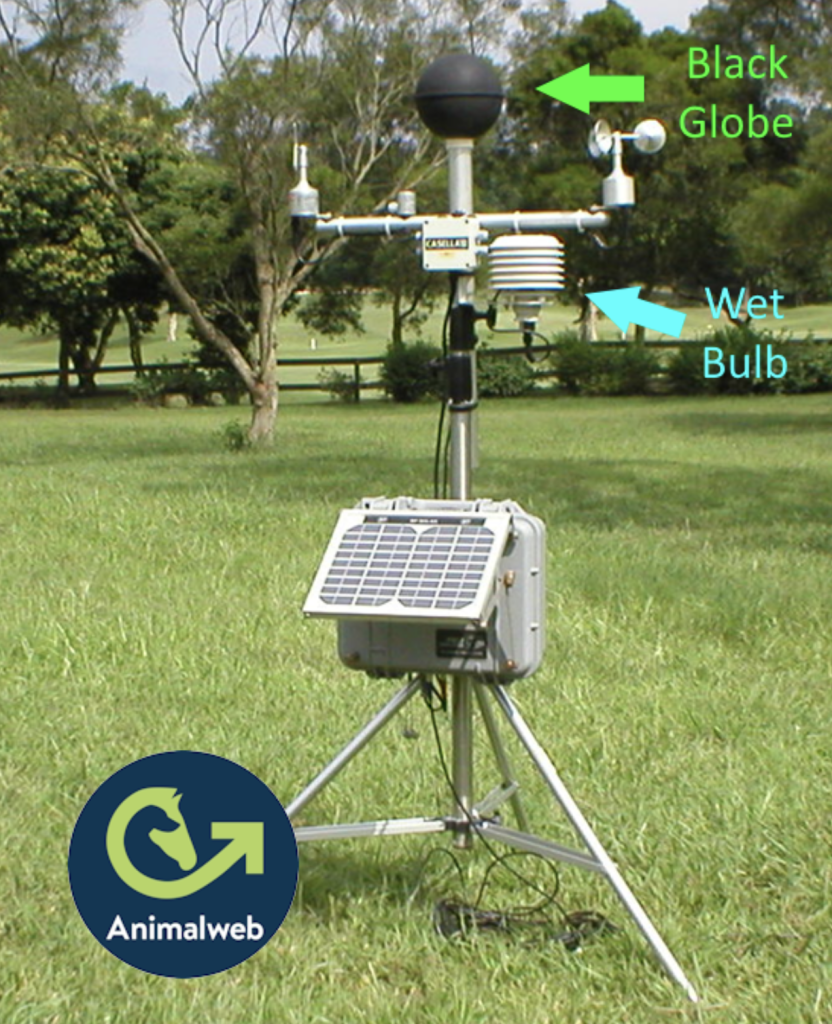
Climate monitoring station on the proposed cross-country course for the 2008 Beijing Olympic Games.
Once we have the data we need to assess the likely level of “thermal stress”. Many people immediately think of air temperature, but we also need to consider humidity, sun strength and wind in order to get an accurate picture. In order to do this we use a measurement called the WBGT Index or to give it its full name, the Wet Bulb Globe Temperature Index. This is made up of two measurements. Firstly, the Wet Bulb temperature, which can be measured directly or calculated from temperature and humidity. These would be measured in the “shade” inside a screen such as the one shown above which shield thermometers or sensors from solar radiation.

The second component of the WBGT Index is the Globe Temperature. This is the temperature insider an approximately 6” or 15cm diameter black globe. The globe temperature represents a balance between the heating effects of direct and reflected (from the ground) solar radiation and the cooling effect of any wind. The WBGT Index is calculated from 70% of the Wet Bulb temperature in °C and 30% of the Black Globe temperature, also in °C.
WBGT (°C) = (0.7 x Wet Bulb°C) + (0.3 x Black Globe°C)
WBGT Index at all Olympic Games since Barcelona in 1992 and estimated for Paris based on current weather
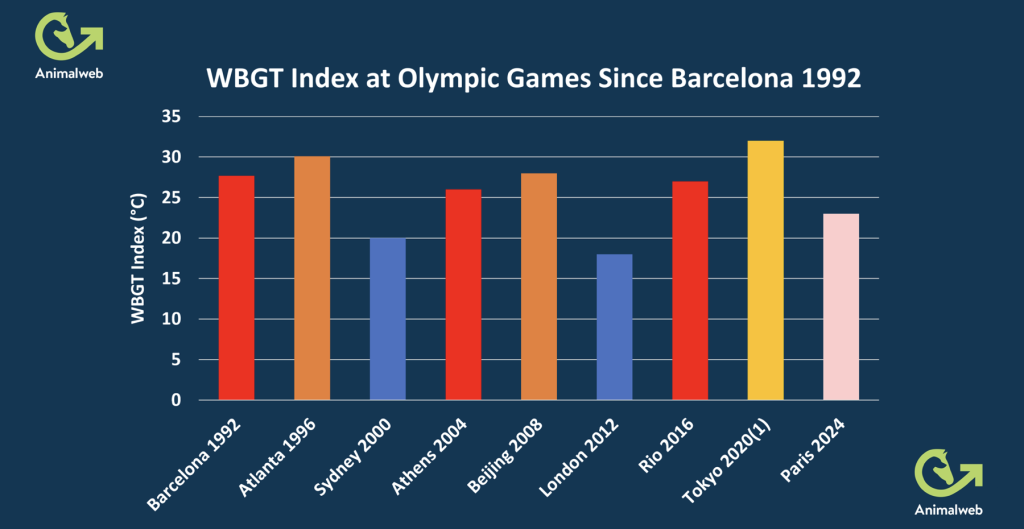
As you can see from the graph above, Tokyo has been the “hottest” (or more accurately, the most thermally stressful) Olympic Games on record. If we look at the current climate data for Paris the WBGT would be higher than Sydney 2000 or London 2012 but lower than all the other Games since 1992.
Climate Mitigation For Equestrian At Olympic Games
When we have accurate data on the climate, in the case of a World Games or other major event, we may have the option to move the competition to a more favourable date, such as was done for the 2018 World Equestrian Games in Tryon USA in 2018 which was moved from August to September. Of course this is not an option with the Olympic Games, which always takes place at the same time of year wherever it is being held in the world. We therefore have to look at other approaches to climate mitigation.
1. Education

One of the first steps is education. Riders and National Federations who support them need to be aware of best practice. For example, the importance of acclimatisation to heat in reducing the risk of heat illness. This can be carried out at home and to some extent once at the Games. Cooling is another area where there still can be a lot of misinformation, such as that cold water on the quarters causes horses to tie-up or that water must be scraped to cool horses effectively or that fans are as effective as cold water. Another important consideration for riders is that in hot conditions horses will benefit from a modified warm-up routine. This The FEI produced a series of videos to support riders and federations in advance of Tokyo based on content I provided.
2. Scheduling
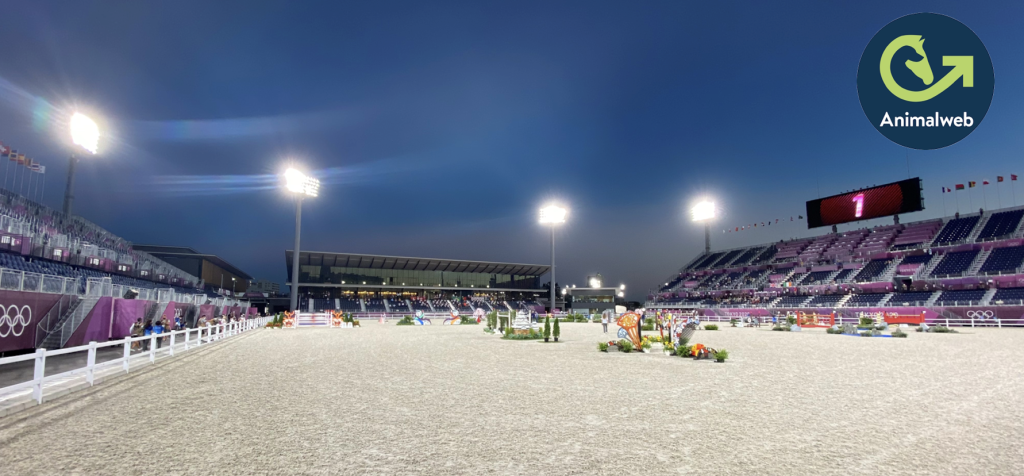
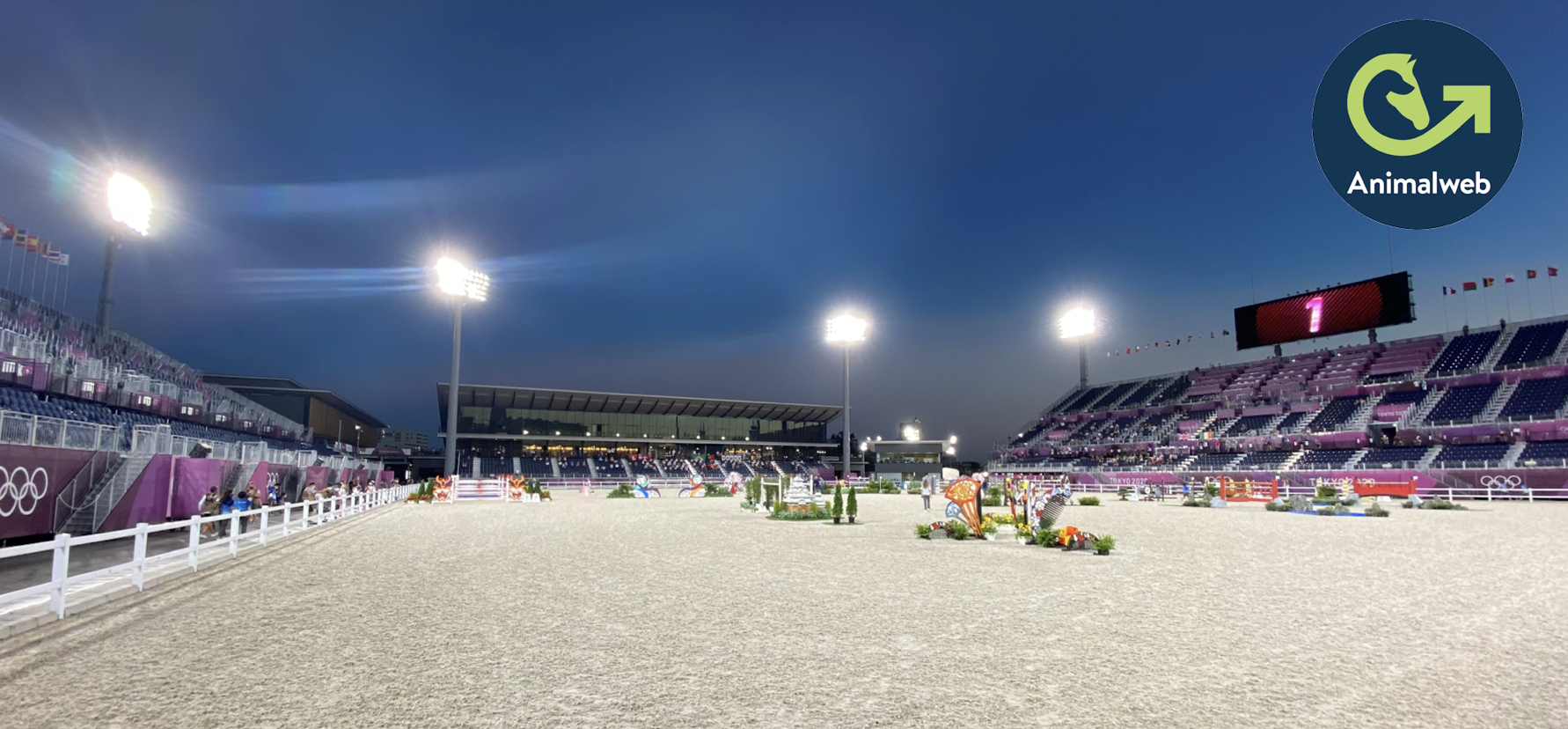
Where possible the timing of competitions is moved to avoid the hottest parts of the day. There are also other considerations involved in this, such as sufficient light and or whether shadows may cause issues, particularly on the cross-country course. If floodlighting is available then evening competitions are an excellent option as once the sun goes down conditions improve dramatically. This was used in Tokyo for Dressage and Jumping. Eventing Dressage and Jumping took place during the day as the horses need to be able to cope with heat for the cross-country. Other factors that have to be considered in scheduling include rain, thunder and lightning, tornadoes, hurricanes and earthquakes.
3. Air-Conditioned Stabling
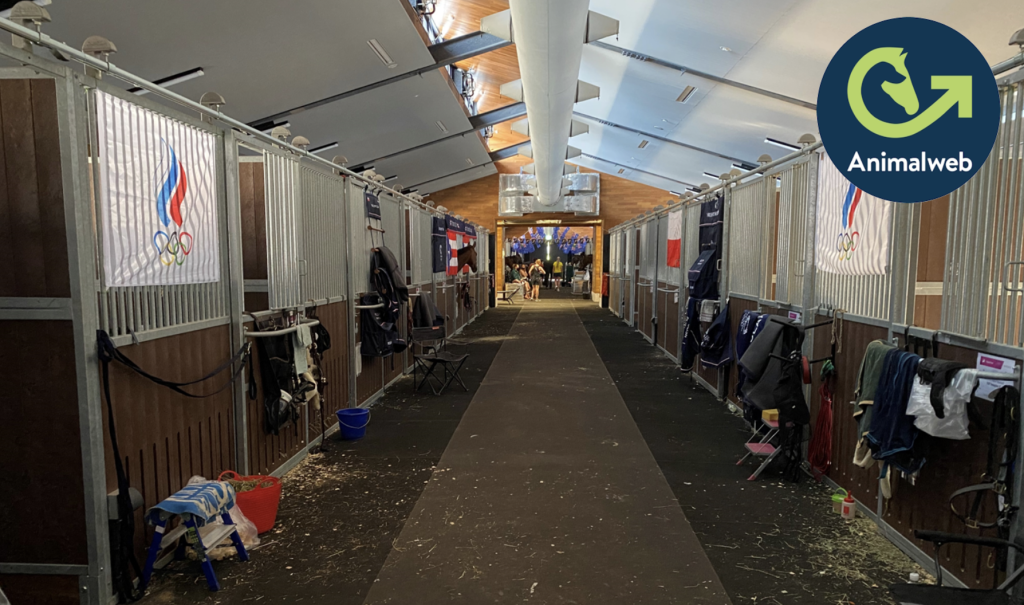
Air-conditioned stables allow horses an excellent environment in which to rest and recover from training and or competing in the heat. Living in cool conditions does not negate acclimatisation from training in the heat. However, air-conditioned stables are very costly and require a lot of monitoring and management to ensure good air quality.
Training Facilities
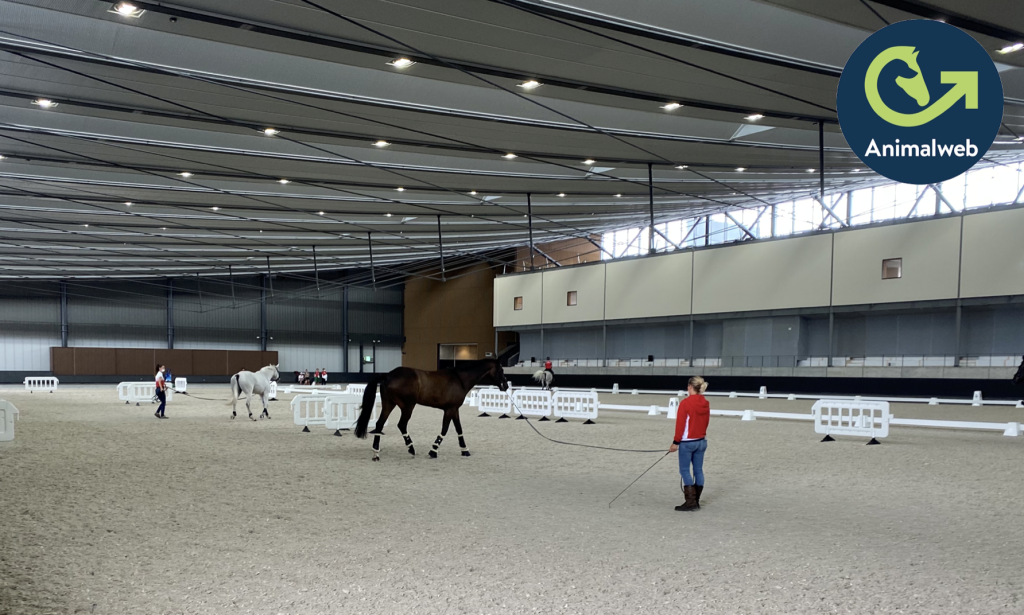
Covered training facilities have been provided at a number of Olympic Games. The first time this was provided was in Atlanta in 1996. These areas can be used to allow riders to conduct some training out of the full heat and may also be used by some riders for warm-up for competition. A climate controlled (not fully air-conditioned) indoor arena was provided in Tokyo in 2021 (see below). In Beijing in 2008 an air-conditioned indoor training arena was provided. These covered or air-conditioned arenas can be very important for the small proportion of horses that do not cope well with heat.
4. Competition Modification
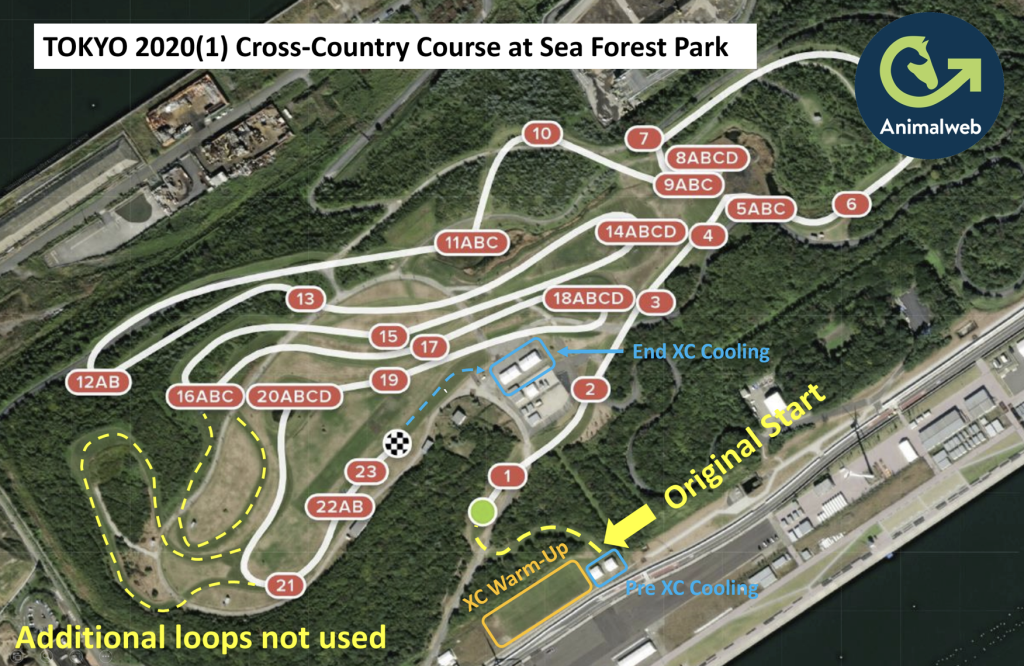
There is little that can realistically be done to reduce the intensity or duration of competition in dressage or Jumping or Para-Dressage. However, reducing the demand in cross-country is required when the conditions are likely to be at a WBGT of 28°C or above. The method for reducing demand is to maintain the speed but to reduce the distance, thus the time out on course is reduced. This can still result in horses becoming hotter than in cool climates but the cooling facilities at the end of XC prevent any heat illness.
5. Cooling Facilities
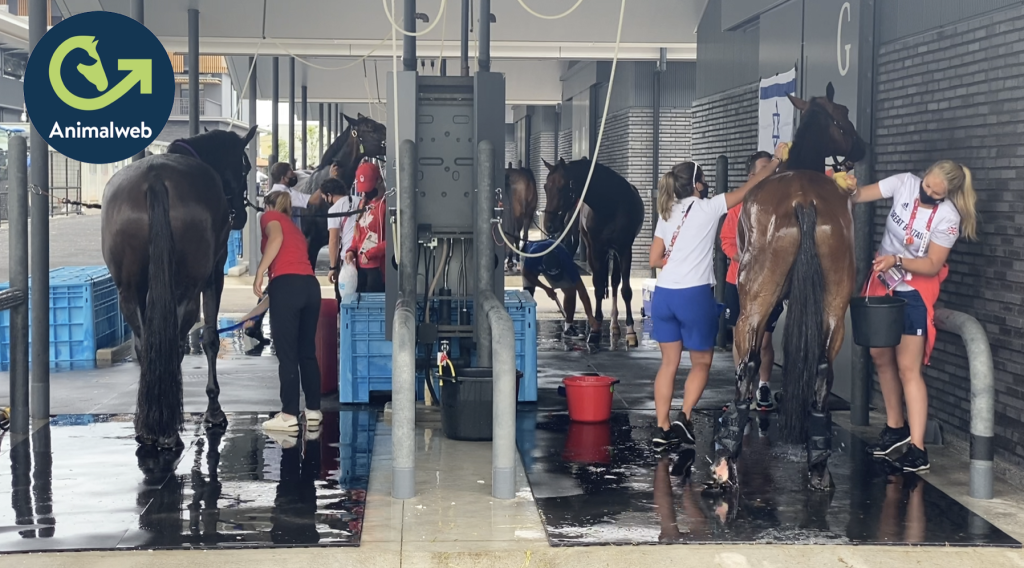
Providing sufficient water and ice for cooling are the primary method with which horse welfare is protected. Even if horses get hotter than normal, provided they are cooled quickly and effectively they are not at risk of heat related illness. There has not been a single case of heat-related illness in a horse since the 1996 Atlanta Olympic Games when climate mitigation was first employed. This requires good organisation. In Tokyo 2020(1) several tonnes of ice were delivered daily and 7500kg of ice were used on cross-country day alone! Other facilities such as misting fans can provide increased comfort in cooling areas but must never be relied on to achieve rapid cooling.
6. Monitoring
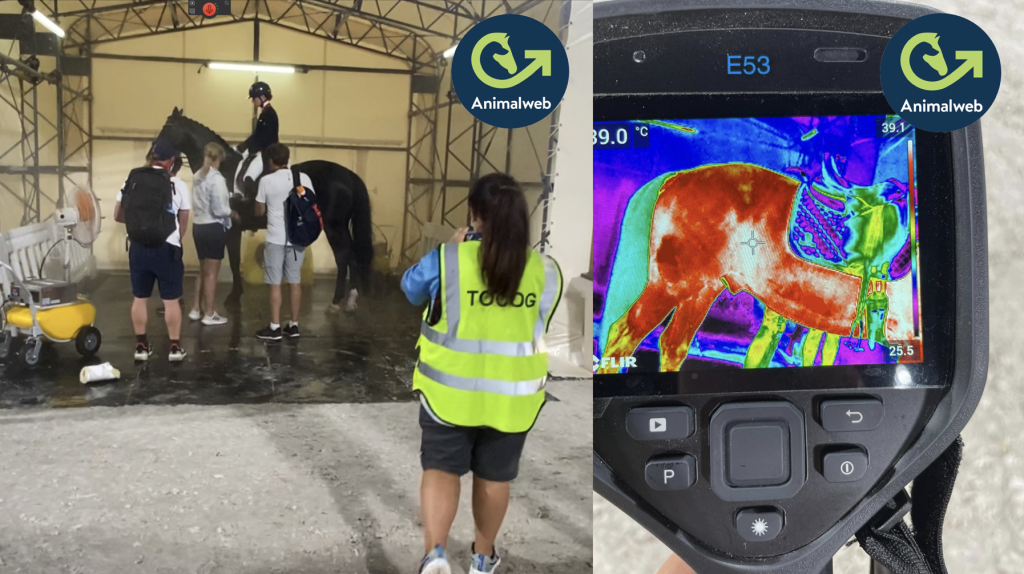
Monitoring how horses are coping with conditions is also an essential part of welfare management, with the aim of making early interventions where necessary. This is undertaken by the stewards and the veterinary team. In Tokyo 2020(1) we instigated the use of thermal imaging to monitor horses during training and before, during and after competition in order to flag horses that were particularly hot in order to ensure they were cooled in a timely and effective manner.
PARIS 2024 – What To Expect
Predictions for Paris based on historic data indicated expected warm Northern European summer conditions, this is from the official Paris 2024 website.
What conditions can I expect in Paris?
Located in the north of France, Paris consistently experiences warm summers. The average daily temperature in July and August ranges from 15°C (59°F) to 25°C (77°F), with average relative humidity around 66%.
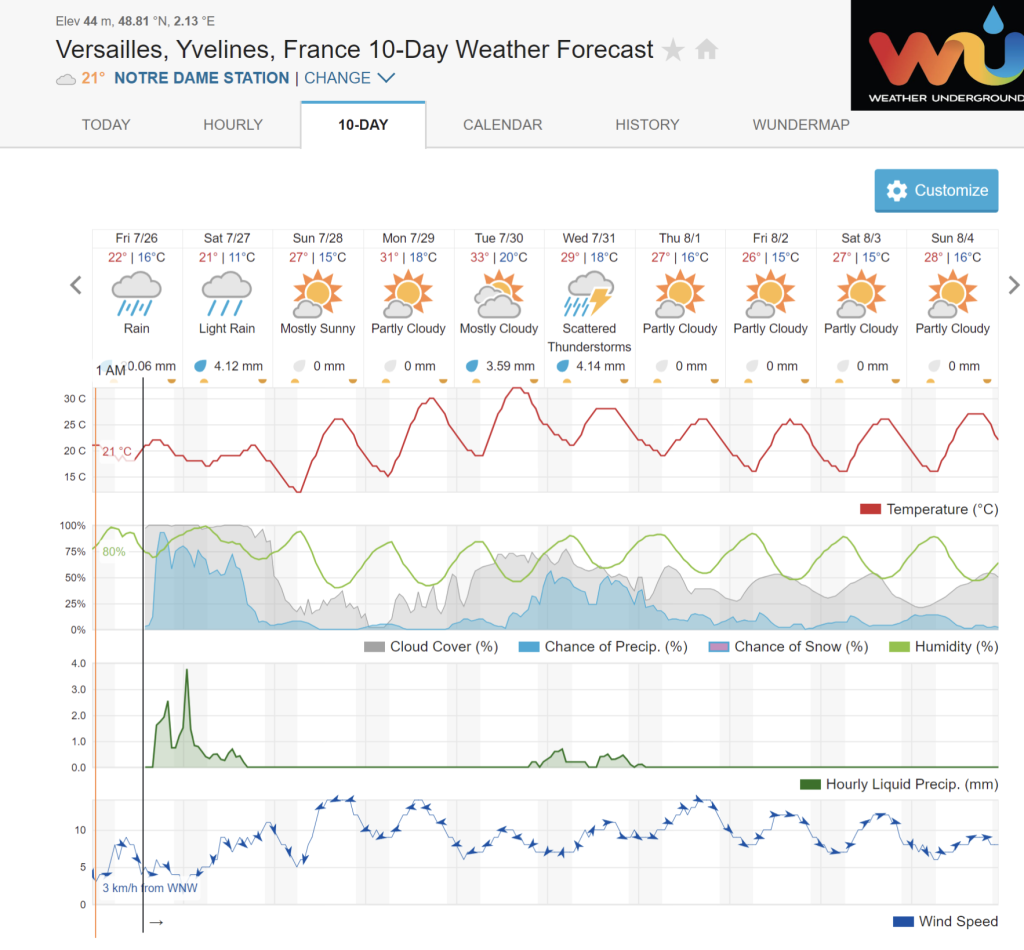
This should however be with the proviso that Europe has experienced 3 severe heatwaves around the time of the Games in the past 10 years. Current conditions are warm, with temperatures up to 29°C and a WBGT Index of 22°C. Well below our threshold of 28°C at which changes to competition are made. However, the forecast for Versailles (where equestrian is taking place) as opposed to Paris itself, does indicate some hotter weather on the way preceded by rain which will increase the humidity in the atmosphere. Cross-country begins at 9:30am French time on Sunday 28th July, with even warmer weather currently predicted to follow on Monday, Tuesday and Wednesday. There is always the possibility that the hotter weather will come in earlier so we will be keeping a close eye on the forecasts. It currently looks as though the conditions may be challenging for Dressage Individual Grand Prix Day 1 and Dressage Team Grand Prix Day 1 on Tuesday 30th July with predicted temperatures as high as 33°C.