


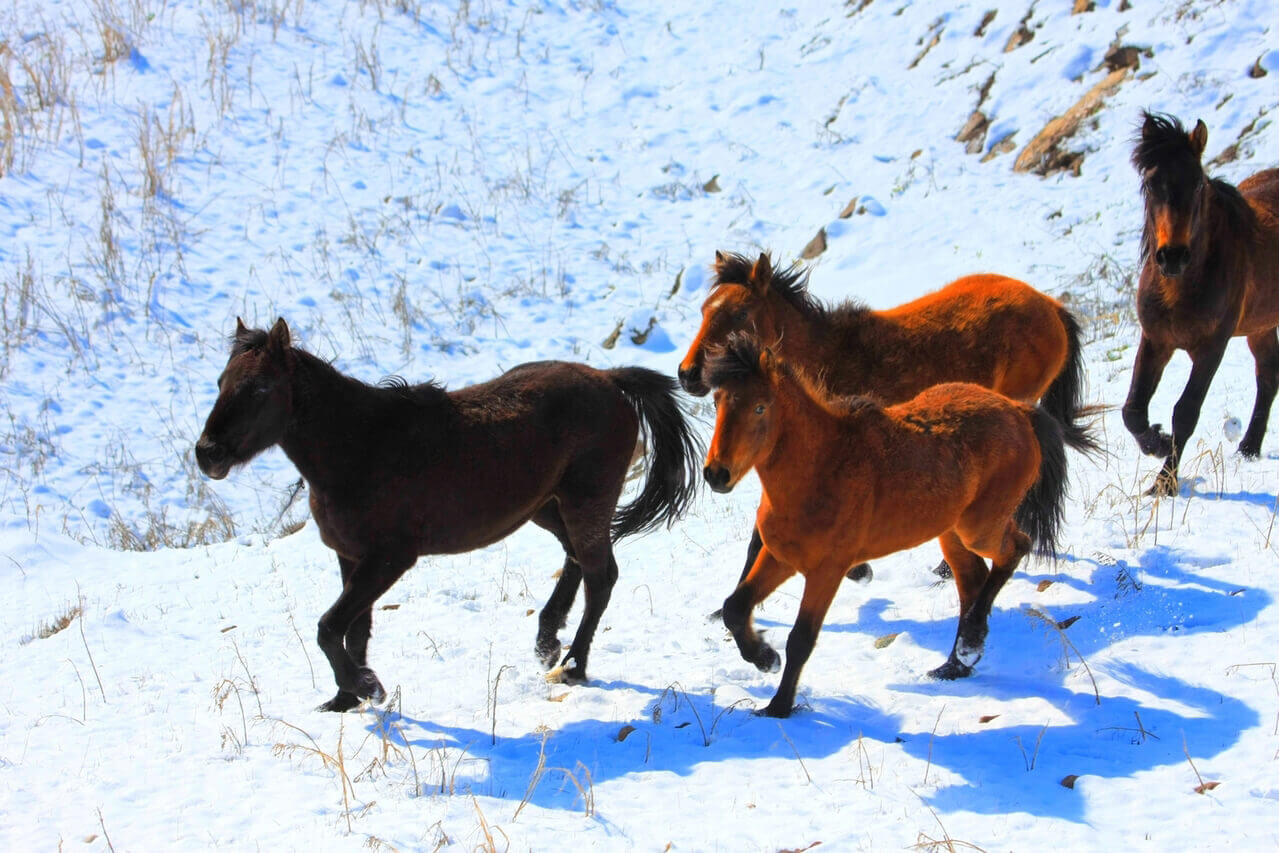
If the forecast is correct (IF!), then many of us will be preparing for snow over the next few weeks. Here are some of our TOP-TIPS to keep your horses and ponies healthy!
Exercise
If still able to ride, allow longer to warm up by spending twice as much time walking and trotting to avoid muscle strains. Avoid areas of uneven ground and areas which suddenly change from soft to hard, as these are a high risk for injury.
Forage
Make sure your horses and ponies have plenty of forage (unless on restricted intake for weight management). This is how the horse keeps itself warm and healthy.
Hard-Feed
If your horse/pony is on hard feed and cannot be turned out or ridden at all or their activity is much reduced, then reduce their hard feed. Whilst we advise against sudden changes in diet, a reduction in hard-feed is an exception and will lower the risk of GI issues such as colic.
Bran Mashes
There is no evidence that bran mashes reduce the risk of colic and may even increase the risk. While it will feel nice to give your horse a warm bran mash, this is not necessarily a good thing, as the sudden introduction of food your horse does not get every day will disturb the bacteria in the hindgut. If your horse gets a small bran mash every day, then that’s different.
Ventilation
Unless snow is coming into the stable, avoid closing up top floors/windows, especially for horses and ponies with a history of respiratory problems such as equine asthma, as this could trigger an exacerbation.
Rugs
Temperatures are set to dip but don’t be tempted to over-rug as this could make your horse uncomfortable. Swapping to a slightly heavier-weight rug or adding a thin fleece underneath is probably all that is needed for many horses and ponies.
Feet
Snow can “ball-up” in horse’s and pony’s feet. This is usually worse for those who are shod. Snow and ice can become very hard and lead to tripping, bruising, soft tissue injury, joint injury, hoof cracks and lameness. This can usually be managed by putting Vaseline on the frog and sole when the foot is dry (it won’t stick if the foot is already wet), putting on hoof boots or wrapping the feet with vet wrap. Vaseline and vet-wrap are temporary measures and don’t work well for all horses. A longer-term approach is to ask your farrier to put pads on, but this is clearly hard to organise at short notice and may only be required for a few days. AVOID USING INDUSTRIAL GREASE/OIL (e.g. AXLE GREASE) – these products have chemicals which are not kind to the skin/hoof and may lead to dermatitis (inflammation of the skin).
Water
Many horses and ponies will reduce their water intake in cold weather. This can lead to an increased risk of impaction colic. You can take the chill off buckets when you are at the yard by boiling a kettle or taking a flack of hot water from home. For horses and ponies that have had a previous history of impaction colic, adding in a small amount of oil such as linseed (e.g. 1/2/ to 1 cup a day) or adding in some table salt (1/2 to 1 x 25ml scoop; 2.5 to 5 teaspoons) can help encourage drinking and ease the passage of food.
Increased Stable Time
If your horse or pony has to spend more time in the stable, consider having a radio to play some quiet and calming music. If your horse really gets stressed by being in, then there are many stable toys now available, and it may also be worth considering a stable mirror.
