


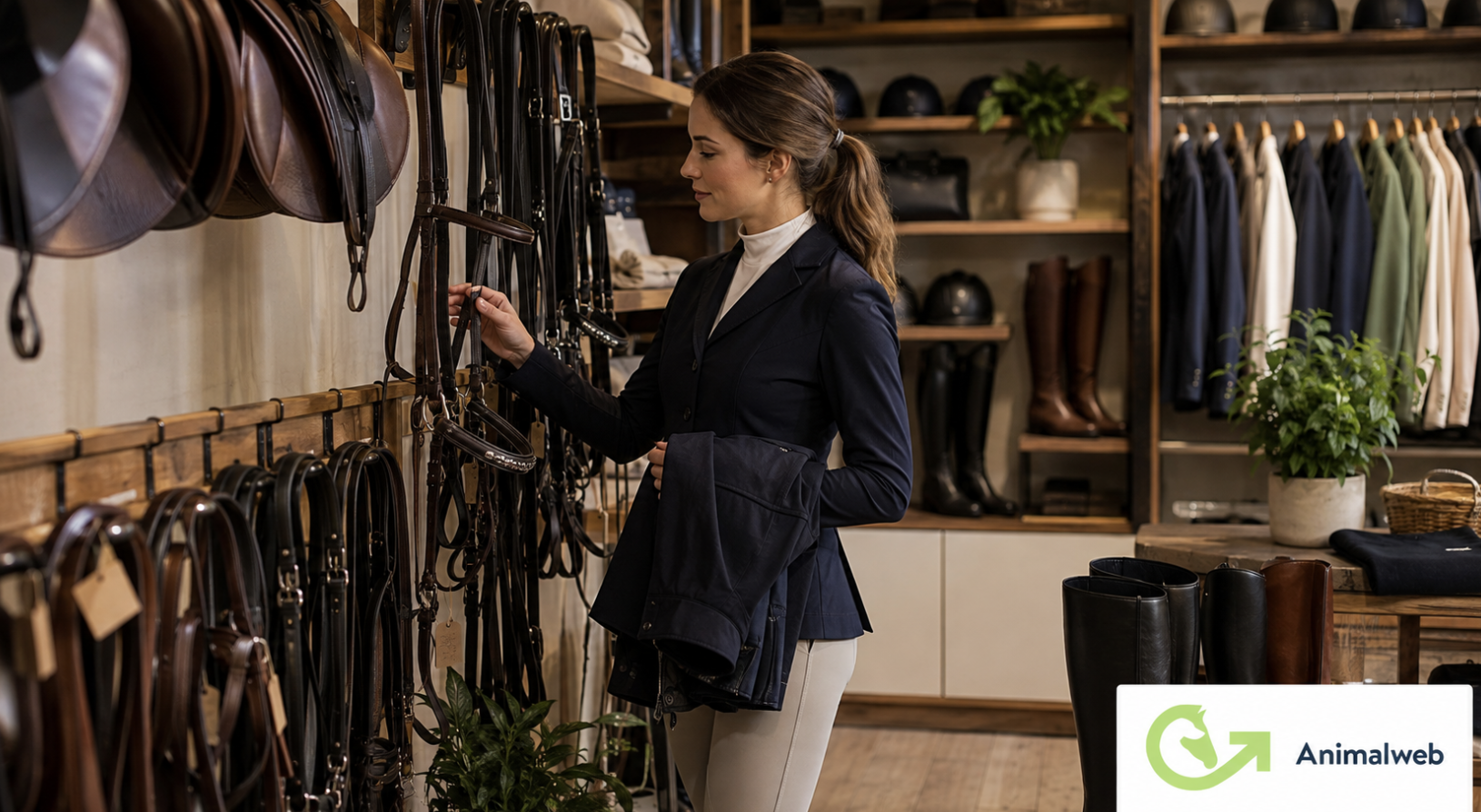
A new study has explored how sporting ambition may influence riders’ spending habits, their interest in luxury equestrian products and their attitudes towards sustainability.
Equestrian sport is often associated with significant financial investment. From horses and veterinary care to clothing, tack and competition fees, the costs can quickly add up, particularly for those competing at higher levels.
However, does greater sporting ambition also make riders more interested in luxury brands? And are riders who prefer expensive products less likely to shop sustainably?
Researchers Stephanie May, Jennifer Kunz and Felicita Lopata surveyed 240 German-speaking equestrians, alongside a control group of 240 non-equestrians, to investigate these questions.
Competitive riders spent considerably more
Almost 76% of the equestrian participants owned at least one horse, while around half were classified as having sporting ambitions.
The results showed a clear difference in spending between riders with and without competitive ambitions.
On average, riders with sporting ambitions had spent approximately €4,600 more when purchasing their most expensive horse. They also reported spending an average of €1,030 per month on costs including horse care, feed, equipment and veterinary treatment.
This was almost twice the €530 monthly average reported by riders without sporting ambitions.
However, higher spending did not necessarily mean that riders were primarily motivated by status or recognisable brands.
Quality and durability mattered more than status
When riders were asked why they purchased luxury equestrian products, durability was the most important reason, followed by quality.
Brand and status were rated as the least important motivations across both groups.
Riders with sporting ambitions placed significantly more importance on product quality than those without competitive ambitions. The researchers also found a small but significant relationship between sporting ambition and an affinity for high-priced equestrian products.
This means ambitious riders were more likely to express a preference for luxury equestrian products, although the study cannot establish that sporting ambition directly caused this preference.
The researchers investigated whether social comparison could help explain the relationship. For example, riders competing alongside people with expensive horses, clothing or equipment might be encouraged to make similar purchases.
Although participants who compared themselves more with others showed a greater affinity for high-priced products, social comparison did not explain the relationship between sporting ambition and luxury preferences.
The authors noted that riders may instead value luxury products for their performance, quality and longevity.
Why do people ride?
Across the entire group, love for horses was the strongest motivation for riding. Relaxation and spending time outdoors were also highly rated.
Riders without sporting ambitions placed greater importance on relaxation and being outdoors. Competitive riders were more strongly motivated by fitness and the sporting challenge.
Competitive riders also rated the image and reputation of equestrian sport as slightly more important, although this remained a relatively weak motivation overall.
Are luxury purchases less sustainable?
Importantly, the study found no statistically significant evidence that riders with a preference for expensive equestrian products behaved less sustainably when shopping.
Higher sporting ambition was also not significantly associated with less sustainable purchasing behaviour.
The findings challenge the assumption that luxury consumption must automatically conflict with sustainability. A more expensive product could potentially support sustainable consumption if it is well made, used for longer and replaced less frequently.
However, the study only measured participants’ self-reported attitudes and purchasing behaviour. It did not independently assess the environmental impact of the products they bought or determine whether expensive items genuinely lasted longer.
How sustainable do riders believe equestrianism is?
Equestrians and non-equestrians gave similar answers when asked whether riding was a sustainable hobby.
On a five-point scale, riders gave it an average score of 3.19, compared with 3.1 among non-riders. This suggests neither group viewed recreational riding as clearly sustainable or unsustainable.
When equestrianism was presented as a sport, ratings were lower. Riders gave its sustainability an average score of 2.5, while non-riders gave it 2.7.
The researchers had expected riders’ close connection with horses, land and the outdoors to encourage a more positive view of equestrianism’s sustainability. This was not supported by the findings.
Instead, the moderate and relatively uncertain responses may indicate that riders recognise both sides of the issue.
Horse-related activities may support grassland management and biodiversity in some circumstances. At the same time, horse ownership and competition can involve considerable resource use, waste, transport emissions and the environmental effects of manufacturing equipment.
What does the study tell us?
The findings suggest that competitive ambitions are associated with greater expenditure and a stronger preference for high-priced equestrian products. However, this does not necessarily translate into less sustainable shopping.
For many riders, purchasing an expensive item may be less about displaying status and more about finding something they believe offers better quality, performance and durability.
The authors stressed that this was an exploratory study and that the relationships between ambition, luxury and sustainability remain complex. The participants were predominantly female, the information was self-reported and the research focused on a German-speaking sample, meaning the results may not represent every part of the wider equestrian community.
Further research could investigate what riders actually purchase, how long products remain in use and whether high-priced equestrian equipment delivers the durability and environmental benefits consumers may expect.
