


We are probably all aware that our diets directly influence our risk of certain diseases and the same applies to the horse. This might be quite obvious when we think of diseases like laminitis, but are there practical things we can do in relation to promoting digestive health? Well clearly there are no guarantees but the following are some key areas to consider when trying to promote good digestive health and increase your horse’s resilience and ability to ward off disease.
How important is fibre?
Over time, the minimum amount of forage recommended for maintaining gut health has increased, largely in recognition of the increased prevalence of gastric ulcers. Fibre provided by forages has other important functions, not least that it is utilised by the microbiota or ‘bugs’ that live in the horse’s digestive system. The bugs are an important part of the horse’s immune system. Signs of dysbiosis – a disruption of the population of bugs in the gut – are often very visible. Loose droppings, poor condition and colic are some of the most common problems that we can see but what we tend to overlook is that changes to the microbiota might have been occurring for weeks, months or even years prior to those problems becoming apparent on the outside. At some point, a perfect storm of events occurs, or a tipping point is reached, where the horse changes from looking in good health to having a problem.
Why bugs matter
The beneficial microbes in the digestive tract help to keep potentially harmful ones at bay by out-competing them for resources – a phenomenon known as competitive exclusion. If we keep the good bugs well fed and in an environment they prefer i.e. not too acidic, they should thrive. If we don’t give them enough to eat however, they will start to look for food elsewhere and that includes the mucus that lines and protects the gut. If the mucus layer is eroded, the gut cells are exposed to things they shouldn’t be such as acid and harmful bacteria which compromises their tightly organized structure – a phenomenon known as leaky-gut syndrome. Things that shouldn’t pass through the gut wall can now do so, potentially compromising the horse’s health in many ways.
Feeding the bugs – how much fibre is enough?
If you have a good doer you’re very likely striving to find a balance between feeding enough to maintain gut health but without resulting in excessive weight gain. For long term health and well-being, a minimum of 1.5% of current body weight on a dry matter basis is recommended to be fed. This can be a mix of forage types including pasture, chopped fibre and hay or haylage. If your horse or pony gains weight at this level of intake then it is better to use a lower nutritional value forage rather than reducing the amount fed.
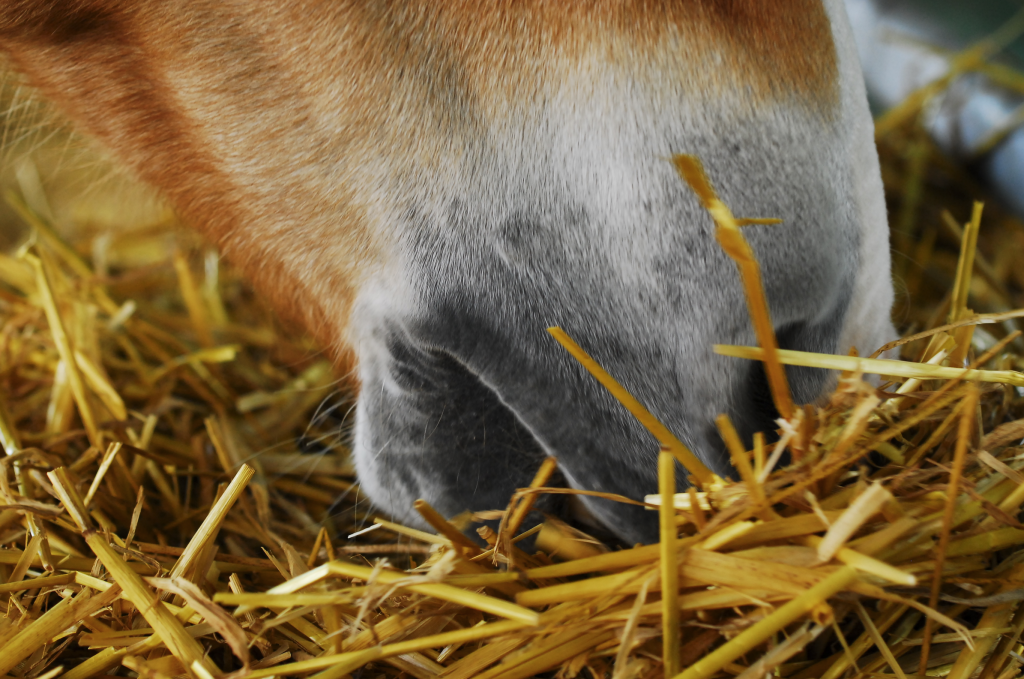
Straw can be a great option for making a difference to calorie intake – replacing one third of the weight of an average hay with straw reduces a horse’s calorie intake by around 16%. Replacing a better quality forage such as haylage with straw can make an even bigger difference. Recent studies have shown that up to 50% of the forage ration can safely be fed as straw with no increased risk of gastric ulcers. Do check with your vet before introducing straw if your horse or pony has a history of impaction colic or doesn’t have the best teeth!
Can I top up my horse’s friendly bacteria?
Ingredients relating to supporting the microbes in the digestive tract are collectively referred to as digestive aids and would include probiotics, prebiotics and more recently postbiotics. The first point to note that there are no bacterial probiotics approved for horses and so anything labelled as a probiotic should only contain live yeast. Prebiotics are not live but are substances that only impact bacteria in the digestive tract – the horse can’t use them as an energy source for examples. The relatively new term of postbiotics is a definition introduced to describe inaminate microbes and their components that have been shown to have an effect on the microbial population in the gut. Although the postbiotics are not live, their presence can still be sensed by other microbes in the gut and so can exert an effect.
Using any of these digestive aids should help to maintain a healthy digestive system and are arguably even more important when horses are challenged by low fibre diets, high levels of stress and medications.
Why a balanced diet matters too
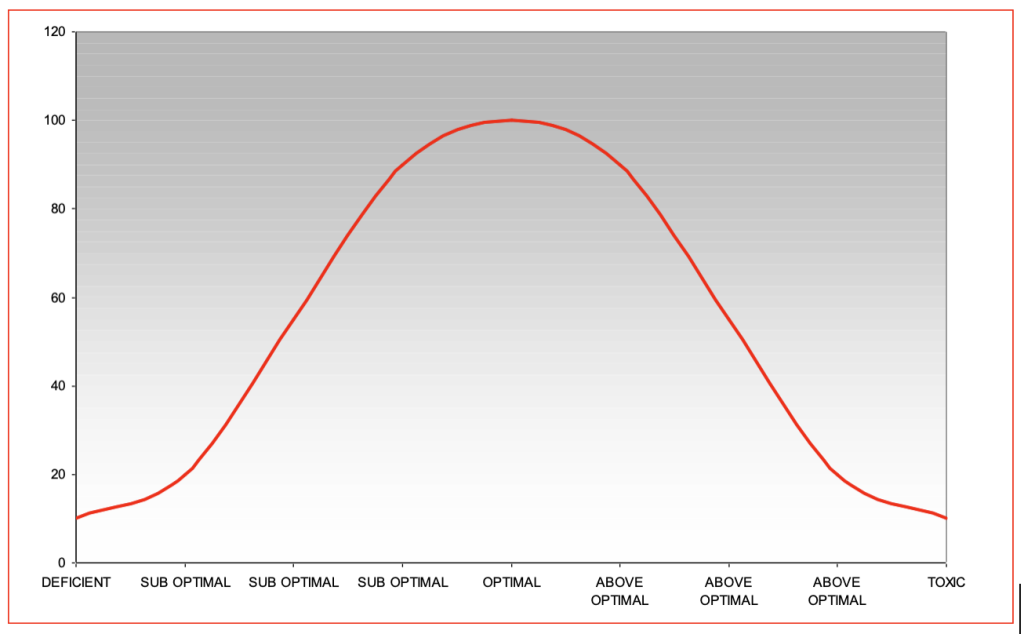
A balanced diet is one that contains the nutrients required by an individual according to their specific requirements for work, life stage or reproductive status. It is important to consider that there are ranges within which a nutrient level can be consumed without causing a problem such as a deficiency or toxicity. The graph shows how there is an optimal level and then a range around optimal before a toxicity or deficiency situation is reached.
The complicating factor is the contribution that forage is making to the horse’s requirements. A nutritionist has to take into account the contribution from forage when formulating a feed or supplement, as it is the total intake of nutrients from the whole diet that determines whether the diet is balanced. As you can imagine, there are a number of variables to consider, including how much is fed and the quality of the forage.
The key point is that products will only balance the ration if they are fed at the recommended levels. It is really important that the horse’s weight is known and the amount outlined on the pack for the size of horse is used to ensure the diet is balanced. If you find that you are needing to feed significantly more or less than the recommendation then it probably means you’ve got the wrong feed for your horse and the diet is not likely to be balanced.
