


I first became interested in the effects of transport on horses when working at the Animal Health Trust. My first major transport studies were in collaboration with Prof Natalie Waran (Currently Executive Dean and Professor of One Welfare at the Eastern Institute of Technology (Te Pūkenga) and Chair of the FEI’s Equine Ethics and Wellbeing Commission) and students from the equine MSc course at Aberystwyth University. These were studies of road transport involving driving pairs of horses around East Anglia for 8 hours at a time. We also had the opportunity to look at forward versus rearward-facing transport in trailers.
I was also invited to help plan the travel for Pebbles (trained in Newmarket by the late Clive Brittain) to race in the Breeders Cup. But my first real experience of air travel was for the Atlanta Olympics, where I flew with 6 horses from Europe and had the opportunity to monitor weight loss, water intake, immunity and many other aspects of health. I also had the opportunity to work with World Horse Welfare and a large group of vets and scientists to collect evidence to present to the European Union on long-distance transport of horses for slaughter to show that this seriously compromised welfare and was cruel and unnecessary. I was therefore pleased to be invited by Dr Bert Driessen from Belgium to contribute to a review article on the published science relating to the transport of horses for slaughter.
The article is open-access but may not make pleasant reading for horse lovers. My position is still the same. Long-distance transport of horses is stressful, cruel and unnecessary and I would like to see the shortest possible journey times imposed throughout Europe.
LINK to paper – Chapter 4: Horses | Preslaughter handling and slaughter of meat animals (wageningenacademic.com)
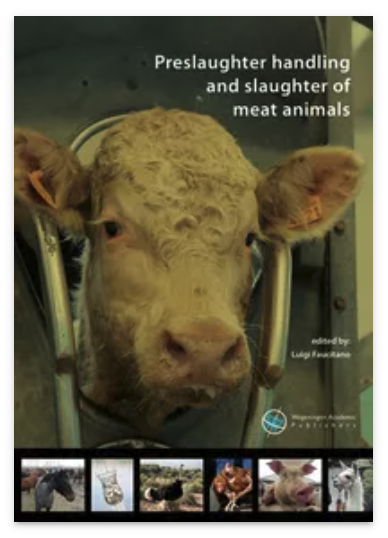
Abstract/Excerpt
‘Preslaughter handling and slaughter of meat animals’ is unique because it covers the entire period of preslaughter period and slaughter, and its effects on the welfare of multiple species destined for meat production.
Several chapters describe the current knowledge on all welfare topics from pre-transport preparation at the farm to stunning and slaughter, and the assessment of animal welfare and stress through physiological, behavioural and meat and carcass quality measures. Other chapters cover new and important topics, such as mobile slaughter and preslaughter handling, and slaughter of non-traditional meat species.
This unique and comprehensive work is written by internationally renowned experts and accomplished scientists in the field, who are engaged in active research laboratories and who have demonstrated their devotion to animal care and welfare. This work will be of interest and relevance to animal scientists, academics, students, animal welfare and industry associations, policy makers, veterinarians, livestock and poultry chain stakeholders, and all those involved in and who care about the humane handling of meat species.
