


Cooling Practices for Equine Thermoregulation After Cross-Country Competition – Hodgetts, C*. and C. Brigden (Myerscough College)
Introduction:
Strenuous exercise like British Eventing (BE) cross-country competition can increase equine core body temperatures to critical levels, particularly in hot/humid conditions without suitable acclimatisation (Marlin et al., 1996). Heat stroke is a welfare concern, particularly with increasing occurrences of UK heatwaves due to global warming (Kendon et al., 2021). Cooling practices have been investigated for international competition horses working maximally (Marlin et al., 2018), but not specifically the practices used in industry by riders at grassroots level. The aim was to investigate cooling practices used after cross country phases at BE affiliated grassroots (80-100cm/435-475m/min) and international level competitions (110-120cm/520-570m/min). Additionally, to investigate reasons for use of specific cooling methods by BE riders.
Material and methods:
Cooling practices were observed and recorded in a classification table following cross-country, at 3 grassroots classes (n=121) and 3 international classes (n=135) across four venues. Average temperatures were recorded and grouped into low (15-19°C), medium (20-24°C) and high (25°C +). Humidity was grouped into low (45-64%), medium (65-85%), and high (86%+). Chi-square tests for associations analysed associations between cooling practices and rider level; average temperature; and humidity. In a separate survey, 55 grassroots and international BE riders completed an online questionnaire with 9 closed questions exploring practices used and rider information. 10 open questions explored reasons for practices used and were analysed using thematic framework analysis.
Results:
Associations existed between rider level and observed use of different cooling practices (P<0.001). International riders (IR) used evidence-based practices more than grassroots riders (GRR). 90% of IR used whole body application of water compared to 37% of GRR; 67% IR used immediate cooling compared to 11% GRR. 67% of IR used continuous applications, versus 2% GRR (Figure 1). Some evidence suggested weather affected practices used but this was impacted by observations of only one international class in high temperatures. Thematic analysis revealed three themes of why cooling practices are used: practicality, educational influences, and health and welfare. Five themes for reasons for alterations in hot weather included weather conditions, competition structure, horse health, venue facilities, and horse fitness and performance. Sub-themes revealed practices chosen were mostly based on health and welfare, with rapid cooling and high temperature thresholds being the most common.
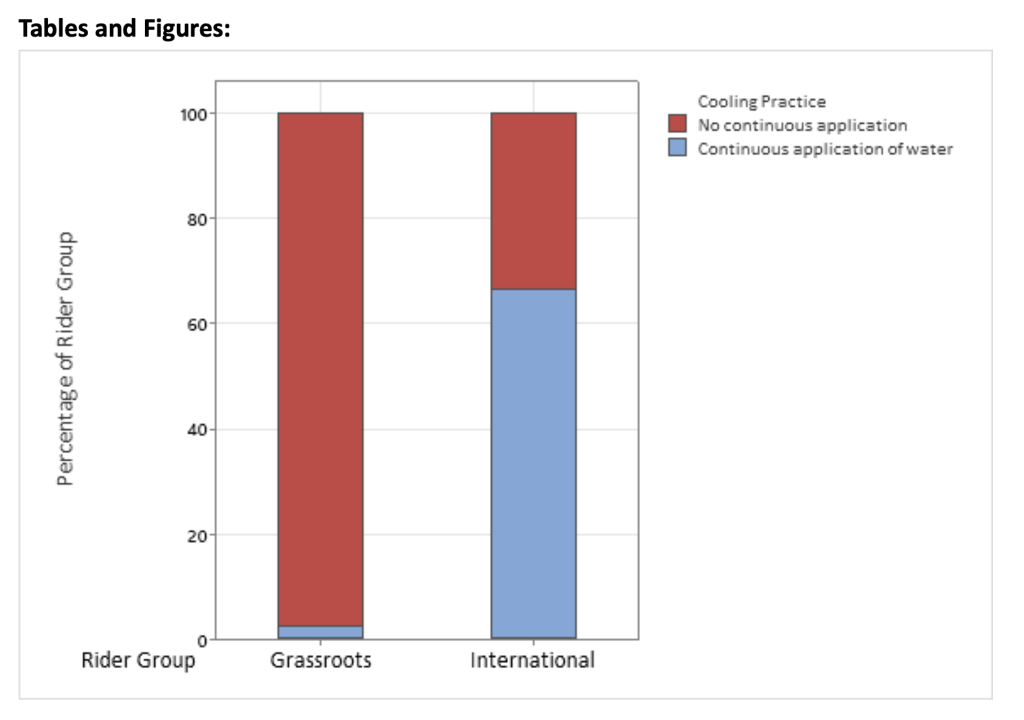
Figure 1: Percentage of grassroots and international riders using continuous application of water post cross country,
at British Eventing competitions (P<0.001; χ2=135.54).
Discussion and conclusions:
Apparently lower use of scientifically proven cooling practices by Grassroots riders may increase risks of equine heat stroke. Results may have been affected by limited availability of cooling facilities at grassroots venues. Survey responses revealed riders felt the need for appropriately positioned water provisions, such as large water tubs at the cross-country finish. There was some indication that weather had an impact, but this requires validation from a larger sample of classes in mixed temperatures. Awareness of rapid cooling for welfare and adaption of practices in high temperatures were demonstrated in the survey, but only reflected in observations of international riders. Overall, the study indicates the need for better education of all BE riders regarding evidence informed cooling practices post strenuous exercise, as well the provision of cooling facilities at venues.
References:
Kendon, M., McCarthy, M., Jevrejeva, S., Matthews, A., Sparks, T. and Garforth, J. (2021). State of the UK Climate 2020. International Journal of Climatology, 41, pp.1-76.
Marlin, D., Misheff, M., and Whitehead, P. (2018). Preparation for and management of horses and athletes during equestrian events held in thermally challenging environments. In FEI Sports Forum. Pp 17-18
Marlin, D.J., Scott, C.M., Schroter, R.C., Mills, P.C., Harris, R.C., Harris, P.A., Orme, C.E., Roberts, C.A., Marr, C.M., Dyson, S.J. and Barrelet, F. (1996). Physiological responses in non-heat acclimated horses performing treadmill exercise in cool (20 °C/40%RH), hot dry (30 °C/40%RH) and hot humid (30 °C/80%RH). Equine Veterinary Journal. Supplement 22, pp.70–84.
