


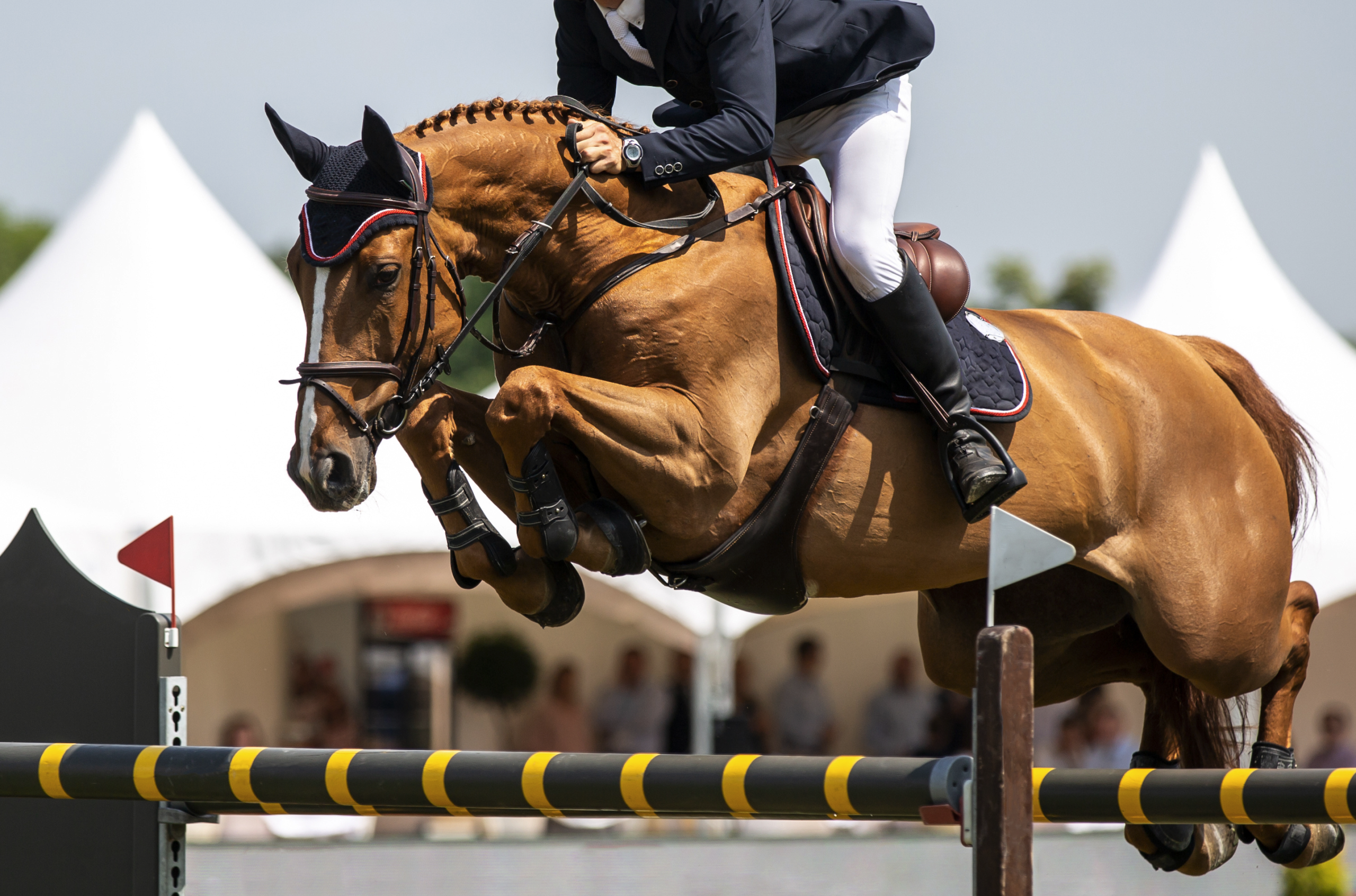
A discussion with showing jumping coaches Richard Seals and Natasha Andrews – What does a “good life” really look like for a showjumping horse, and how can coaching methods support both equine welfare and rider decision-making under pressure?
In this episode of the Animalweb podcast, Helen Stock is joined by British Showjumping coaches Natasha Andrews and Richard Seals, following their research presentations at the BSAS Equine Conference. Drawing directly on their Master’s-level research, the conversation bridges real-world coaching practice with emerging evidence on welfare, learning, and performance.
Natasha explores how showjumping coaches assess and promote a good life for the horse during training sessions, revealing strong welfare awareness but also gaps in formal education on equine learning theory, mental wellbeing, and ethical decision-making. Her findings raise important questions about social licence, duty of care and the emotional challenges coaches face when performance pressures clash with welfare values.
Richard’s research focuses on positive pedagogy and game-based coaching approaches, examining how supportive learning environments help riders develop confidence, adaptability and better decision-making in the arena. He explains why encouraging riders to think for themselves, reflect positively and problem-solve under pressure is not only vital for performance, but also for horse welfare and long-term partnership success.
Together, this episode offers valuable insights for coaches, riders and anyone interested in the future of equestrian sport. It challenges traditional coaching norms, highlights the importance of evidence-based practice, and shows how thoughtful coaching can improve outcomes for both horse and rider.
If you care about welfare, performance and developing confident, ethical equestrian partnerships, this is an episode well worth listening to.
Listen to this lively descussion:
“A good life for the horse isn’t just about soundness, it’s about mental wellbeing, learning and day-to-day experience.”
“Coaches are a key link between education, welfare and public trust in equestrian sport.”
AND
“In showjumping, decision-making speed matters just as much as technical skill.”
“Positive coaching isn’t about lowering standards, it’s about creating confident, thinking riders.”
CLICK here to head over to the main Podcast page to see the complete list of podcasts available.

I hope you enjoyed this podcast – make sure you join us for the Webinar on Thursday, 19th February – CLICK HERE.
Transcription
Here is a transcription of the podcast. (Please note this is an automated transcription, so we apologise for any errors from the original podcast.)
Hello and welcome to the Animalweb podcast. I am kicking off the new year with an exciting podcast today. I have two people here ready to speak to us.
I met them both back in November last year at the BSAS Equine Conference in Birmingham. While I was listening to lots of fantastic presentations, I was particularly drawn to theirs because it felt like a step away from traditional academic research and into the real world, people working day-to-day with riders and horses.
Following their presentations, I immediately went over and asked if they would come on the Animalweb platform to talk to us. David and I both feel that showjumping is an area we haven’t covered enough, despite there being a lot going on within British Showjumping at the moment. I wanted to speak to people who are very much boots on the ground, working within the showjumping community.
So, enough from me. Let’s meet our guests. Hello Natasha, and hello Richard.
Helen: Natasha, I would love to learn more about you and your journey into coaching, how you started, and what your role looks like today.
Natasha: Thank you for inviting me. I’m a UKCC Level 4 showjumping coach and recently completed my Master’s degree with the University of Gloucestershire. I actually started coaching as a hobby. I learned to ride at a riding school as a teenager, and as I grew up there, they asked if I would like to start coaching.
That really got me thinking about my role as an educator. About ten years later, I decided to formalise my coaching and look at qualifications. Around that time, showjumping coaching pathways were developing through the UKCC system. Richard and I actually completed our Level 2 together about 13 or 14 years ago.
I then took a break from coaching as I have another career as a lawyer, specialising in safeguarding children and vulnerable adults. I later returned to coaching, initially as a hobby and stress relief, and began doing more CPD with British Showjumping. That led me to complete my Level 3 and later the Level 4, where Richard and I reconnected.
Along the way, mentors such as Nikki Fuller introduced me to concepts like social licence, which really shaped my thinking. Completing the National Development Programme with British Equestrian Federation then became a natural stepping stone into the Master’s programme.
Helen: Richard, tell us about your journey.
Richard: I grew up around horses. My mother and uncle were dressage riders, but I always found jumping more exciting. I initially got into coaching because I felt it would improve my own riding, but I soon realised I really enjoyed helping people.
I started teaching at the riding school where I learned to ride and went on to complete my Level 2 with Natasha back in 2012. I progressed through Level 3 and more recently completed Level 4 and the Master’s programme.
I coach a wide range of riders, from grassroots to those with international ambitions, as well as some event riders. I’m also still actively riding and competing myself, and I’m fortunate to spend time training abroad, including in Germany.
Helen: Let’s move into your research. Natasha, your research focused on how British Showjumping coaches assess and promote a good life for the horse in training sessions. What led you there?
Natasha: It developed over time. In year two of the Master’s, I looked at duty of care in coaching, influenced by my background in safeguarding. That research focused on British Showjumping coaches.
As I analysed the findings, I began comparing duty of care towards the human athlete and the equine athlete. Equestrian sport is unique because we have two athletes in partnership. That raised questions about potential conflicts in duty of care and how those are managed.
I then explored the FEI’s work on what constitutes a good life for the horse. There was very little research on how coaches interpret this, so I decided to explore whether coaches’ views aligned with those models.
Helen: What did your research reveal?
Natasha: Overall, it was very positive. Coaches took a holistic approach to welfare, considering nutrition, physical health, mental wellbeing, and management outside the arena. Even though many weren’t familiar with formal models like the FEI or Mellor’s Five Domains, they were effectively applying those principles through experience.
However, much of that knowledge was experiential rather than formally taught. That suggests opportunities to strengthen welfare education within coaching pathways.
There were also clear tensions between welfare and performance pressures. Coaches spoke about emotional labour, managing riders seeking quick fixes, and sometimes having to step away from relationships where values no longer aligned.
Helen: Richard, your research focused on positive pedagogy and game-based approaches to decision-making. What sparked that interest?
Richard: I’ve always been fascinated by decision-making in competition. In showjumping, decisions need to be made quickly, and those decisions impact both performance and horse welfare.
Positive pedagogy focuses on supportive learning environments where athletes develop confidence, autonomy and enjoyment. A game-based approach uses realistic scenarios to help riders learn through problem-solving rather than repetition.
Many coaches were already using these approaches instinctively, but without the academic language or framework. The research highlighted the value of introducing these concepts earlier in coach education.
Helen: How does this translate into real-world coaching?
Richard: Riders need to be able to think independently. In competition, the coach can’t make decisions for them. Creating environments where mistakes are allowed helps riders develop confidence and adaptability.
Game-based training, such as riding full courses rather than isolated lines, prepares riders for the realities of competition. It also helps them understand their horses better and make ethical decisions that suit the partnership.
Helen: To finish, what would you like people to take away from your research?
Natasha: Coaches highlighted a lack of formal education around equine welfare and learning theory. There’s a strong case for welfare-focused CPD that runs alongside safeguarding training. Understanding how horses learn is fundamental to their mental and physical wellbeing.
Richard: I’d like to see more education around positive pedagogy introduced earlier in coaching pathways. Coaches also need better peer support networks. For riders, learning to reflect positively on what went well is incredibly powerful.
Helen: Thank you both. This has been a fascinating conversation and one that highlights how evidence-based coaching can benefit horses, riders and the wider equestrian community.
If you enjoyed this discussion, please join us for our upcoming live webinar, where Natasha and Richard will present their research in more detail and answer your questions.
Thank you both for your time.
