


New research, involving Animalweb expert Prof. Roberta Blake alongside collaborators from Anglia Ruskin University and the University of Brasília, has provided the first clear evidence that the type of pad used under a training roller can significantly influence pressure on a horse’s back when using a Pessoa training aid.
The study investigated how different padding options affect pressures and forces beneath the roller during lunging in trot and canter. Training rollers are widely used in both rehabilitation and training, often in combination with Pessoa systems, but concerns have been raised about the pressures they place on the thoracic region of the horse’s back.
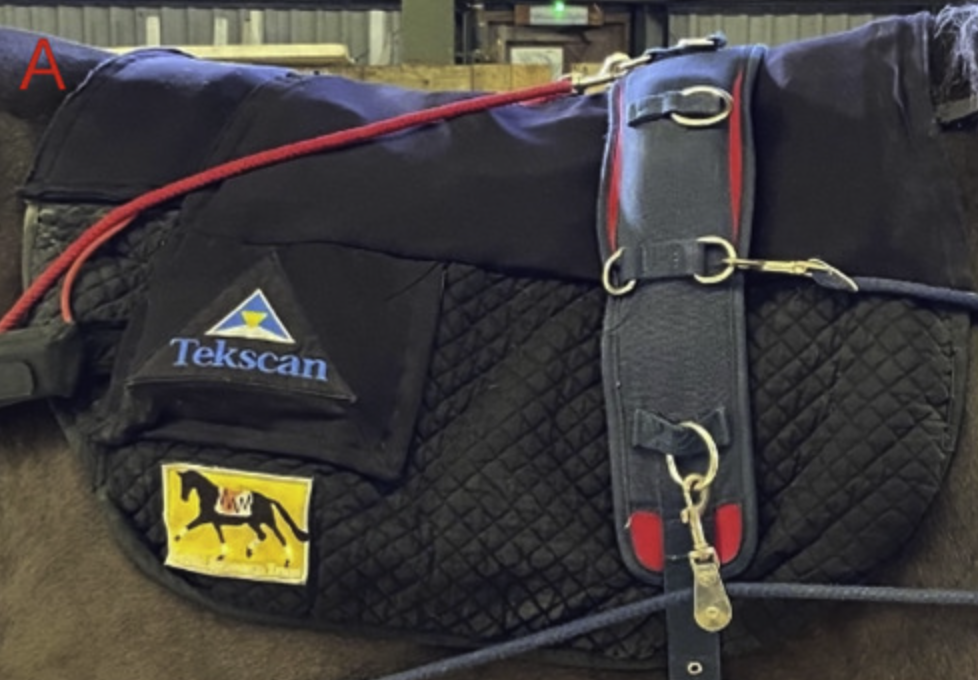
Using six horses in a controlled crossover design, the researchers compared three conditions: no padding, a folded cotton saddle cloth, and a purpose-made roller pad. Pressure-mapping technology was used to measure a range of variables, including average pressure, peak pressure and force.
The results showed clear and consistent differences between the pad types. The purpose-made roller pad produced the greatest reductions, lowering pressure and force measurements by up to 75–82% compared to no padding. Even a simple folded cotton saddle cloth significantly reduced pressures, although not to the same extent.
Importantly, the study also found that pad choice influenced how pressure was distributed across the horse’s back, not just the overall magnitude. This has potential implications for comfort, movement and long-term musculoskeletal health.
Previous research has suggested that high pressures under training rollers, particularly over the spine, may contribute to discomfort and altered movement patterns. This study supports the idea that relatively simple changes in equipment, such as using appropriate padding, could play a meaningful role in improving welfare during lunging and rehabilitation work.
The authors conclude that using a training roller without adequate padding may increase the risk of back discomfort and soft tissue damage, while selecting the right pad, particularly purpose-designed options, can significantly reduce these risks.
The findings provide practical, evidence-based guidance for riders, trainers and veterinary professionals, reinforcing the importance of tack choices in everyday training and rehabilitation routines.
