


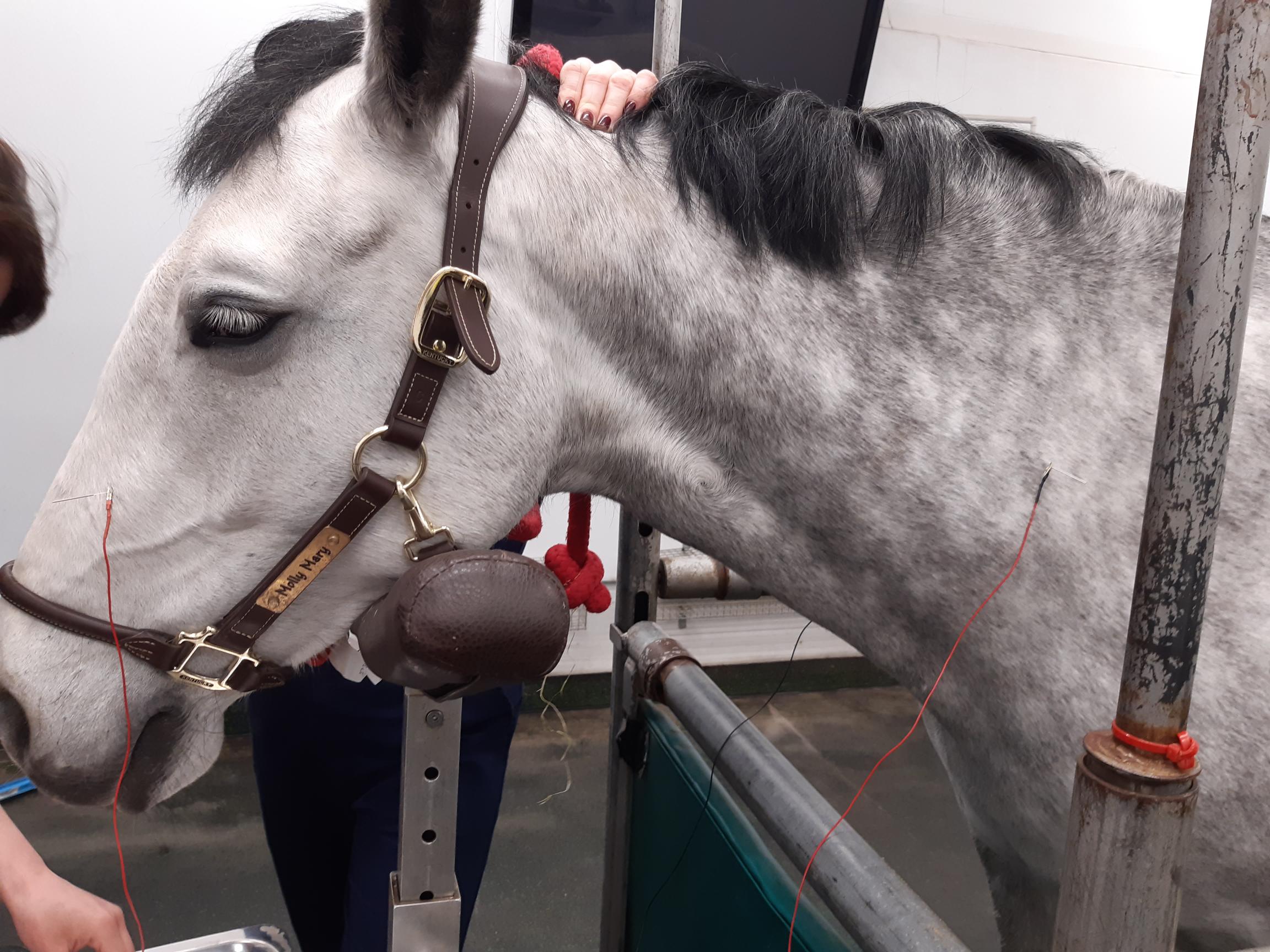
A new study conducted by the Royal Veterinary College (RVC) has shed light on the potential benefits of electroacupuncture for treating equine trigeminal nerve-mediated headshaking (TMHS). This painful and often debilitating condition causes affected horses to experience uncontrollable head shaking and flicking, severely impacting their quality of life and safety when ridden. In extreme cases, TMHS may even lead to euthanasia.
Study Overview and Methodology
The research team, led by Bettina Dunkel, Head of Equine and Professor in Equine Internal Medicine, Emergency and Critical Care at the RVC, in collaboration with four external experts, retrospectively analysed the outcomes of electroacupuncture treatment in 42 horses suffering from TMHS. Clinical records spanning from 2015 to 2024 were reviewed, capturing detailed patient profiles, history, duration and severity of headshaking, alongside diagnostic tests performed and the number of electroacupuncture treatments administered. Owners and primary veterinarians provided follow-up information, allowing the researchers to compare headshaking severity using a scale from 0 to 3 before and after treatment.
Key Findings
The findings showed that electroacupuncture was very well tolerated by all horses involved in the study. The median headshaking grade dropped from a three before treatment to a one after treatment. Overall, 64% of cases showed improvement, with 33% of the horses experiencing complete resolution of symptoms. However, not all horses benefited from the treatment. 31% showed no improvement, and 4.8% (two horses) experienced worsening of clinical signs following treatment.
The researchers highlighted the low complication rate associated with electroacupuncture and its ease of administration in a stable or yard setting. This treatment approach appears to offer similar benefits to percutaneous electrical nerve stimulation (PENS), another neuromodulation technique previously used for TMHS.
Bettina Dunkel commented on the study’s promising results:
“Electroacupuncture is a viable treatment option for horses suffering from this devastating disease. We are very pleased with the results of the study and hope that it will encourage veterinarians and horse owners to pursue this treatment option.”
Implications and Future Directions
The study not only underscores the potential of electroacupuncture as a safe and effective treatment for TMHS but also opens up avenues for further refinement of the technique. Researchers suggest that adjusting treatment duration and electrical frequencies might improve success rates and extend remission periods. They also stress the importance of ruling out other causes of headshaking before starting treatment.
The electroacupuncture machine used in the study was generously sponsored by the RVC’s Animal Care Trust, reinforcing the commitment to advancing equine health care through innovative research.
About the Royal Veterinary College
The Royal Veterinary College is the UK’s largest and longest-established independent veterinary school. A member institution of the University of London, the RVC holds accreditations from multiple international bodies, including the RCVS, AVBC, VCI, SAVC, EAEVE and AVMA. Ranked as the top veterinary school in the world by the QS World University Rankings by subject in 2025, the RVC is renowned for its research excellence, with 88% of its research rated as internationally excellent or world-class in the Research Excellence Framework 2021. The institution offers comprehensive undergraduate and postgraduate programmes and provides expert veterinary care through its teaching hospitals and first opinion practices.
References
- Devereux S. Electroacupuncture as an additional treatment for headshaking in six horses. Equine Vet Educ 2017;31:137-146.
- Roberts VLH, Bailey M, Equipens g, et al. The safety and efficacy of neuromodulation using percutaneous electrical nerve stimulation for the management of trigeminal-mediated headshaking in 168 horses. Equine Vet J 2020;52:238-243.
For more detailed information, please refer to the paper:
Dunkel, B., Hildon, G.L., Coumbe, K. M., Busuttil, E., von Schweinitz, D. & Devereux, S. (2025) Electroacupuncture as a treatment for suspected trigeminal nerve-mediated head-shaking in 42 horses. Equine Veterinary Education, 00, 1–7. Available from: https://doi.org/10.1111/eve.14135
