


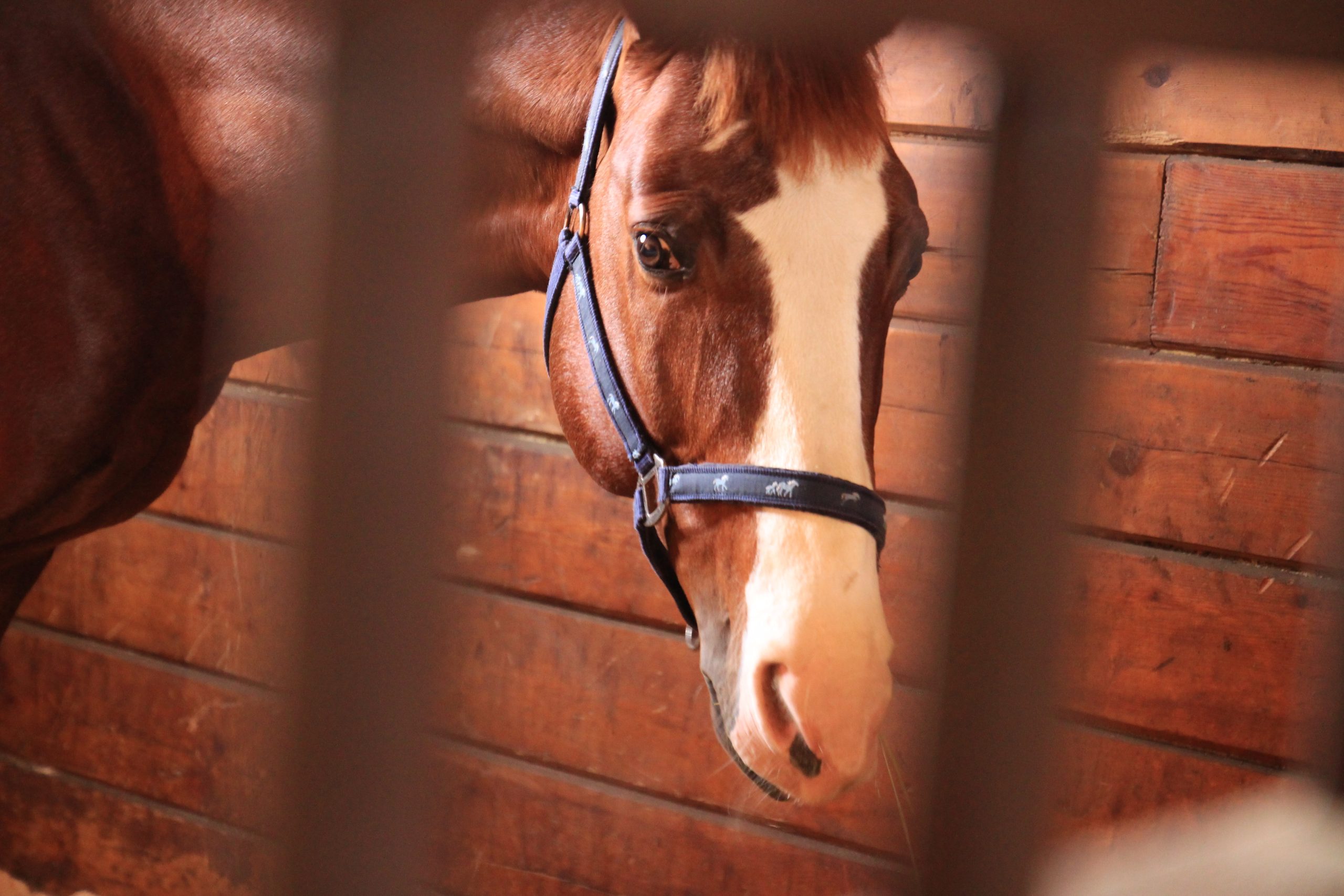
University College Dublin researchers wish to recruit horse owners to investigate a possible new treatment for Equine Headshaking Syndrome.
Researchers at University College Dublin (UCD) in Ireland have announced a collaboration with veterinary researchers in the United Kingdom (UK) for a new study on a potential treatment for headshaking syndrome in horses, according to a press release.
The team aims to recruit owners of headshaking horses or ponies across Ireland and the UK, for a 12-month study involving blue light therapy. Interested participants can complete an online survey to determine suitability of their horse for the study. See the link below.
The research team is led by Associate Professor Barbara Anne Murphy, Head of Equine Science within the School of Agriculture and Food Science at UCD, in close collaboration with Drs. Veronica Roberts (University of Bristol), Kirstie Pickles (equine internal medicine consultant and researcher), Clodagh Kearney (UCD School of Veterinary Medicine) and David Marlin (AnimalWeb Ltd).
Complete the recruitment survey
There are many causes of headshaking, one of which is trigeminal-mediated headshaking. This is a painful condition of the trigeminal nerve in the face, causing horses to shake their heads and show signs of nasal irritation. Signs can be mild up to severe and can make the horse unrideable and significantly affect their quality of life.
This condition affects around 1% of the equine population, may be more prevalent in geldings and some horses may be only seasonally affected. There is no one, effective and safe treatment.
If you own or manage a horse or pony with headshaking symptoms, and you are interested in being involved in this important research, please complete the recruitment survey here: https://www.surveymonkey.com/r/Headshaking_recruit
About the study
Selected study participants will work closely with the research team to record footage of their horses’ headshaking behaviour during exercise at different times of the year, and participation will involve completion of bi-monthly questionnaires.
The study will involve participants fitting a light mask on their horse to extend daily exposure to blue light at specific times of the year. Participation in this study will improve researchers’ and veterinarians’ understanding of headshaking in horses and will allow them to evaluate the impact of blue light on managing headshaking symptoms.
Prof. Murphy explains: “This study brings together knowledge and expertise from leading researchers of headshaking in horses. We are hoping for a big response to this recruitment survey from horse owners in Ireland and the UK. This would allow us to select the most suitable participants for this study and answer the important questions that will hopefully help us improve management of a condition that significantly impacts horse welfare”.
Dr. Roberts adds: “I am very excited to be a part of an international collaboration into much-needed research into headshaking in horses”.
Dr. Pickles comments: “It is exciting to be part of this study investigating the use of a light mask for management of headshaking. Current management options are limited, offer only symptomatic treatment rather than treating the inciting cause, and often have restrictions for competing horses. We look forward to working with owners of headshaking horses to explore new avenues of therapy”.
Dr. Kearney states: “Headshaking is one of the most frustrating conditions equine vets encounter, and it is even more so for the owners of horses suffering from this condition. It is disheartening to not be able to help these horses more and offer truly effective treatment options. This research, beginning with this survey, is therefore an important opportunity to investigate a new non-invasive treatment, which could provide new hope for the management of this condition in certain cases”.
Sign up here
If you own or manage a horse or pony with headshaking symptoms, and you would like to participate in this important research, please complete the recruitment survey here: https://www.surveymonkey.com/r/Headshaking_recruit
Blue light therapy
Read more about the potential for blue light therapy to treat headshaking in our separate article here.
