


There has been a lot of talk about this being a “mast” year for acorns. This can be a concern for horse owners, but it can depend on circumstances. Mast years occur every 3-10 years. Mast years for acorns in the UK primarily involve pedunculate (English) and sessile (Durmast) oaks, which are wind-pollinated and synchronise production across large areas. In the UK, since the new millennium, 2003, 2006, 2013, 2017, 2020, 2022 and 2025 have been mast years.
Why Do Mast Years Occur in the UK?
The mechanisms are the same as globally: an evolutionary strategy for predator satiation and resource optimisation, adapted to UK conditions. Oaks produce few acorns for 2–4 years (starving out seed predators like squirrels, jays, mice, and deer), then boom synchronously to overwhelm them, ensuring ~1–5% of seeds survive to germinate (vs. near-zero in lean years). A single mature oak can yield 5,000–10,000 acorns in a mast, but production costs stunt growth by 20–30% that year.
Key triggers in the UK
Weather cues: Warm, dry springs (e.g., >15°C in April–May) enhance wind pollination and flower survival; Prior-year rainfall/drought influences bud set—e.g., wet 2024 winters built reserves post-2022 mast.
Resource buildup: Trees recover 1–3 years after masting, accumulating carbohydrates; lean years reset the cycle.
Synchronisation: Likely via weather (regional climate signals) rather than direct communication between trees, though pollen clouds and mycorrhizal networks may play minor roles.
Species/Regional factors: Pedunculate oaks mast more frequently than sessile; southern England often leads due to milder weather. Climate change may shorten cycles or increase variability.
Regional Variations in Mast Events
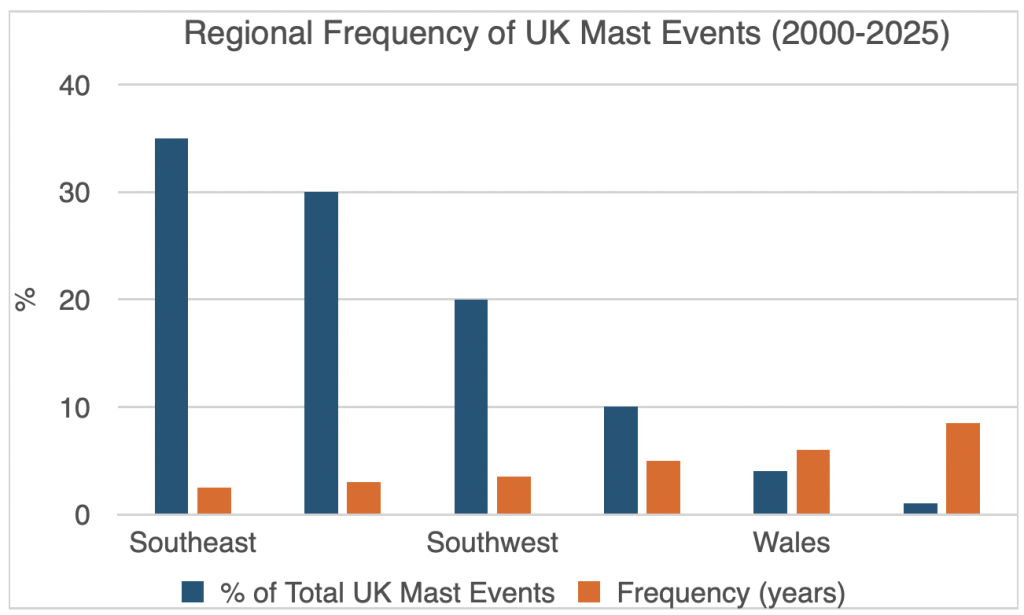
Mast years for acorns are most frequent and intense in southern and central England, particularly in the Midlands, Southeast, and Southwest. These regions host the highest density of native oaks (pedunculate and sessile) and experience the optimal weather for synchronisation. Northern England, Scotland, and Wales have mast events, but they are less frequent, less synchronised, and often milder due to cooler, wetter climates. The Southeast has the highest number of mast events based on data from the Woodland Trust for the past 25 years, and also has the shortest time between mast years; on average, one event every 2½ years, whereas Scotland is the least likely and least frequent.
Acorn Toxicity in Horses
Acorns and other parts of oak trees (Quercus species), such as young leaves, buds, and twigs, contain tannins (specifically gallotannins), which are polyphenolic compounds toxic to horses when ingested in large quantities. Horses typically avoid them due to their bitter taste, but toxicity can occur during mast years (bumper acorn crops in autumn, like this autumn in the UK) or when forage is scarce. All oak species pose a risk, but red oaks are often more toxic than white oaks. Toxicity is rare but can be fatal if untreated, primarily affecting the gastrointestinal tract, kidneys, and sometimes the liver.
Symptoms of Acorn Toxicity
Signs usually appear 3–7 days after consistent ingestion and can mimic colic or salmonellosis. Early detection is key.
Early Stage (Days 1–3), Depression, loss of appetite (inappetence), mild colic (abdominal pain), constipation. Horses may appear lethargic; mouth ulcers are a possible complication.
Progressive Stage (Days 4–7), Severe watery or bloody diarrhoea, increased heart rate (>100 bpm), dark urine (haemoglobinuria), dehydration, oedema in legs, diarrhoea often explosive and haemorrhagic; blood in faeces/urine.
Advanced/Severe Stage, Weakness, incoordination, kidney failure (azotaemia), liver damage, shock, recumbency. It can lead to death in 85% of severe cases without intervention; secondary issues like laminitis may follow.
How to Reduce the Risk
Inspect and Manage Pastures Proactively
- Daily Checks: Walk your fields regularly, especially under oak trees, to spot and remove fallen acorns, leaves, or branches. Rake or vacuum them up promptly; acorns can accumulate quickly after wind or rain.
- Avoid High-Risk Areas: Temporarily exclude horses from pastures with heavy acorn drops until cleared. Rotate grazing to fields without oaks or extend turnout in low-risk areas (e.g., away from boundaries with oaks).
- Tree Maintenance: Trim overhanging branches from fence lines to prevent acorns and debris from falling into pastures. For young oaks, fence them off entirely to protect both the trees and horses.
Ensure Adequate Nutrition and Enrichment
- Provide Plenty of Forage: Horses eat acorns mainly when bored or when forage is scarce. Offer unlimited access to high-quality hay, grass or silage to satisfy hunger and reduce curiosity. A fibre-rich diet also dilutes any accidental ingestion.
- Enrich the Environment: Keep pastures engaging with toys, companions, or varied turnout to prevent boredom-driven foraging. Regular exercise helps too.
Monitor Your Horse Closely
- Watch for Habits: Some horses develop a “taste” for acorns despite the bitterness—note if yours seeks them out and restrict access immediately.
- Seasonal Awareness: Risks peak in autumn (September–November) for acorns and spring for buds/leaves. In mast years like 2025, with abundant acorns, double down on prevention.
- Know the Signs: Early detection saves lives. Look for reduced appetite, dark urine, swelling, colic, bloody diarrhoea, or lethargy. If suspected, CALL YOUR VET ASAP, don’t wait for severe symptoms.
Additional Tips
- Fencing Solutions: Use electric tape to cordon off oak-heavy zones—inexpensive and effective.
- Species Variation: All oaks (e.g., English, red) pose risks, but toxicity levels vary; err on the side of caution with any.
- Natural Allies: If feasible, let pigs graze acorn areas first. They aren’t affected by acorns.
