



Written by Carmen Cummiskey, a Sports Engineer and Entrepreneur who founded equestrian body protector company FOMO in 2016. An industry expert in equestrian body protection, having created and designed products in adherence to the latest European and British safety standards.
Watch Carmen’s webinar – Body Protector Technology – What you need to know
Important Update on Body Protectors
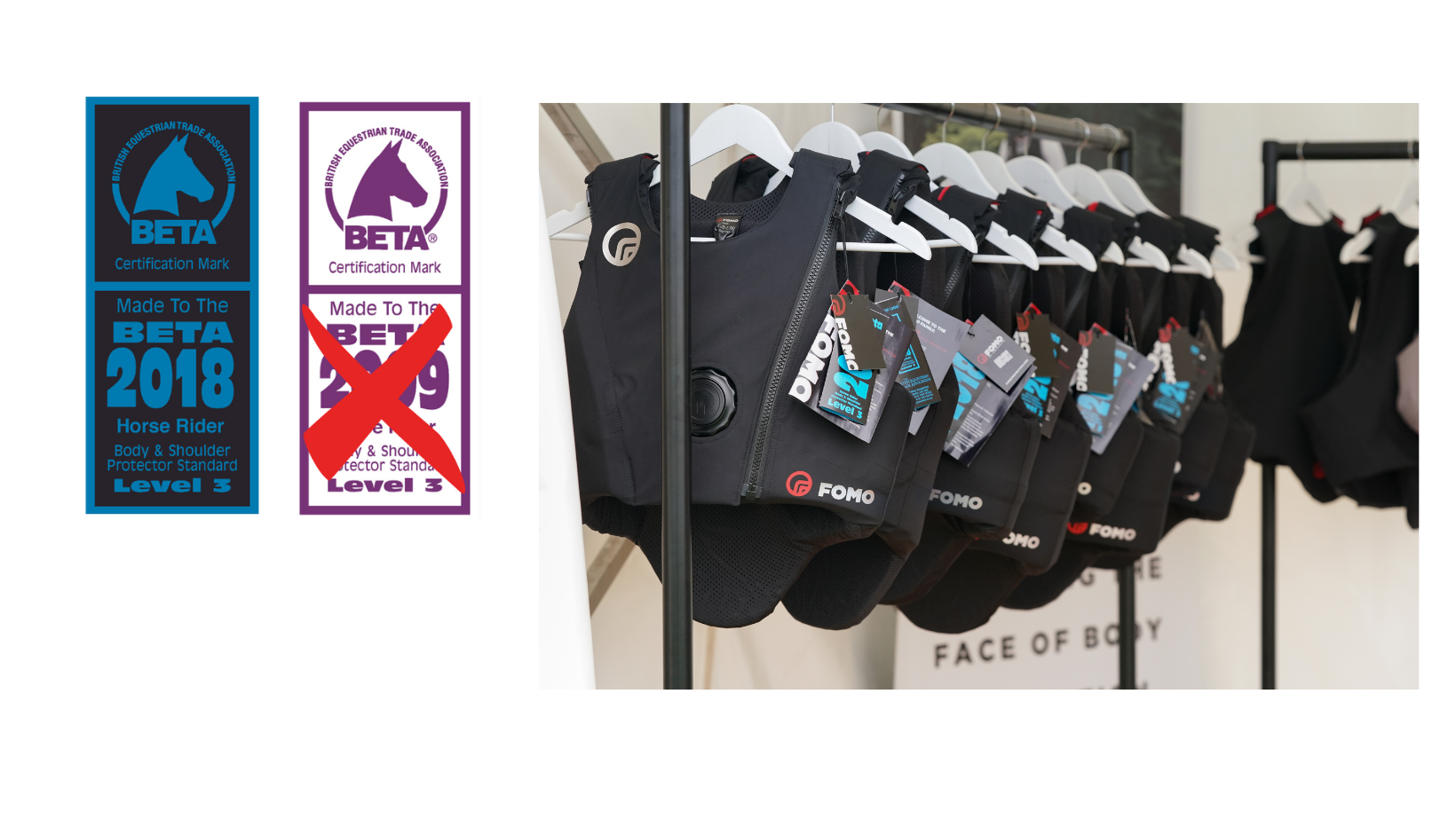
Effective from January 1st of this year, there are significant changes to the rules for body protectors. All body protectors sporting BETA 2009 tags will no longer be allowed in British Eventing, Pony Club, and British Riding Club events.
How to Check?
Inspect the BETA tag for the printed year. Those with 2009 tags (purple for level three, gold for level two, and black for level one) are now non-compliant.
What’s Still Legal?
Good news! Body protectors with 2018 tags are deemed acceptable for competitions in British Eventing, British Riding Club, and Pony Club from January 1st. Tags are colour-coded: blue (level three), orange (level two), and green (level one).
Understanding Levels:
- Level 1: Minimal protection for licensed jockeys.
- Level 2: Suitable for general riding in low-risk situations and licensed jockeys when specified.
- Level 3: Recommended for working with horses, competing in events like jumping and eventing, designed to prevent minor injuries.
What’s New?
The 2018-based designs bring crucial improvements in tailoring and comfort, optimising the rider’s experience. These changes aim to enhance overall performance while ensuring maximum safety.
Tips for Checking the Fit of Your Body Protector:
Different body protectors will fit you differently depending on the style and manufacturer. Achieving the best fit for you is most important. You may have to experiment with different brands or styles to find the most suitable body protector for you to use. If you cannot achieve an appropriate fit, consider ordering a custom body protector made to your measurements. Be sure to consult a knowledgeable retailer or respective brand if you are unsure of the fit.
- Before putting on the body protector, loosen all closures and flex the body protector. With it on, fasten the chest and waist closures to achieve a snug fit. Make sure you have room left within the fasteners for further tightening or loosening. If your body protector is at the end of the range of its ability to be tightened or loosened, consider trying another size or type of vest.
- With the body protector fit securely around your chest and waist, check the front length. The body protector should reach to your breastbone and cover your bottom rib by around 2cm. The shoulders and neckline of the body protector should lie flat against your body; if this fit cannot be achieved —if the vest pulls away from your body— then you may need to try a shorter length. Some styles allow you to adjust the length of the protector through tabs at the shoulders.
- Check the back length by sitting in a saddle and simulating all your riding positions. You should have approximately 12cm between the saddle and the base of the body protector in the back. If seated on a chair or stool this roughly equates to a full handswidth of space from the seat. If the body protector comes in contact with the saddle, it could push upwards near your neck or interfere with your riding. It should also not bang against your hip bones.
Foam Impact Performance:
It’s important to note that the foam in body protectors can experience degradation over time. The impact-absorbing capabilities may diminish, compromising the level of protection. As we prioritise your safety, we recommend replacing your body protector every three to five years, or more frequently if you ride regularly. This ensures the foam remains in peak condition for effective impact performance.
Can I Use My Old Protector?
While there’s no ban on using older protectors for activities like hacking, schooling, and training at home, accidents can happen anywhere. Consider the highest quality safety gear and be aware that foam can degrade over time. Replace older protectors to ensure optimal protection.
