


Background
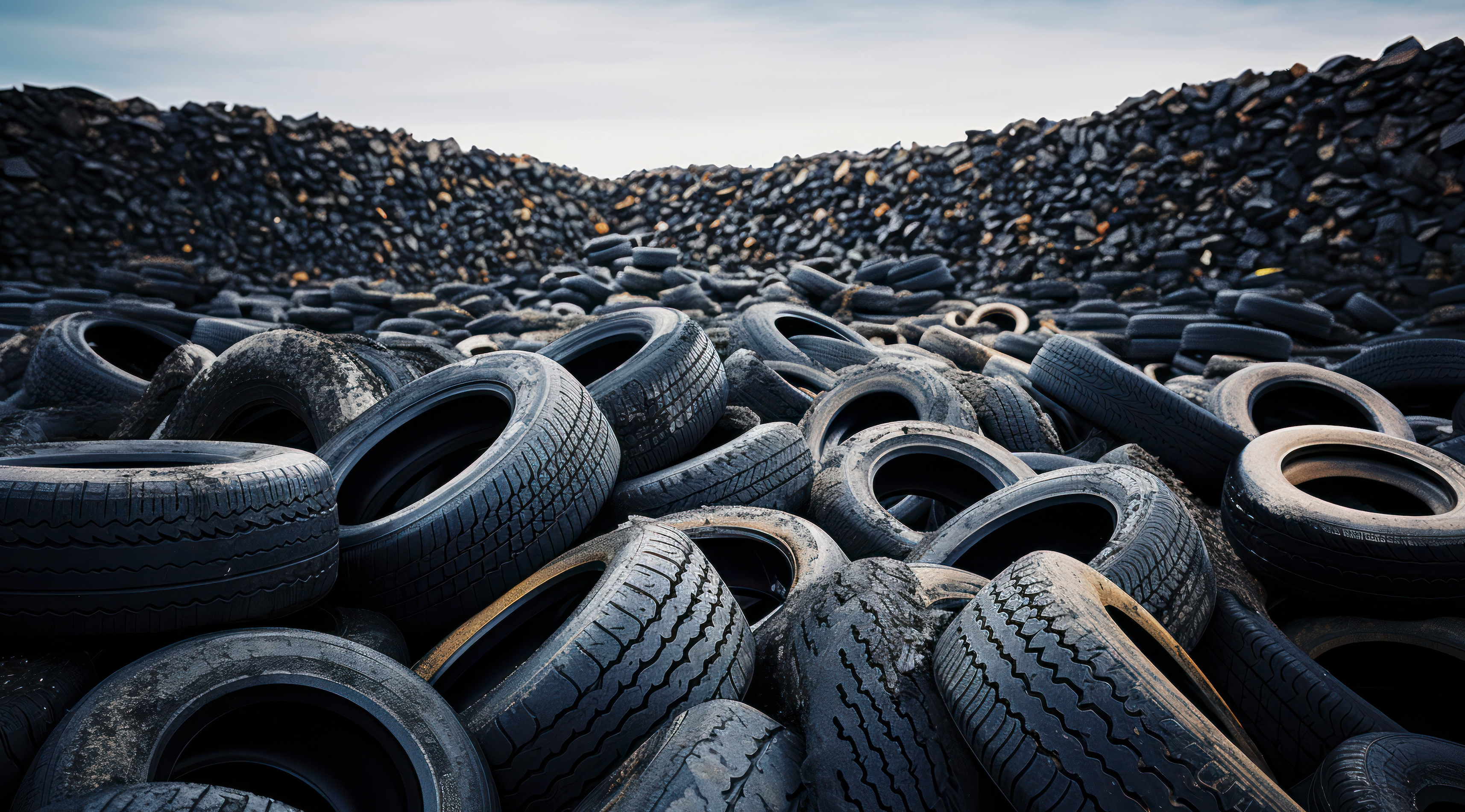
Around 10-15 years ago stories started to emerge around concerns of the toxicity of car tyres, particularly when old tyres are processed into chippings, “crumb” and finer granules. These products have become increasingly used in synthetic playing surfaces (3G, 4G, 5G etc), playground surfaces, safety surfaces and walkways. This is of course in addition to concerns over inhalation of tyre dust, particularly in urban environments, as a result of friction between tyres and the road; the reason we have to replace our tyres every 20,000-30,000 miles, depending on the roads you drive on and how you drive. In fact, Imperial College London in February 2023, pressed for urgent research into toxic emissions produced by car tyres when in use on cars, buses, lorries, etc. Link here.
How could recycled tyres be harmful?
Recycled rubber tyre material can potentially be harmful in two ways. The first is simply due to inhalation of very fine particles, particles to fine to normally even be seen, deep into the lung. These can cause inflammation simply from their physical presence. However, in addition, recycled tyre material also contains fillers, stabilizers, cross-linking agents and secondary components such as pigments, oils, resins), a range of other organic compounds and heavy metal additives. A 2022 study tested crumb rubber as applied to synthetic sports pitches and found out of 91 samples from 17 countries on four different continents, found that most contained eight compounds classified as carcinogenic by the European Chemicals Agency, and anthracene, pyrene and benzo[ghi]perylene (B[ghi]P), catalogued as substances of “very high concern”. (Armada et al. 2022). Other researchers have also confirmed the presence of potentially harmful or known harmful chemicals in crumb rubber (Gomes et al. 2021).
Research on the potential effects of recycled tyre products on people
Prior to 2011, there were few studies on the potential harmful effects of recycled rubber. However, between 2011 and to date (March 2024) there have been at least 49 published papers on the topic of “crumb rubber” and “health” and 33 papers on “crumb rubber” and toxicity and 8 on “crumb rubber” and cancer.
So what is the real risk to human health? A US study from 2018 estimated that “non-cancer hazards and cancer risks for all the evaluated scenarios were within US EPA guidelines. In addition, cancer risk levels for users of synthetic turf field were comparable to or lower than those associated with natural soil fields.” And the authors concluded that “This Human Health Risk Assessment results add to the growing body of literature that suggests recycled rubber infill in synthetic turf poses negligible risks to human health.” (Peterson et al. 2018). Another study investigated whether malignant lymphoma in a sample of 7214, 14-30-year-old patients could be linked to synthetic turf exposure. They concluded that “Our findings in the state with the greatest number of such fields and a large, diverse patient population are consistent with those of a prior study observing no association between individual-level exposures to turf fields and cancer incidence. Avoidance of synthetic turf fields for fear of increased cancer risk is not warranted.” (Bleyer et al.2018).
However, a more recent review article entitled “Where the Rubber Meets the Road: Emerging Environmental Impacts of Tire Wear Particles and Their Chemical Cocktails” with over 30 different authors published only two weeks ago (7th March 2024) raises serious concerns. The aim of this paper is to try and pull all the various evidence from published scientific papers in the past 15 or so years (Mayer et al. 2024). They concluded that based on all currently available evidence, “Tyre wear pollutants represent an environmental and human health risk” and that “Comprehensive clean-up solutions are needed to reduce the risk of tyre wear pollutants.”
What are the possible potential risks to riders and horses?
Non-Riding activities
Many, perhaps the majority, of arena surfaces now contain recycled rubber products. When not riding or lunging on a surface containing recycled rubber the risks would appear to be almost entirely to people as opposed to horses. The risk of adverse health effects could come from either direct physical skin contact with surfaces containing recycled rubber material or from inhalation of dust created from the surface. Based on the available evidence the risk from direct contact is likely to be relatively low due to low contact hours. However, if weeding or carrying out maintenance on arenas with recycled rubber, it may be a good precaution to use gloves and wear a particle filter mask with a rating of FFP2 (European EN 149 standard) or a rating of N95 (American NIOSH standard). These masks will filter at least 95% of PM 2.5 particles and significantly reduce the amount inhaled. It may also be prudent to consider wearing such a mask if carrying out harrowing/dragging on surfaces. The amount of airborne particles generated by maintenance activities will be higher in indoor spaces.
Riding activities
When being ridden or being lunged, a horse’s feet contact with the surface will result in dust being “kicked up” into the air. The smaller particles may take many hours to settle and if an arena is in constant use the particle count may increase over time. This is obviously a greater risk for indoor arenas with low levels of ventilation. The horses’ feet will contribute to the further breakdown of rubber in the surface, particularly if horses are shod. Any particles made airborne are then available to be inhaled by both horses and riders. The fact the harder the horse works, the higher the volume and speed of air movement into the lungs means there is significant potential to inhale large amounts of particles. However, the rider will also be exposed to rubber particulates.
Summary
There is no research in this area at this time in equestrian sport so the risk is unknown but based on research in human sport and the recent review by Mayer et al. (2024) this may be an area that we should have on our radar and be considering. It is likely that poorly ventilated indoor arenas would pose the greatest risk for high respirable rubber particle numbers. It might also be expected that watering the surface may reduce airborne particles, but this has also not been researched to the best of my knowledge. In summary, there is absolutely no doubt that the compounds present in recycled rubber products used in many applications, including riding surfaces, contain a variety of known carcinogens, heavy metals and other toxic compounds. This is proven. What is not known at this time is the relative risk to horse or rider health from working with or on these surfaces. In 2019 I saw this comment on a popular horse online forum: “Rubber is generally inert….” I think we can safely say things have moved on a bit, but this may still be the view of most equestrians.
References
- Armada, D., Llompart, M., Celeiro, M. et al. (2022) Global evaluation of the chemical hazard of recycled tire crumb rubber employed on worldwide synthetic turf football pitches, Science of The Total Environment, 812, 152542, https://doi.org/10.1016/j.scitotenv.2021.152542
- Bleyer, A., and Keegan, T. (2018) Incidence of malignant lymphoma in adolescents and young adults in the 58 counties of California with varying synthetic turf field density, Cancer Epidemiology, Volume 53, Pages 129-136 https://doi.org/10.1016/j.canep.2018.01.010.
- Gomes FO, Rocha MR, Alves A and Ratola N. (2021) A review of potentially harmful chemicals in crumb rubber used in synthetic football pitches. J Hazard Mater. 409, 124998. https://doi.org/10.1016/j.jhazmat.2020.124998
- Mayer, P.M. Moran, K.D. and Miller E.L. et al., (2024) Where the rubber meets the road: Emerging environmental impacts of Tire Wear particles and their chemical cocktails, Science of the Total Environment https://doi.org/10.1016/j.scitotenv.2024.171153
- Peterson MK, Lemay JC, Pacheco Shubin S, Prueitt RL. (2017) Comprehensive multipathway risk assessment of chemicals associated with recycled (“crumb”) rubber in synthetic turf fields. Environ Res. 2018;160:256-268. https://doi.org/10.1016/j.envres.2017.09.019
