


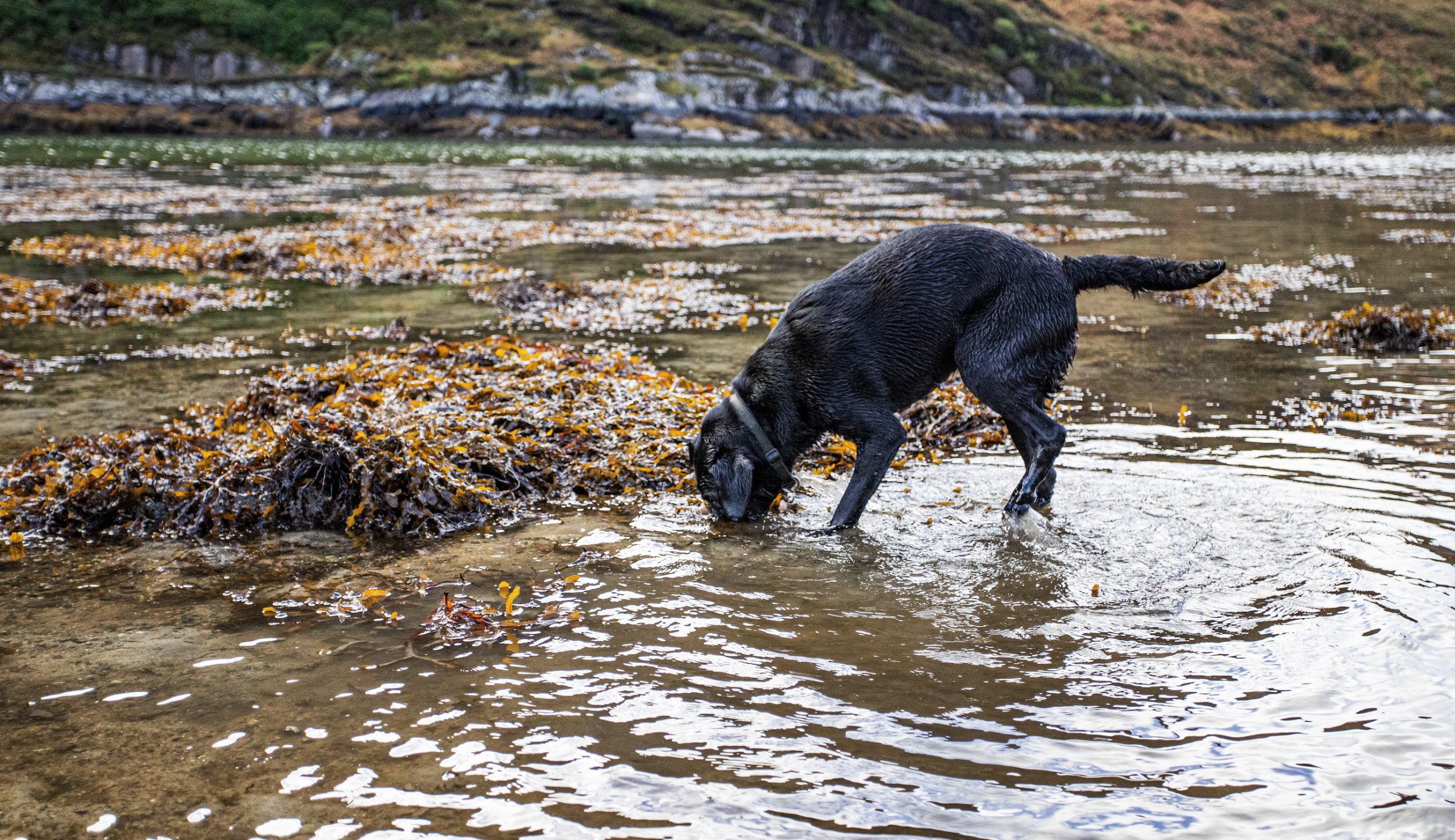
A search and rescue responder has trained her Labrador to detect an invasive marine species known as “sea vomit” in what is believed to be a world first.
Dr Texa Sim’s two-year-old Labrador, Uisge, has been trained to identify Didemnum vexillum, a fast-spreading sea squirt that has established itself in UK waters. The species, originally from Japan, is often transported on the hulls of ships and can rapidly form thick, carpet-like colonies across the seabed.
If left unchecked, it can smother marine habitats, displace native species and cause significant disruption to biodiversity. It also presents challenges for the fishing industry, particularly shellfish farms.
Bringing detection dogs into the marine environment
Detection dogs are widely used on land to locate invasive plants and animals, but marine applications are far less common. Drawing on her background in marine science and her experience in mountain search and rescue, Dr Sim saw an opportunity to apply scent detection skills beneath the shoreline.
The first UK record of Didemnum vexillum was in Wales in 2008, and it has since spread to parts of England and Scotland.
Early detection is critical
As ocean temperatures change, invasive species are increasingly able to establish themselves in new ecosystems. Rapid detection and reporting are essential to limit their spread.
Dr Sim has also trained her five-year-old dog, Sgiath, who continues to work with the Glencoe mountain rescue team in the Scottish Highlands. Alongside identifying invasive organisms, confirming their absence is an equally important part of the work.
She hopes her project will inspire other handlers to consider training dogs for marine invasive species detection, highlighting Labradors in particular for their adaptability, focus and drive.
Biosecurity remains central to the initiative, ensuring that the work to detect invasive organisms does not inadvertently contribute to their spread.
With innovation at the intersection of canine capability and marine science, this pioneering approach could offer a valuable new tool in protecting Britain’s waters.
