


Avoiding spring laminitis
Ninety per cent of laminitis is caused by the underlying metabolic conditions equine metabolic syndrome (EMS) and Cushing’s disease (pars pituitary intermedia dysfunction, PPID). If your pony/horse is at risk of these diseases, you must start thinking about laminitis as soon as spring grass growth occurs. All native breeds and many cob types have some degree of insulin resistance which predisposes them to EMS. PPID is common in older horses with 20% of horses over 16 years of age having a positive blood test for this disease.
- Testing older horses for PPID and susceptible (overweight and/or cresty neck) horses/ponies for EMS is sensible prior to spring so you are aware if your horse carries an increased risk of laminitis. Once a horse has had an episode of laminitis (for any reason), they are at increased risk of another episode compared to a horse that has never had laminitis, so prevention is key.
- Proactively manage bodyweight. Do not allow horses/ponies to start spring grazing overweight. Keep a monthly weight check of your horse/pony using a weigh tape.
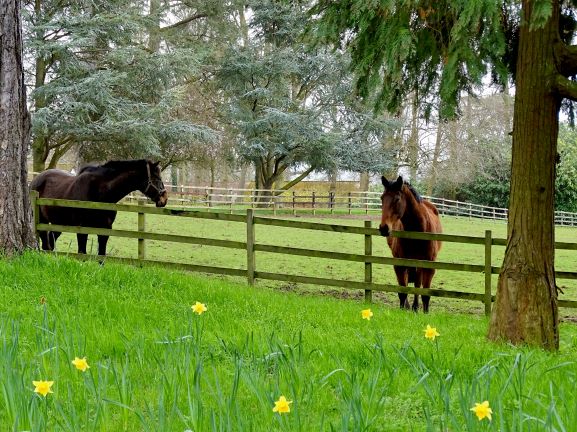
- Spring grazing is risky for horses with EMS/PPID and those with a prior history of laminitis as lush spring grass contains high levels of non-structural carbohydrates (NSC), sugars and soluble starches. Incredibly, horses are capable of eating 60% of their daily food allowance in just three hours if unrestricted and gorging like this will result in severe insulin spikes.
- Bare grazing with additional soaked hay, strip maze grazing or grazing muzzles can aid control of laminitis prone horses during spring grass growth. Grazing muzzles must be used carefully and should not be worn for more than twelve hours. Grass length must not be excessively short or long if using a muzzle as this will prevent the horse from being able to eat anything at all. For advice on how to use a grazing muzzle, follow this link to the National Equine Welfare Council.
- Ensure the rest of the diet is low in soluble sugars and starch. Check the starch and sugar content on the feed bag label. For laminitic prone horses, feeds with less than 5% starch and sugar are recommended.
To see Kirstie’s previous Laminitis article, click here
