


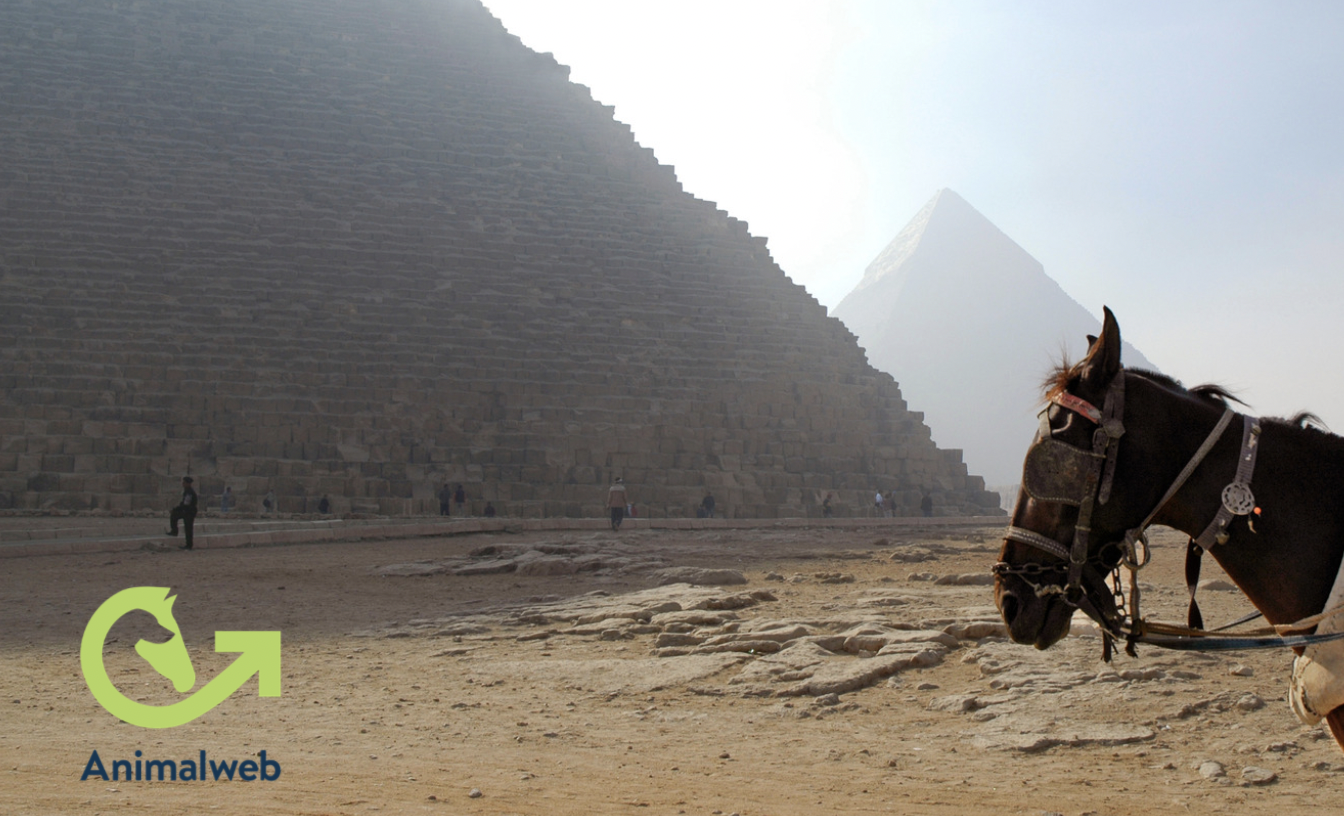
The Longines Global Champions Tour’s debut beside the Pyramids of Giza brought international attention to the welfare of local working animals. With a five-year welfare initiative now announced, could that attention help deliver lasting improvements beyond the competition?
From 22–24 October 2026, leading showjumping horses and riders competed against the backdrop of the Pyramids of Giza at the first Longines Global Champions Tour (LGCT) event in Cairo.
But the area’s relationship with horses extends far beyond international sport. Working animals are part of the surrounding tourist economy, and charities supporting them have documented serious welfare concerns.
The event raised a wider question: what lasting benefits could an international equestrian competition bring to local working animals and the communities that depend on them?
Following the competition, LGCT and its partners announced a five-year initiative intended to improve conditions for working horses and other animals in the Giza region.
The welfare concerns behind the setting
Egypt Equine Aid (EEA), which supports working animals in disadvantaged communities across Egypt, reports treating animals with severe wounds, untreated lameness, advanced disease, malnutrition and exhaustion.
The charity links many of the challenges facing working animals to poverty, limited access to veterinary care, and shortages of training and resources.
These accounts highlight the suffering experienced by animals receiving the charity’s care. They do not establish how widespread these problems are across the entire local working-animal population, but they underline the importance of accessible support.
For families who rely on working animals for their livelihoods, lasting improvements need to consider the needs of both animals and their owners. Access to veterinary treatment, practical education and support with appropriate working conditions can all play a part.
Egypt Equine Aid’s appeal to Longines
The welfare questions surrounding the Cairo event were raised months before the competition took place.
In its February article, The Longines Global Champions Tour at Giza: A Moment of Global Attention, EEA explained that it had written to the CEO of Longines on 29 January 2026. The charity asked the company to consider supporting awareness of the challenges facing working equines in Egypt.
EEA presented its approach as collaborative and constructive, highlighting the potential for international attention to generate support for veterinary services, owner education, farrier training and humane working practices.
Its appeal raised a question for the wider equestrian community: can the influence surrounding elite horse sport help improve the lives of animals working outside it?
What action was taken?
Ahead of the event, Brooke Hospital for Animals in Egypt confirmed its participation in a project to identify and register horses around the Giza Pyramids using electronic microchips.
Working alongside veterinary authorities and other local organisations, the project aimed to establish a database to support disease monitoring and biosecurity. The proposed individual records would contain health information, including vaccinations, examinations and treatments.
In August, Egypt Today reported that the General Authority for Veterinary Services had launched the registration programme as part of preparations for the competition. The report described planned laboratory surveillance, sampling and controls on the movement of unregistered horses.
Identification and health records can provide a foundation for veterinary oversight. Their longer-term value for welfare will also depend on what follows, including access to treatment, support for owners and attention to animals’ daily working conditions.
A five-year welfare initiative
On 26 October, two days after the competition ended, the Egyptian Equestrian Federation, LGCT and their partners announced a five-year initiative aimed at improving the welfare of working horses and other animals in the Pyramids area and wider Giza region.
The programme brings together the Egyptian Equestrian Federation, LGCT, the General Organization for Veterinary Services, the Egyptian government, Orascom Pyramids and the international equine welfare charity Brooke. According to the announcement, independent oversight will support its implementation.
Building on existing measures, including registration, microchipping, vaccinations and veterinary examinations, the initiative is intended to support sustained improvements in animal health, care and working conditions.
The programme will initially focus on approximately 700 horses, with a second phase intended to extend support to approximately 2,000.
How were the competition horses protected from disease?
The arrival of international competition horses in Egypt also raised questions about disease risk and the measures in place to safeguard their health.
When horses travel internationally and gather at competitions, biosecurity is important to reduce the risk of infectious diseases spreading. Specific animal-health arrangements were established for horses attending the Cairo event.
An Equine Disease-Free Zone was designated at the Panorama 2 Viewing Area on the Giza Plateau. Known as EG-3, the zone covered approximately nine hectares and included specified transport routes to Cairo International Airport and Sphinx International Airport.
The purpose of a disease-free zone is to create a defined area where animal-health safeguards can be applied and movements controlled. For the Cairo event, Egyptian authorities provided guarantees about the establishment of the zone. The European Commission assessed these as sufficient to allow eligible registered horses to return to the EU after competing, subject to the relevant certification requirements.
Competition horses were also subject to FEI horse-health requirements. These included health self-certification and twice-daily temperature readings recorded in the FEI HorseApp for the three days before arrival and throughout the event. Monitoring temperature can help identify a possible early sign of illness and alert those responsible for a horse to seek veterinary advice.
These FEI requirements apply more broadly to international competitions and were not unique to Cairo. Together with the designated zone, they formed part of the documented arrangements intended to protect horse health.
The health of competition horses was one part of the wider discussion. The everyday health and welfare of the working animals living around the Pyramids remains a separate, ongoing issue.
Tourism and responsibility
The Cairo event brought international attention to the Pyramids of Giza and the surrounding area, raising wider questions about the relationship between tourism and working-animal welfare.
Could major equestrian events encourage visitors to consider the welfare of animals involved in tourism? And could organisers and sponsors use their platforms to share responsible-tourism guidance and support the organisations already working with local communities?
After the final round
The event has ended, but its wider legacy is still to be determined. The recently announced five-year welfare initiative offers an opportunity to improve the lives of working animals in the Giza region beyond the competition.
How many animals will the programme reach? What veterinary care and practical support will owners be able to access? And how will progress be shared with the public?
These questions will become increasingly important as the initiative develops. Continued attention to the health, care and working conditions of local animals could help ensure that the international interest generated by the event leads to lasting benefits for both animals and the communities that depend on them.
References
British Equestrian (n.d.) Using the FEI HorseApp. Available at: https://www.britishequestrian.org.uk/competitors/fei-horseapp/using-the-fei-horseapp (Accessed: 27 October 2026).
Egypt Equine Aid (2026) The Longines Global Champions Tour at Giza: A moment of global attention. Available at: https://egyptequineaid.org/the-longines-global-champions-tour-at-giza-a-moment-of-global-attention/ (Accessed: 27 October 2026).
Egypt Today (2026) ‘Veterinary Services begins microchipping horses at the Pyramids’, 4 August. Available at: https://www.egypttoday.com/Article/1/148715/Veterinary-Services-Begins-Microchipping-Horses-at-the-Pyramids(Accessed: 27 October 2026).
European Commission (2026) Commission Implementing Regulation (EU) 2026/2188 of 1 October 2026. Available at: https://eur-lex.europa.eu/legal-content/EN/TXT/?uri=CELEX:32026R2188 (Accessed: 27 October 2026).
Longines Global Champions Tour (2026a) Cairo 2026: Location. Available at: https://www.gcglobalchampions.com/lgct/calendar/2026/cairo/2669/location (Accessed: 27 October 2026).
Longines Global Champions Tour (2026b) Five-year equine welfare initiative announced to improve conditions for working horses in Giza, Egypt. Available at: https://www.gcglobalchampions.com/news/1181084/five-year-equine-welfare-initiative-announced-to-improve-conditions-for-working-horses-in-giza-egypt (Accessed: 27 October 2026).
