


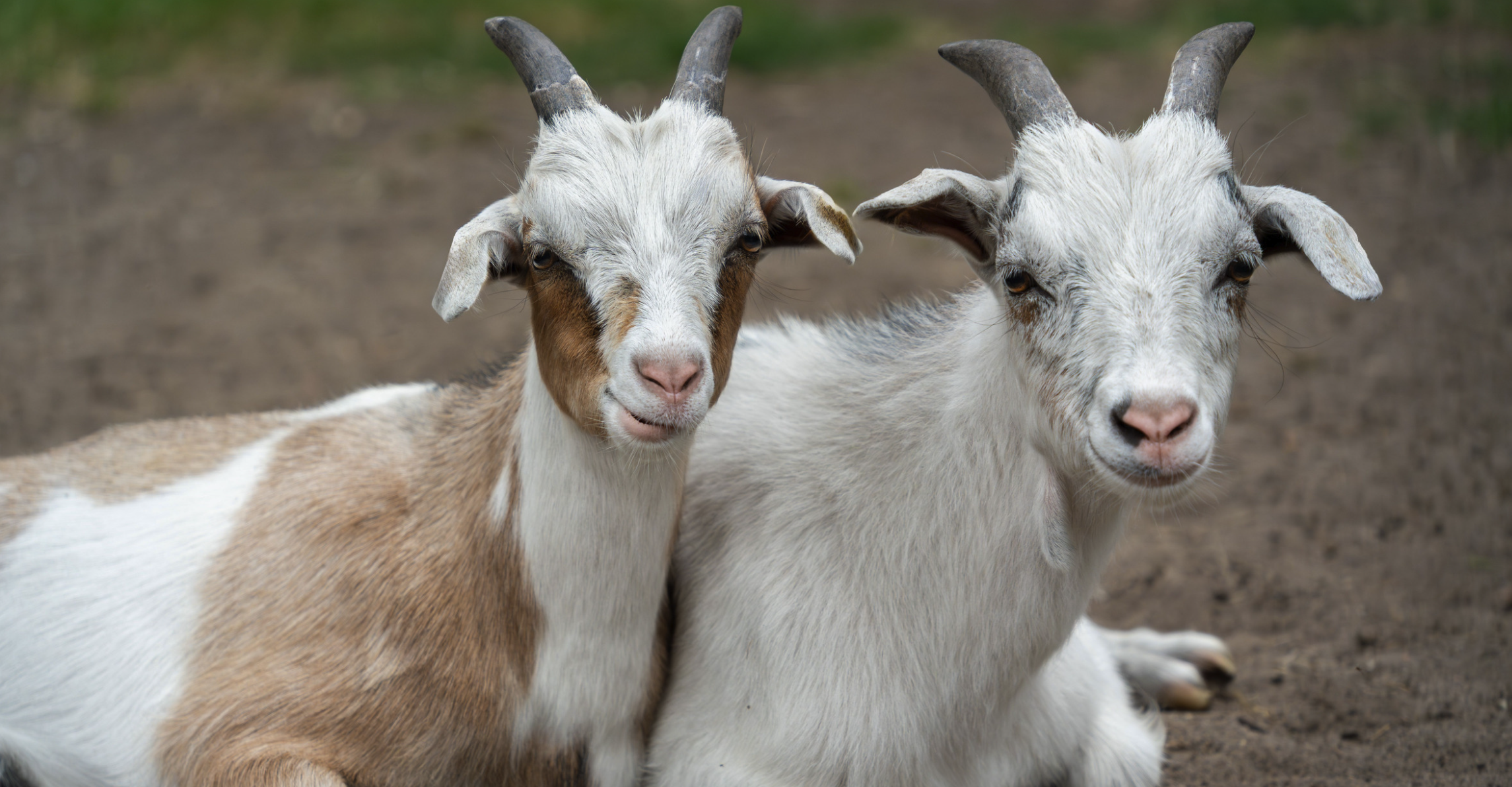
The presence of a human could help reduce stress-related behaviours in goats temporarily separated from their herd, with new research suggesting people may provide a similar level of behavioural support to another goat.
Researchers investigated whether familiar and unfamiliar people could help reduce behavioural responses associated with social isolation in goats, and whether the animals’ existing willingness to interact with humans influenced their response.
The study involved 16 goats that were already highly accustomed to positive human interaction. Each goat underwent four five-minute tests: complete isolation, isolation with an unfamiliar person, isolation with a familiar person and isolation with another goat.
When completely alone, the goats vocalised frequently, attempted to escape and showed increased locomotor activity. However, their overall behavioural reactivity was significantly lower when either a person or another goat was present. They also vocalised less under all three conditions compared with being completely alone.
Interestingly, researchers found no significant difference between the behavioural effect of having a familiar person, an unfamiliar person or another goat present.
Goats that were more comfortable with human contact also appeared to benefit more from human presence. Those that accepted touch for longer during tests conducted in their normal environment vocalised less when subsequently isolated with either a familiar or unfamiliar person.
The findings raise the possibility that humans could act as a form of ‘social buffer’ for goats during short periods of separation from their herd. This could have practical implications for situations where temporary isolation is unavoidable, including routine management, veterinary procedures or other husbandry situations.
However, the researchers stress that the results apply to goats that were highly socialised with people and may not translate to animals with less human contact. The study also measured behaviour rather than physiological indicators of stress, meaning it cannot confirm that the goats were actually experiencing lower physiological stress levels.
Another important limitation was that the goats experienced the four conditions in the same order, so some of the changes observed could potentially have resulted from becoming accustomed to repeated isolation rather than the presence of a companion.
The researchers conclude that both human and goat companionship reduced stress-related behaviours during short-term isolation in highly human-socialised goats, but say further research incorporating physiological measurements is needed to establish whether this represents a true social buffering effect.
