


Marlin D.J1*, MacKechnie-Guire R.2, Cross G.H. 3, and Murray R.4
1Animalweb Ltd.
Abstract
Many lay equestrian texts describe the use of curb bits in horses, but understanding of their mechanism of action is limited with respect to the complex interaction between the curb bit, the horse and the rider. Forces within the rein-bridle system may be generated by the rider and or by motion or movement of the horse. Understanding the interaction between the curb mouthpiece, the reins, the cheekpiece and the curb chain is an important step towards understanding the interaction with the horse. This study aimed to quantify the forces on the reins, the bridle cheekpieces to the horse’s occiput and the curb chain. A high-level dressage horse was ridden in walk, trot and canter, and in transitions between gaits. A double bridle was equipped with load cells in the left curb rein, left cheekpiece, and centre of the curb chain and synchronised with video (100Hz). In walk, trot and canter, curb rein and curb chain tensions were of similar magnitude, and of lower magnitude than curb cheekpiece tensions. Peaks in curb cheekpiece tension (>10N) frequently occurred in the absence of increases in rein tension, indicating that the horse can increase cheekpiece tension in the absence of rider-created rein tension. Using the principles of classical static mechanical equilibrium, intra-oral forces were estimated using the tension data for the curb chain, cheekpiece and rein when in canter. These findings show that it is possible for increased cheekpiece tensions to be created by horse interaction with the bit in the absence of rider rein forces.
Keywords
bit pressure, rein forces, estimates, rider, curb bit, equestrian
Highlights
- This study is the first to report tensions within the curb rein, curb chain and curb cheekpiece of a double bridle.
- Identification of the timings within the stride of the peak tensions; most peaks occurred in relation to gait but peaks also occurred due to the rider and or the horse.
- First estimation of intra-oral forces in a double bridle based on combination of data and mechanical theory.
- Demonstration that curb chain and curb cheekpiece tensions can increase independently of rider through rein tension, i.e. due solely to the actions of the horse.
Introduction
A variety of equipment or “tack” is used to manage interaction between horse and rider during ridden exercise. Bridles are commonly fitted to the horse’s head and typically incorporate one or two bits or mouthpieces; a metal, nylon or rubber mouthpiece inserted into the horse’s mouth, attached to the cheekpieces, which applies pressure via the reins to guide the horse via cues from the rider. While this type of equipment is accepted as standard, there has been limited investigation of horse and rider bit/bridle interaction. A simple snaffle bit is a basic, direct-action bit often used alone in a single bridle. A double bridle incorporates two bits (a snaffle and a curb) for more refined control. A curb bit is a leverage bit that can be used alone or as part of a double bridle. The curb bit has been used as part of ridden equipment through history and various advice is provided in texts about its interaction with the horse [1, 2]. However, little measurement of this interaction has been achieved to date, so various informal theories have been put forward, but these lack either experimental data and/or appropriate reference to the relevant physics and have not been peer-reviewed [3-5].
The equipment that riders are permitted to use in competition is regulated by rules and regulations, which are designed to safeguard horse welfare. In international Grand Prix dressage competitions, competitors are required to use a double bridle. The double bridle comprises a bridoon bit (or “bradoon” in older literature; essentially a smaller version of the snaffle bit), curb bit, curb chain, and four cheekpieces (two left and two right). Due to the additional parts, compared to the snaffle bridle (typically 1kg), the weight of the double bridle is increased by approximately 1kg (i.e. ~2kg in total weight), which increases the forces for the occipital region [6]. The bridoon mouthpiece is similar in design and function to the snaffle bit which consists of a jointed or straight mouthpiece attached to cheek rings to which the cheekpieces and reins are attached. The curb bit has an elongated cheek (or shank) attached to the mouthpiece (Figure 1). The shorter part of the cheek extends caudodorsally from the mouthpiece, attaching to the cheekpiece, and the longer part extends rostroventrally, providing attachment for the reins. For international competition, the length of the rostroventral part of the shank is limited to 10cm and the length of the caudodorsal part should not exceed 5cm [7].
The curb chain passes below (ventral) to the ventral border of the mandible, rostral to the noseband and is fitted to stabilise the curb mouthpiece, limiting excessive caudal retraction of the curb bit. When the rider applies rein tension, the rostroventral part of the cheek shank is retracted/rotated caudally, and the caudo-dorsal part of the cheek rotates rostrally. Traditional guidance for curb chain fit is based on the curb chain coming into action (increasing in tension and applying pressure on the ventral part of the head) when the angle of the cheekpiece is at approximately 45 degrees relative to horse’s lips [4, 8]. It is advised that the caudodorsal part of the cheek should be short and the rostroventral part of the cheek should be relatively long to minimise total force on the poll [4]. It would be valuable to know if this view is correct, and in addition, consideration should also be given to how pressures beneath the headpiece are distributed. As we will demonstrate, whilst a longer upper shank may be beneficial in reducing poll forces, it is possible that such a longer upper shank may pull the headpiece forward, inducing focal pressures at the base of the horse’s ears. However, measurement of the curb rein, curb cheekpiece and curb chain tensions that, when measured together, can test these ideas, have not previously been reported.
In high-level horses fitted with a double bridle and when ridden by high-level riders, compared to a snaffle bridle, little difference was found in dorsal nasal and ventral mandible pressures beneath the noseband when horses were ridden in walk, trot, and canter [6]. Additionally, rein forces were measured for the snaffle bit (snaffle bridle), and the bridoon and curb mouthpieces (double bridle). These forces each apply pressures in the mouth proportional to the contact area of each mouthpiece. The rein forces of the snaffle bit alone were always found to be higher than either the bridoon or curb mouthpieces alone [6]. Of particular relevance to the present study, we note that the very low rein forces observed on the curb bit, may nevertheless translate into moderate pressures in the mouth, not just because of the consideration of the contact area involved (the analysis of which is not part of our present or previous work) but because of the additional effects of the lever principle. Analysis of all the curb lever forces (reins, cheekpiece, and curb chain) can help unravel some of this complex interaction and serve as a reliable alternative to direct intra-oral pressure measurements until the latter become available.
The degree to which the shank of the curb mouthpiece can be retracted is limited by the curb chain and the curb cheekpiece, which is in turn restrained by the headpiece interaction with the horse’s skull and ears. Curb chains are frequently used alone or in conjunction with a cover, which may be rubber, leather or a synthetic material. Curb chain forces and curb cheekpiece forces, as a group, have not been reported. Understanding the interaction between the curb mouthpiece, the reins, the cheekpiece and the curb chain is an important step towards understanding the interaction with the horse.
This pilot study aimed to measure tensile forces on the curb cheekpiece, curb rein and curb chain using a horse undergoing walk, trot, canter and transitions between gaits to understand the interactions between the bridle, curb bit and the horse, and estimate forces transmitted to the oral structures by the curb mouthpiece.
Methods
Horse
One high level dressage horse (training at Prix St. Georges level and competing with scores of over 70% at Advanced Medium level) with height at the withers of 172cm, body mass of approximately 600kg and age 13 years was used. The horse had received a full dental check by a veterinarian within three months of the study. As part of the horse’s training programme, the horse was regularly ridden and competed in both a snaffle bridle and a double bridle. On the day of the study, the horse was assessed by a veterinarian. This assessment included a clinical examination, noninvasive oral evaluation and epaxial muscle palpation, visual observations in walk and trot in a straight line and turns on a firm-level surface. No lameness, pain or muscle tension was observed.
Rider
One Grand Prix dressage rider was recruited with body mass of 70kg. The rider was the horse’s owner and usual rider.
Bridles and Bits
Bridle and saddle fit were assessed by a Society of Master Saddlers qualified bridle fitter and saddle fitter prior to the study. The horse wore its usual double bridle (Fairfax Performance double bridle, Fairfax Saddles Ltd., The Saddlery, Fryers Road, Bloxwich, Walsall, WS3 2XJ, UK) weighing 1.90kg, which was used as part of the horse’s general tack and equipment used when being ridden. The bridle featured a headpiece shaped around the caudal margin of the ears and had attachments for both cheekpieces, a noseband, and a throat lash. The horse was ridden in a Swedish (Crank) noseband, adjusted to looser than the FEI noseband tool which easily passed under the noseband over the nasal bone. The horse’s regular Bridoon (Neue Schule Tranz Angled lozenge eggbutt bridoon; mouthpiece 14mm diameter; Neue Schule Ltd, Suite 3, Theatre Corner Business Centre, 106/108 Newgate Street, Bishop Auckland, County Durham, DL14 7EQ, United Kingdom) and curb (Neue Schule Slimma Weymouth; mouthpiece 14mm diameter, cheek top shank length 5.4cm, lower shank length 7.8cm), as shown on the design drawing in Figure 1 were used, fitted with a curb chain set to come into action at approximately 45 degrees.
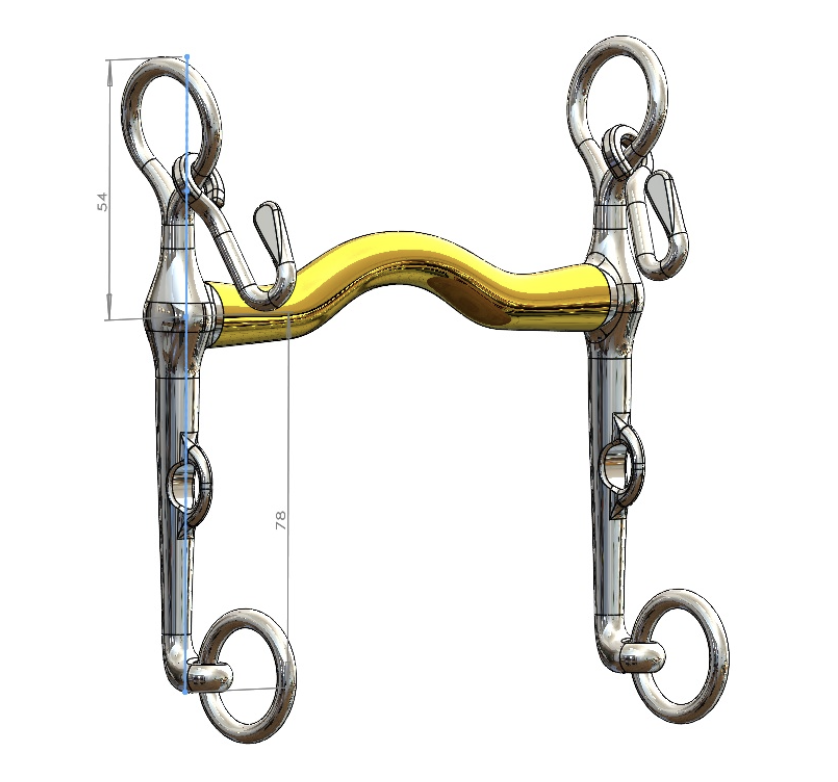
Figure 1: CAD drawing of the curb bit used in the study showing dimensions to the extremities of the cheek shank, measured in mm from the axis of the mouthpiece.
Rein Tension Sensors
Left curb rein (Schockemöhle 13mm width plain leather, Schockemöhle Sports GmbH, Kötterhof, 8, 49439 Mühlen, Germany), left curb cheekpiece and curb chain tension were recorded simultaneously using miniature s-beam load cells with a range of 0 to 500N (0-10 VDC output range; DBBSMM-50kg-002-000, Applied Measurements Ltd, 3 Mercury House, Calleva Park, Aldermaston, Berkshire, RG7 8PN, United Kingdom). Each load cell weighed 25g and measured 35mm x 24mm x 12mm. As a pilot study and to minimise technical challenges only one side of the bridle was instrumented. In addition, we have previously demonstrated that that right-left differences do not occur in rein tension in advanced dressage riders (REF). An M6 eye bolt (20mm long, eye diameter 5mm) was screwed into each end of the s-beam and locked with an M6 bolt and washer. For the cheekpiece, one end of the load cell was connected to the cheekpiece and the other attached directly to the caudo-dorsal bit ring with 4mm wide nylon cable fastener. For the curb rein, the load cell was attached similarly to the curb rein and the rostroventral ring of the curb cheek. The third load cell was positioned centrally in the curb chain, attached directly to the chain using stainless steel circular split rings. Each load cell was connected by a 2m cable to a wireless strain gauge transmitter with battery power supply (T24-ACMI-SA, Applied Measurements Ltd, 3 Mercury House, Calleva Park, Aldermaston, Berkshire, RG7 8PN, United Kingdom)). The cables were taped along the reins and the wireless strain gauge units were carried in the rider’s waistcoat. To synchronise curb rein, curb chain and curb cheekpiece tensions with the video, a piezo-electric buzzer was connected to one of the analogue outputs of the A/D converter (see below) and the buzzer was placed next to the camera.
Prior to the start of the study, each load cell had been returned to the manufacturer for recalibration in a single direction traceable to UKAS Standards. The calibration and linearity of each load cell was verified before data acquisition at 0 and 12kg with a known weight. The analogue wireless signals from the load cells were received by separate wireless receiver units with a range of 800m and 0-10VDC outputs per channel (T24-AO1i, Applied Measurements Ltd, Aldermaston, 3 Mercury House, Calleva Park, Aldermaston, Berkshire, RG7 8PN, United Kingdom)). The analogue outputs from the wireless receiver were digitised at 100Hz by a 16-bit A/D convertor (USB-1608F-Plus, Measurement Systems Ltd, 16 Kingfisher Court, Newbury, Berkshire, RG14 5SJ, United Kingdom) and the data recorded using DAQami software version 4.2.1f0 (Measurement Computing Corporation, 10 Commerce Way, Norton, MA 02766, USA). This configuration provided a resolution of <0.1N. Recordings were exported as CSV files for further analysis in Microsoft Excel and Sigview 6.2.0.0 Pro (SignalLab e.K., Karl-Abt Straße 5, 75173 Pforzheim, Germany).
Video and Audio Recording
A video camera (Blackmagic 6K, Blackmagic Design, Gateway Court, Port Melbourne, VIC 3207, Australia) fitted with a 50mm lens (Canon EF Lens 50mm 1:1.8 STM, 30-2 Shimomaruko 3-chome, Ota-ku, Tokyo 146-8501, Japan) was fixed to a tripod and positioned centrally and perpendicular to the long side of the arena. Video images were recorded in Blackmagic Design native .braw format at a resolution of 4096 x 2160 pixels and a frame rate of 100Hz to match the tension recordings.
Study Protocol
Data collection took place in a 20m by 60m sand, fibre and rubber outdoor arena, which had been levelled and prepared prior to data collection. After the horse was fitted with the experimental equipment, the horse was initially walked in hand to acclimate to the arena equipment and then underwent a 10min rider-prescribed warm-up on both reins. Data were collected on the left rein while the horse was ridden in collected walk, working (rising) trot, collected canter, and the following transitions: collected (sitting) trot to walk; collected trot to halt; collected canter to walk; collected canter to halt including rein back. Simultaneous video footage was acquired to synchronise gait, movement patterns and mouth movements. A veterinarian observed the horse’s gait and behaviour at all times for indicators of pain or discomfort or signs of lameness which were at no point detected. After completion of the trial, the horse was cooled down, all equipment was removed, and the horse was returned to its stable.
Data Processing
Rein tension: No noise was apparent on any of the recorded signals and so no filtering was applied. Video files in .braw format were imported into DaVinci Resolve (Version 19.1.4 Build 11, 2025; Blackmagic Design, Gateway Court, Port Melbourne, VIC 3207, Australia) and exported as .MOV format files. Video files and .CSV files were imported into Telemetry Overlay software for synchronisation based on the audio signal and overlay (V1.3.16, 2022, Telemetry Overlay S.L. Carrer del Comte Borrell, 225 7 1, 08029 Barcelona, Spain). Final video with tension overlays were exported as .MP4 format files.
Intra-oral forces: The theoretical treatment of the curb bit as an application of classical statics is given elsewhere (Cross et al, Submitted/In Review). The intra-oral force may be determined, using the theory, from the tension data for the curb chain, curb cheekpiece and curb rein. The intra-oral force was calculated for one set of data in canter where a sufficient range of rein tension was available. Continuous time-series tension data (100Hz collection frequency) was sorted into, rein tension data bins, of 1N width, between 0N and 12N wherein the curb chain and curb cheekpiece tensions falling within each bin were each averaged. In the bin containing the largest number, n, of recorded points a standard deviation, , for the experiment was obtained and converted to the standard error of the mean, , for each of the mean bin values of curb chain and curb cheekpiece tension.
Statistical Analysis
Differences between locations (curb rein vs. curb chain v curb cheekpiece) were investigated using the Kruskal-Wallace Test and Wilcoxon rank sum test with a Bonferroni correction (significance P=<0.017) (Figure 2). The relationship betweencurb chain and curb rein and curb cheekpiece tensions in walk, rising trot and sitting canter were investigated using both simple linear regression (Figure 7) and Huber regression (Table 1). Huber regression is a robust regression technique that balances the properties of least squares and absolute deviation regression, making it less sensitive to outliers than traditional linear regression. Significance was set at P<0.05. Statistical analysis was performed with Analyse-It (Analyse-It Software Ltd., Leeds, LS3 1HS, UK) with the exception of the Huber regressions which were performed with custom code written in Python (Python Software Foundation, 9450 SW Gemini Dr., ECM# 90772, Beaverton, OR 97008, United States) and run on Google Colab (Google LLC, 1600 Amphitheatre Parkway, Mountain View, CA 94043, United States).
Results
The left curb rein, curb chain and curb cheekpiece tensions over time and the distribution of the tensions within the recording period are shown in Figure 2. Images from the synchronisation of curb rein, curb chain and curb cheekpiece tensions with video recordings in walk, rising trot, sitting trot to halt transition (wide view and zoomed in to show head and mouth) and sitting canter are shown in Figures 3-6, respectively.
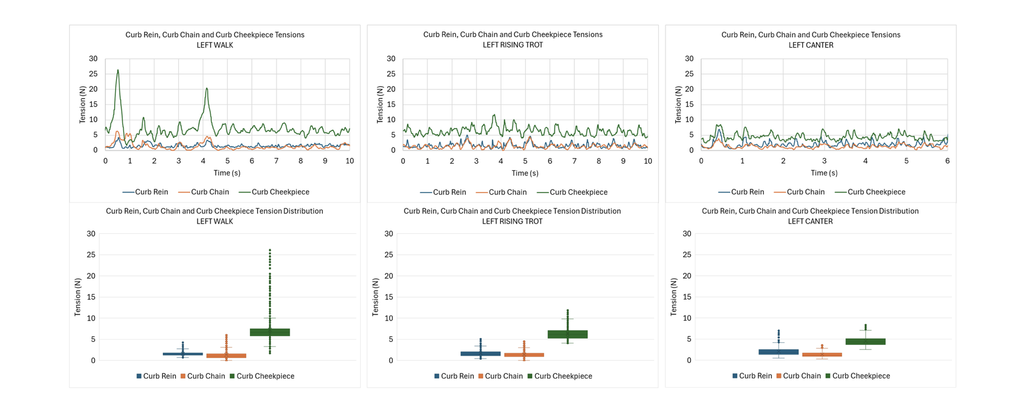
Figure 2. Left curb rein (blue), curb chain (orange) and curb cheekpiece (green) tensions (N) in walk (left panel), rising trot (middle panel) and canter (right panel) top row, and distribution of tension values bottom rows. Horizontal line represents the median value; “x” represents mean value. Box represents 25-75th percentile. All tensions significantly different at least P<0.001 in all gaits.
During walk, the curb rein, cheekpiece, and curb chain forces exhibited a similar cyclical pattern, with the timing of their maximum peaks coinciding with the stance phase of the limbs. In trot, the forces also displayed a cyclical pattern, with the peak curb rein force occurring during the second half of each diagonal stance. The cheekpiece and curb chain forces were phase-shifted relative to the curb rein, reaching their maxima shortly afterward. In canter, the curb rein showed a prominent peak between 50 and 75% of the inside forelimb stance, corresponding to the phase in which the horse propels its centre of mass into suspension. Smaller peaks occurred prior to this maximum, likely influenced by the ground contacts of the other limbs. The curb cheekpiece and curb chain forces were out of phase with the curb rein forces, with their maximum values occurring slightly later.
Curb rein and curb chain tensions were of similar magnitude, showed similar variation and were consistently lower magnitude than curb cheekpiece tensions in walk, rising trot and canter (Figure 2). The greatest variation in tension and the highest tensions recorded were for the curb cheekpiece tension in walk (Figures 2 and 3) and in halt (Figures 5 and 6). Huber regression (Table 1) indicated that curb rein tensions only accounted for less than one third of the variation in curb chain or curb cheekpiece tensions in walk, rising trot and canter i.e. the majority of the variation in curb chain and curb cheekpiece tension was unexplained by variation in curb rein tension.
In walk, curb rein tension was unrelated to curb chain tension and in rising trot, curb rein tension was unrelated to curb cheekpiece tension. However, in canter, curb rein tension was related to both curb chain and curb cheekpiece tension. Curb chain and curb cheekpiece tensions were not related in walk or rising trot but were related in sitting canter with an R2 value of 0.45; the highest explanation of variance of any of the gaits or reins. Whilst there were relatively weak correlations between curb rein and curb chain or curb cheekpiece tension overall, plots of all datapoints indicate that there are rein tension ranges when an increasing curb rein tension results in an increasing curb chain tension (Figure 8a).
The images from the synchronised videos show a number of examples where the curb rein tension is low and the curb cheekpiece tensions increase prior to and independent of any obvious changes in curb rein tension, with the curb rein tension remaining low. This behaviour is particularly evident in Figures 3 in walk, and in halt during the Canter-Halt-Rein-Back- Trot transition (Figure 6), where the curb rein tension is low but the cheekpiece tension increases and decreases independent of the low curb rein tension.
Table 1. Huber regression (intercept, slope, R2 and P value) for left curb chain tension (N) as a function of left curb rein tension (N), left curb cheekpiece tension (N) as a function of left curb rein tension (N) and left curb chain as a function of curb cheekpiece tension (N) at walk, rising trot and sitting canter in a 13yo dressage horse training at Prix St. Georges and ridden by the horse’s normal Grand Prix rider. P value indicates slope is significantly different from “0”.
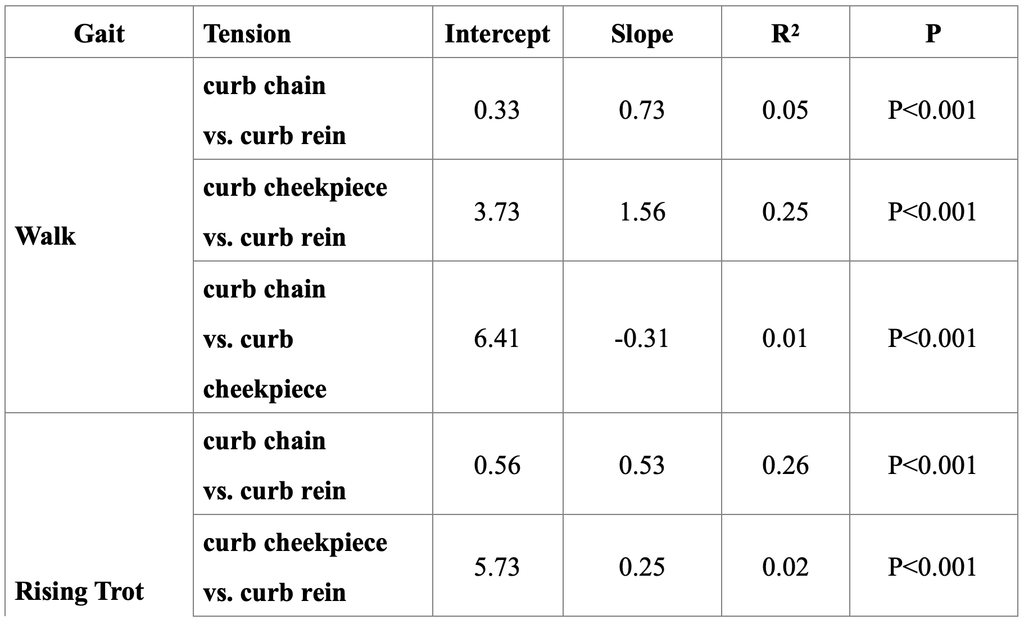
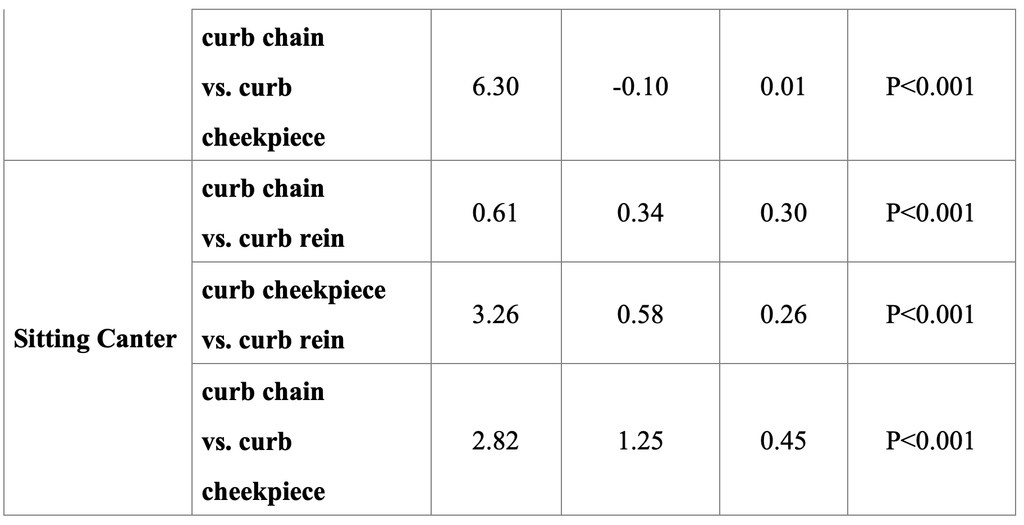
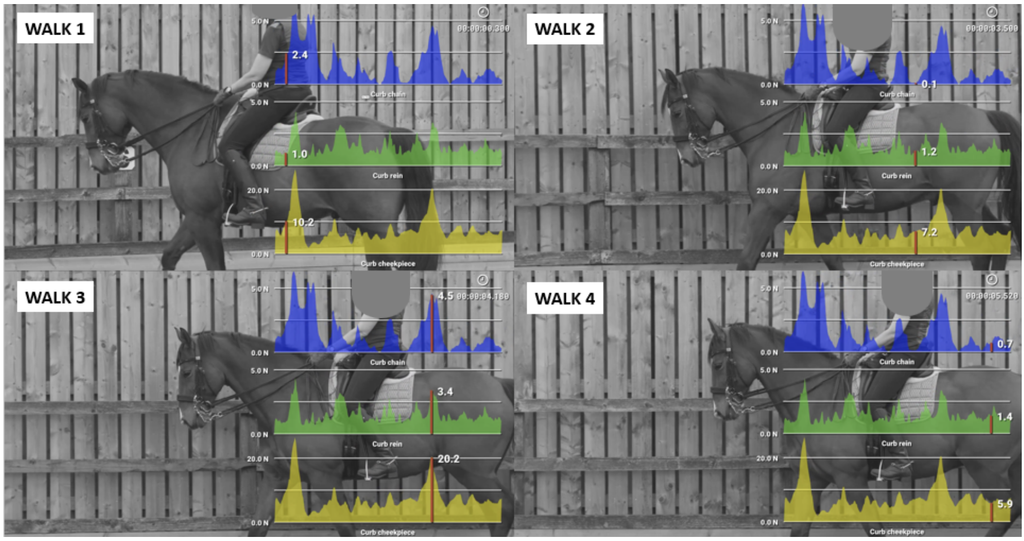
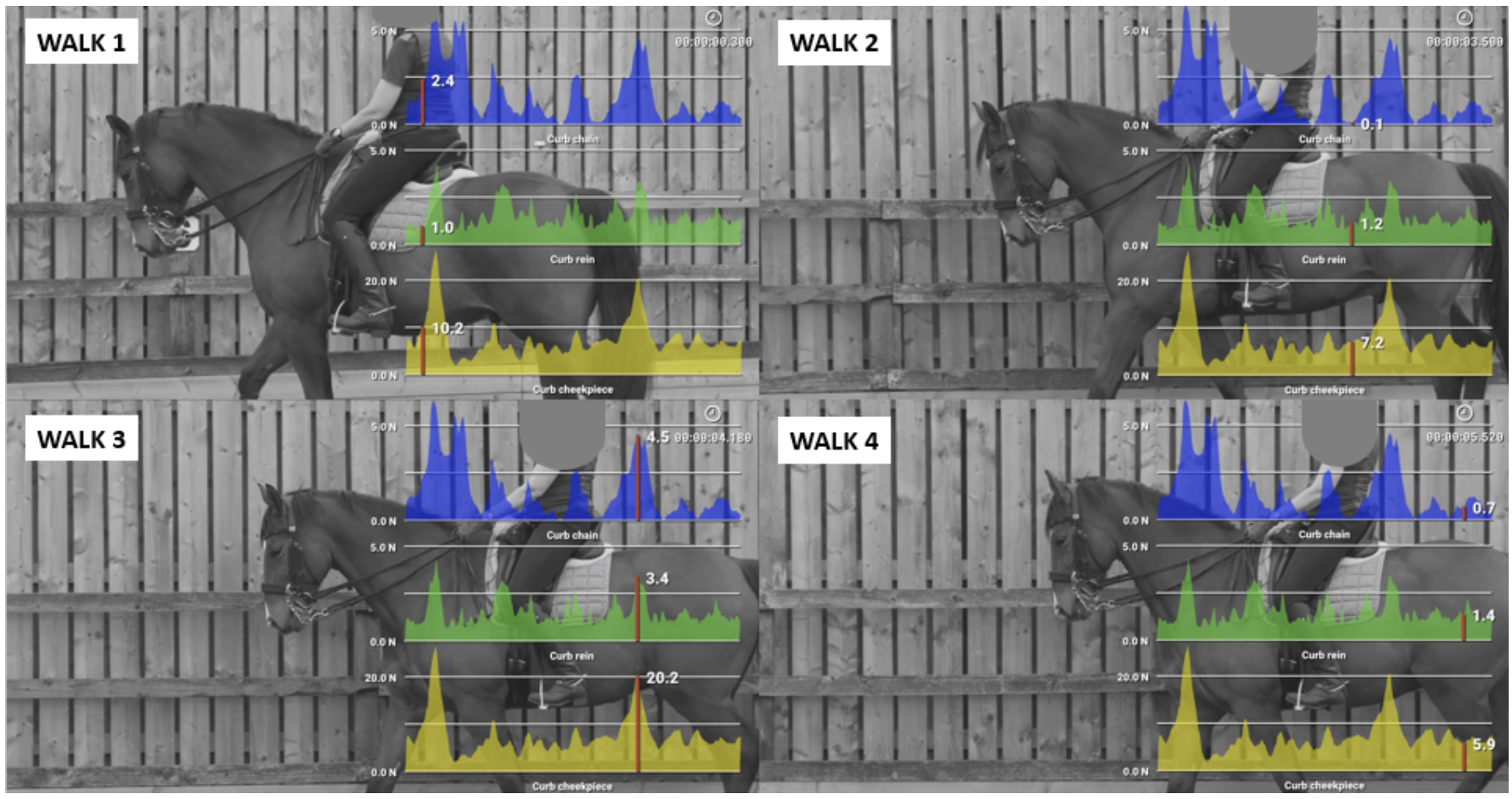
Figure 3. X-Axis (time) on the tension graphs corresponds with the overlay clock time shown top right (s). N.B. Whilst the X and Y axis scales are the same for each screenshot (i.e. Walk 1, Walk 2, Walk 3 and Walk 4) the Y axis scaling for each tension within each screenshot are not the same. The Y-axis has been scaled to focus on the timing of changes not the magnitude. Walk 1 – Horse’s head vertical; Curb cheekpiece tension (10.2N) is increasing and precedes changes in Curb rein tension (low, 1N) or Curb chain tension (low, 2.4N), although latter increasing only peaks around 6N. Walk 2 – Horse’s head vertical; Curb cheekpiece tension (7.2N), Curb rein (1.2N) and Curb chain (0.1N) tensions are all low. Walk 3 – Horse’s head in front of vertical; Curb cheekpiece tension is high (20.2N) and corresponds with peaks in Curb rein tension which is much lower (3.4N) and Curb chain tension (low, 4.5N). Increase in Curb cheekpiece tension preceded increase in Curb Rein tension. Walk 4 – Horse’s head vertical; Curb Rein (1.4N), Curb chain (0.7N) and Curb cheekpiece tensions all low, but cheekpiece is greatest (5.9N).
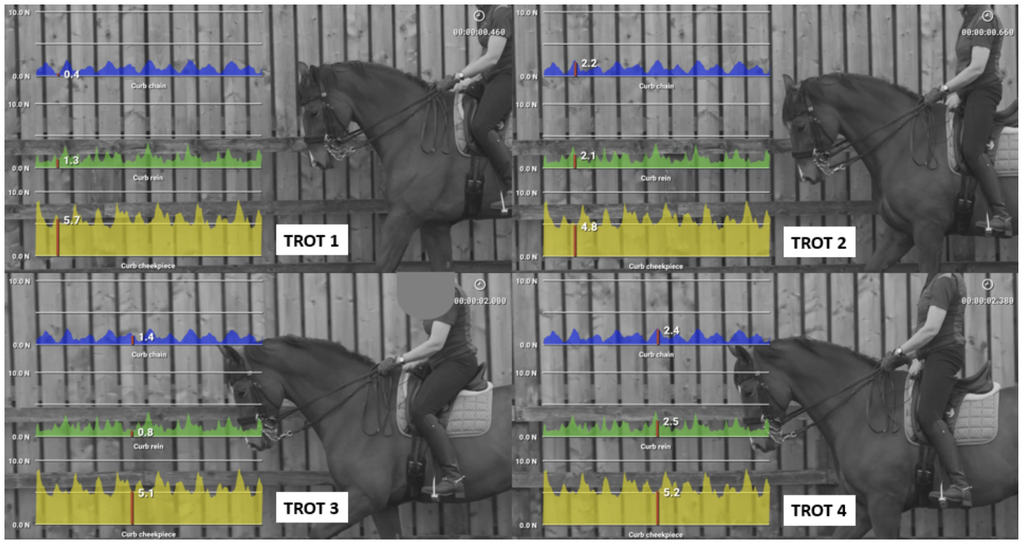
Figure 4. X-Axis (time) on the tension graphs corresponds with the overlay clock time shown top right (s). N.B. Whilst the X and Y axis scales are the same for each screenshot (i.e. Trot 1, Trot 2, Trot 3 and Trot 4), the Y axis scaling for each tension within each screenshot are not the same. The Y-axis has been scaled to focus on the timing of changes not the magnitude. Rising Trot 1 – Rider seated; Curb rein (1.3N), Curb chain (0.4N) and Curb cheekpiece tension (5.7N) all close to minimal values and appear to be changing in phase with stride. Rising Trot 2 – Rider at maximum rise; Curb rein (2.1N), Curb chain (2.2N); Curb cheekpiece tension (4.8N) at minimal value. Peak occurs between seated and max rise. Rising Trot 3 – Rider seated; Curb rein tension low (0.8N), Curb chain tension low (1.4N) and Curb cheekpiece tension at minimum (5.1N). Rising Trot 4 – Rider at maximum rise. Curb rein tension low (2.5N) but peaking, Curb chain tension low (2.4N) but peaking and Curb cheekpiece tension at minimum (5.2N). Increase in Curb Rein tension not reflected in Curb cheekpiece tension.
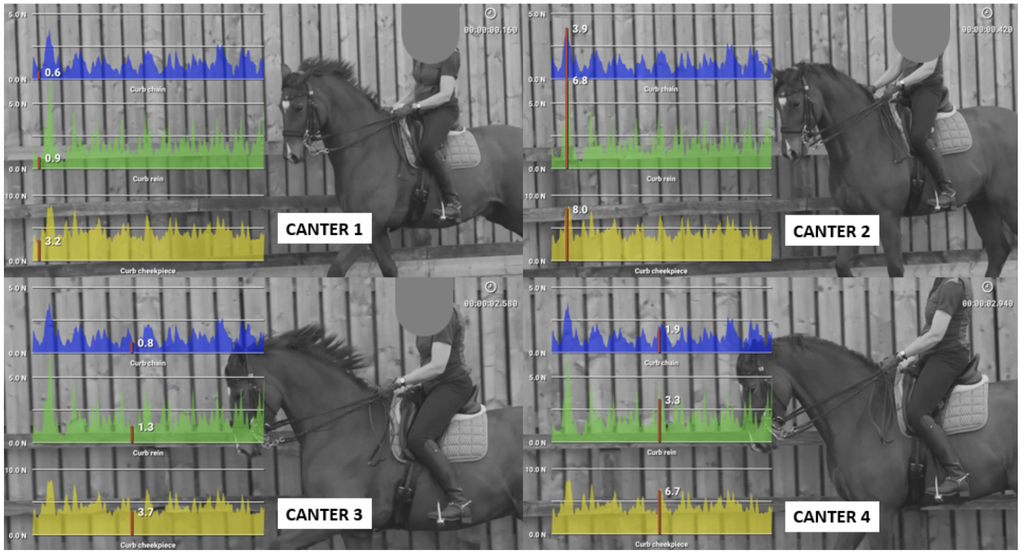
Figure 5. X-Axis (time) on the tension graphs corresponds with the overlay clock time shown top right (s). N.B. Whilst the X and Y axis scales are the same for each screenshot (i.e. Canter 1, Canter 2, Canter 3 and Canter 4), the Y-axis scaling for each tension within each screenshot are not the same. The Y-axis has been scaled to focus on the timing of changes not the magnitude. Canter 1 – Horse’s head just in front of the vertical. Mouth closed. All tensions are minimal. Canter 2 – Horse’s head vertical. Mouth closed. 0.26s later than Canter 1 image. Corresponding peaks in Curb cheekpiece (8.0N), Curb rein (6.8N) and Curb chain tension (3.9N). Canter 3 – Horse’s head vertical. Mouth closed. All tensions are minimal. Canter 4 – Horse’s head vertical. Mouth closed. Corresponding peaks in Curb cheekpiece (6.7N), Curb rein (3.3N) and Curb chain tension (1.9N).
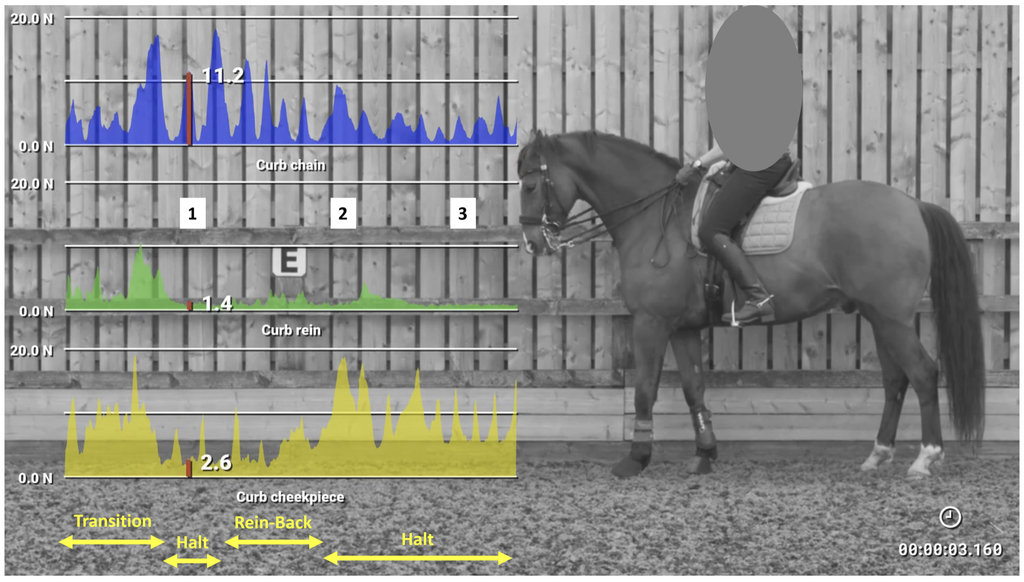
Figure 6. Canter-Halt-Rein-Back-Trot; (1) Horse in halt. Peak in curb chain tension independent of rein tension; (2) Peaks in cheekpiece tension and curb chain tension independent of rein; (3) Rein tension zero but multiple peaks in cheekpiece and chain tension may be caused by horse mouth movements.
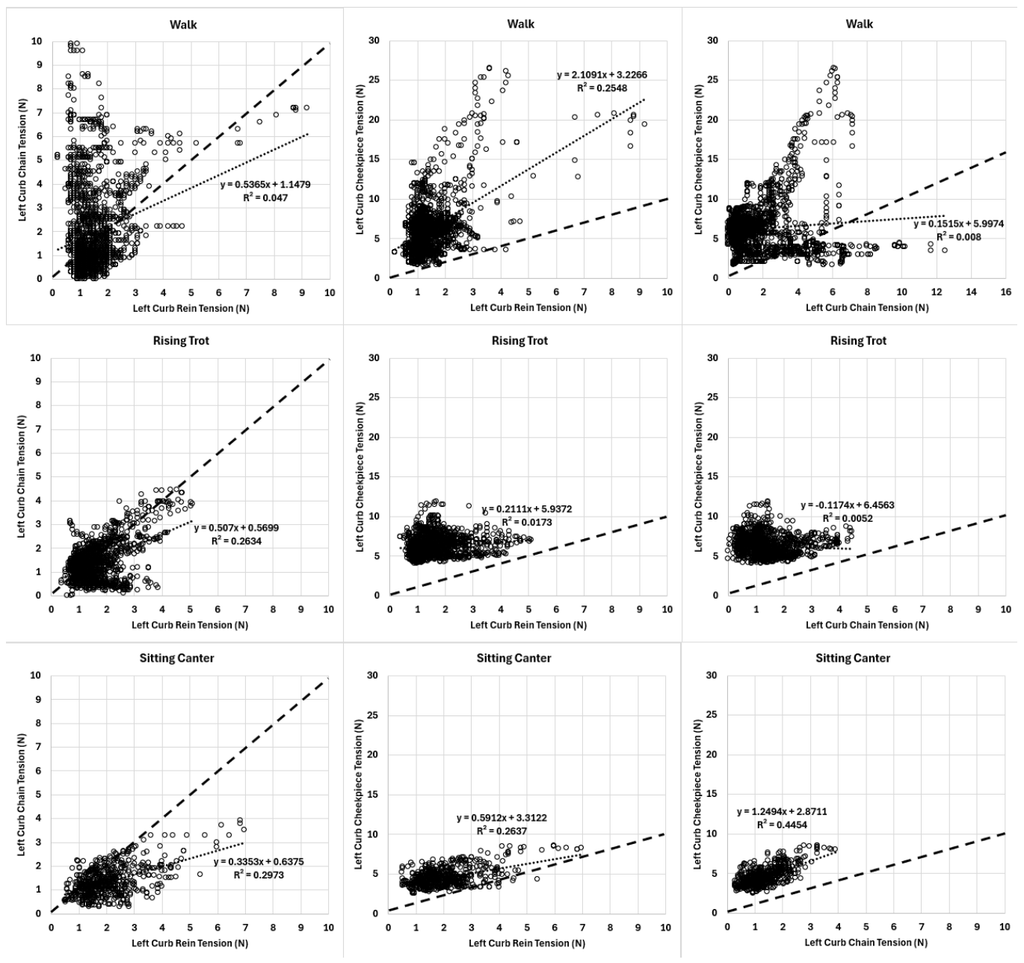
Figure 7. Inter-relationship between curb rein, curb chain and curb cheekpiece and gaits for walk, rising trot and sitting canter. Dashed line represents the line of identity. Dotted line represents the linear regression.
For a single data set collected in canter, rein tension data on the curb rein fell into data bins of width, 1N, between 0 and 12N and provided an opportunity for analysis of the intra-oral force based on the theory of operation of the curb bit [9]. Data analysis for all data sets is available in the Supplementary Information. In all cases other than the canter data selected for analysis, rein tension data was not recorded at levels above 10N and bin populations in the region where the curb chain is tensioned were too small to provide reliable analysis.
To be clear, data falling in, say, bin 12N, contains curb chain and cheekpiece tension events corresponding to rein tension events of between 11.5N and 12.5N, so the error in the independent variable, rein tension, is ± 0.5N (or approximately an equivalent rein weight error of ±50g). Once the data are sorted in this way, the data within each bin is averaged. Figure 8 shows the averaged curb chain and cheekpiece data versus averaged rein tensions in the 1N width bins. The sample population number within each bin used to calculate the average is also given to illustrate how the standard error on the mean varies between the data averages. No rein tension data above 12.5N was found so the data bins above this were empty.
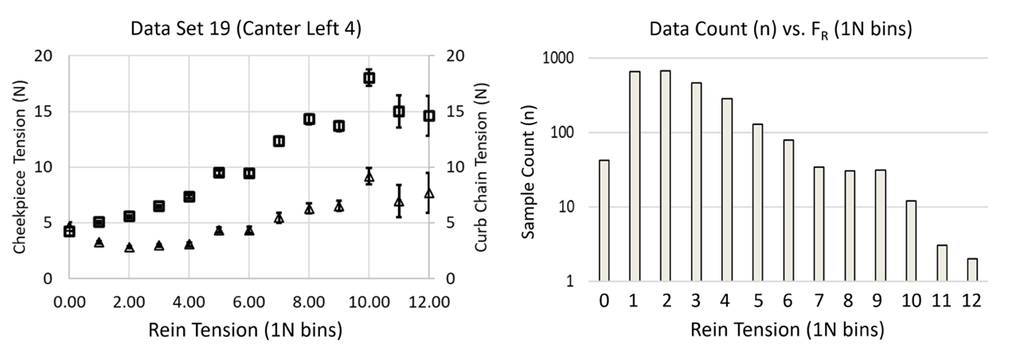
Figure 8: (a) Mean cheekpiece tension (squares) and mean curb chain tension (triangles) versus rein tension in 1N full-width bins for the horse and rider in canter. Error bars are standard error of the mean. (b) Data point count (n) vs. bin number. Note the log10 ordinate scale.
Between 4N and 10N the curb chain and curb cheekpiece tensions rise with increasing rein tension. Neither pass through the origin, indicating that a pre-tension in both curb chain and curb cheekpiece exists which if due to intentional pre-tensioning, could be factored out from the data if desirable. The curb chain tension shows a modest reduction upon first application of rein tension, whilst the cheekpiece tension rises in this low rein tension region. We propose that the curb chain only comes into effect at around 4N of rein tension and prior to this, the bit and bridle system is subject to “floating fulcrum” conditions (stretching of the commissures of the lips and translation of the bit towards the rider). Once this has stabilised, the lever conditions can emerge and be reflected in the data. Above 10N the bin populations are low and high errors suggest that no reliable interpretation can be made of the apparent drop in the curb chain and cheekpiece responses. We also note that all the data are subject to extrinsic inputs such as independent actions by the horse or by the rider through the bridoon rein tension.
The maximum force of the mouthpiece on the mouth tissues, expressed in Equation 1, comprises the vector sum of the tangential component of the rein tension applied at the lower cheek ring, , (being the component of rein tension that lies perpendicular to the curb shank axis) and the vector sum of the curb chain and cheekpiece tensions that produce a balancing tangential force at the upper ring, . This vector sum can be calculated from the data combined with constructions on full profile photographs such as that of Figure 9a to obtain the required angles of force projection, γ, δ and β . Equation 2 makes the substitution to explicitly show the vector sum components and emphasises that the force in the mouth is also a function of these angles.
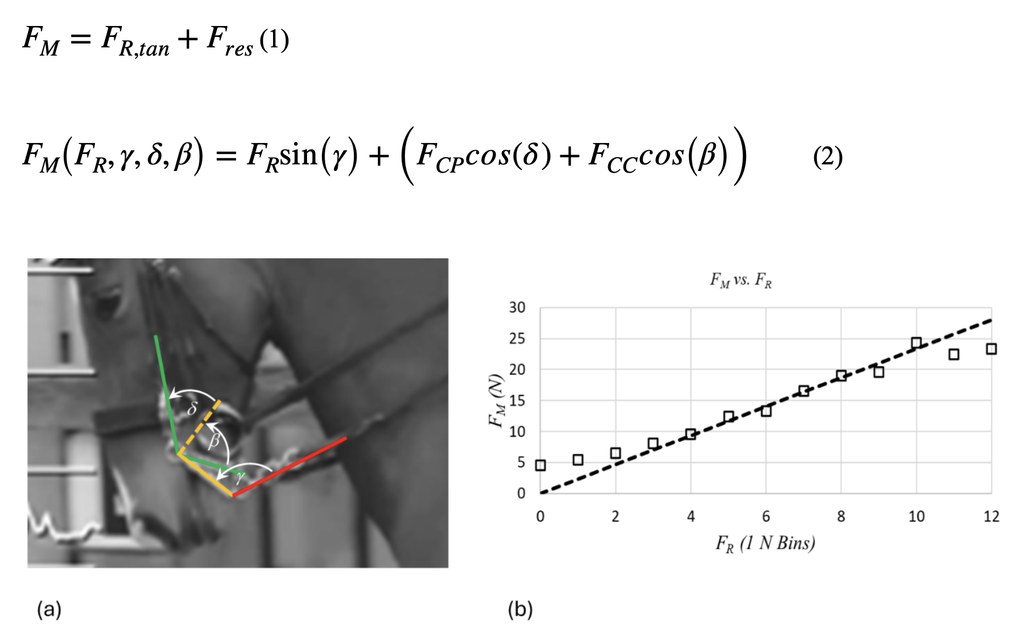
Figure 9: (a) Horse at canter. Construction of the lines of action of the curb chain, cheekpiece (green lines) tensions and rein tension (red line) applied at their respective points on the curb cheek shank axis (solid orange line). The orange dashed line indicates the tangential component of the vector sum of the curb chain and cheekpiece tensions. The angles shown are those required for calculation of the force in the mouth, FM. (b) FM versus rein tension calculated from the experimental data and Equation 2 (open squares), Dashed line; theoretical response function based on a notional value for lever arm ratio, , calculated from Equation 3. The function is shown for data collected in canter in Figure 9b.
Assuming that static mechanical equilibrium can be invoked, the sum of moments must be zero and therefore FM, becomes readily calculable solely from the value of the rein tension, , γ and the ratio , where A is the effective length of the rostroventral part of the cheek shank and B is the effective caudo-dorsal shank length, as follows in Cross et al.:

The individual effective lengths, A and B will usually not correspond to easily identifiable physical positions on the cheek shank. However, the ratio can be left as a fitting parameter given that it is a single unknown in Equation 3.
The data between 4N and 10N, are therefore a good fit to an effective length ratio, A/B = 1.6 which lies within a range of ratios that the bit cheek design might suggest. We can predict a good estimate of the unilateral intra-oral force of around 2.3 times the rein tension. In this case, the horse experienced a total (bilateral, so multiply by two and assume that the rider applies an even bilateral rein tension) intra-oral force of 4.6 times the rein tension. In our data that means an average range of between 4 x 4.6 = 18.4N at the start of the linear region of Figure 9b and 10x 4.6 =46N at the upper end of the linear region.
Converting to the more familiar mass equivalent force units the range is between 18.40/9.81 = 1.88kg and 46.00/9.81 = 4.68kg.
Returning to the issue of effective lever arm lengths and noting our good fit value for the length ratio, we can propose a combination of individual lengths A and B and consider how reasonable they seem.
Figure 10 shows a 2-D design sketch depicting the curb shank, cheekpiece, curb chain and rein configured as in the photograph of Figure 9a.
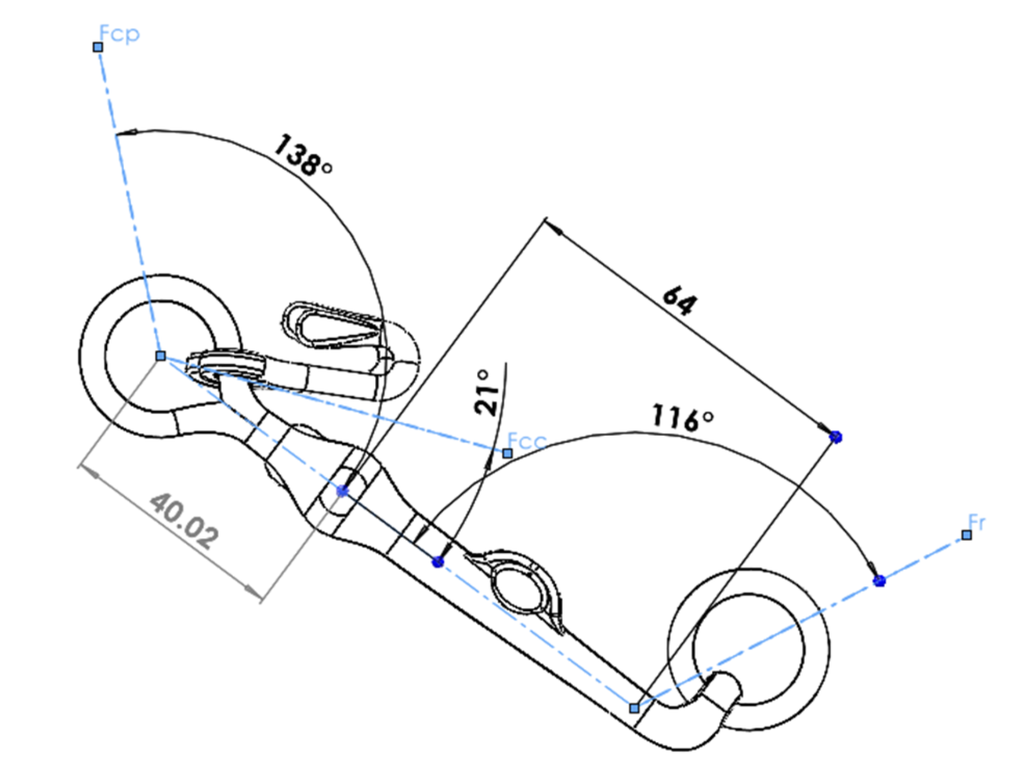
Figure 10: Sketch of the configuration of the curb bit shank and attached bridlework as depicted in Figure 9a. The angles are derived from the photograph. The upper shank length, B is defined as the distance between the mouthpiece axis and the centre of the upper shank ring. The lower shank length, A, is freely adjusted to allow A/B = 1.6.
Consideration of Mouth Pressure Due to the Bit
For implications of intra-oral pain or discomfort it is necessary to determine the pressures that these rein tensions generate and therefore contact surface areas between the mouthpiece, and the mouth tissues need to be considered. Once a model for that is applied, one might attempt to interpret the pressures against what is known about pain thresholds.
It is well known that for a bit lying within the mouth in the interdental space, the tongue and fleshy parts of the commissures of the horse’s lips bear the force applied by the bit [10]. In fact, the flesh envelopes the bit and compresses as it bears the imposed load, leading us to propose that one can approximate the contact surface area to comprise the lower half of the surface area of the mouthpiece. Such a suggestion seems reasonable from inspection of Figure 1 of Engelke and Gasse [10].
The total contact area of the mouthpiece can therefore be modelled approximately using a 3-D CAD model (Solidworks Professional 2022, SP 5.0, Solidworks Corporation, 175 Wyman Street, Waltham, MA 02451, United States) of the mouthpiece and creating a contact area that can be measured by splitting the model mouthpiece along a line bisecting it. The remaining lower half of the mouthpiece of the present study has a contact surface area of cm2.
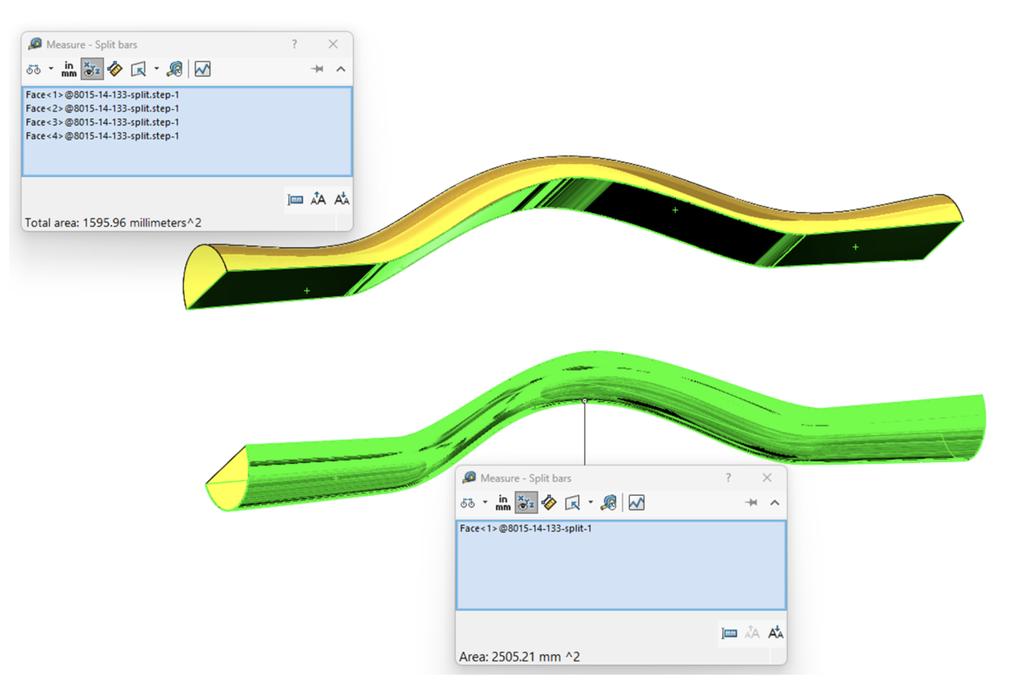
Figure 11. Views of the split 3-D mouthpiece model showing (upper) the calculation of the area projected onto the mouth tissues assuming a force acting normal to the (green shaded) area (~ 16cm2). The actual physical area (~ 25cm2) of the split model is shown in the lower image.
However, it is the projected area that should be used for pressure calculations, which is always an area smaller than the curved surface area of the mouthpiece. Using the proposed method of splitting the 3-D model, as shown in Figure 11, we propose an effective contact surface area, cm2.0. The predicted intra-oral pressures that are created by the intra-oral forces range, therefore, from kg/cm2 (11.50kPa) to kg/cm2 (28.75kPa).
An interesting recent attempt to map experiences of pain in humans onto equines [11] has only human pressure pain detection threshold (PPDT) information to apply, for ethical reasons of course. Nevertheless, it is perhaps helpful to consider these thresholds, note our estimated values of pressure and invite the discussion to continue.
As Musial and Weiss have reported [11], PPDTs measured for the face, hand and foot are, 2.37kg/cm2, 4.54kg/cm2 and 5.47kg/cm2, respectively. They cite predicted bit pressures of between 13.39kg/cm2 and 43.68kg/cm2, calculated from experimental rein tension data [12] but assume that neither the tongue nor the commissures are involved in weight bearing and that it is just the two bony projections of the interdental mandible that contribute to the effective weight bearing area. This was, for the purposes of the research, assumed to be 0.387cm2 which is a factor of around 41 times smaller than our suggestion which assumes more uniform weight bearing.
Discussion
There has been considerable debate regarding the use of the double bridle, relating to the mechanical effect that the lever extending ventrally from the curb mouthpiece has on the forces applied to the intra-oral structures. Cross et al. estimated that the intra-oral forces generated by the curb mouthpiece, as a result of rein tension, are at least equivalent to the magnitude of the rein tension itself and under normal riding conditions and with normal curb shank designs, some multiple of the rein tension. Using an experimental approach, this study provides the first empirical confirmation of the theoretical predictions.
When in walk, rising trot, and canter, the magnitude of cheekpiece tensions were consistently greater than tensions recorded for the curb rein and curb chain. The increase in curb cheekpiece tension may relate to its function, which is to suspend the mouthpiece within the intra-oral space, thereby supporting the weight of the curb mouthpiece. Additionally, with a double bridle, the Bridoon mouthpiece sits slightly caudal to the curb mouthpiece. It is possible that, due to intra-oral mechanics, the Bridoon may interact with the curb mouthpiece, which may influence curb cheekpiece tensions [13].
Riders can choose to use a curb chain guard, which may be constructed of gel, rubber or leather [6]. The guard wraps around the curb chain, offering protection to the bony prominences of the mandibles. Due to the experimental set-up, the curb chain in the current study did not have a guard; however, the magnitude of tension for both the curb rein and curb chain were comparable to one another. Further work is needed to determine the use and application of the curb chain guard, as the addition of an outer layer may influence curb chain forces applied to the mandible.
Curb rein tension accounted for less than one-third of the variation in curb chain and curb cheekpiece tensions when in walk, rising trot, and canter. Thus, the majority of variation in curb chain and cheekpiece tension could not be attributed to changes in curb rein tension indicating that the forces in the curb chain and curb cheekpiece were not predominantly rider-induced. This finding highlights the complexity of intra-oral mechanics associated with the mouthpiece, and bridle-horse interaction. It is plausible that variation in curb chain and curb cheekpiece forces is influenced by intra-oral kinematics, including tongue displacement and mandibular motion.
During locomotion, the ventral movement and flexion of the head and neck is counteracted by the nuchal ligament and cervical musculature, resulting in cyclical force patterns beneath the bridle that are influenced by the phases of the stride [6, 8, 14], which was supported by the findings of cyclical strains during the stride in our study. The peak forces in the curb rein occurred during the stance phase, while the maximum strains in the curb chain and curb cheekpiece followed shortly after the curb rein reached its maximum strain in each stride. Rein tension peaks occur during the stance phase [15, 16]. The phase shift observed between curb rein forces and the forces on the curb chain and cheekpieces likely reflects the complex interaction between the horse, bridle, and rider. During trot and canter, significant vertical and horizontal accelerations and decelerations occur, with the rider influencing the horse through the use of various aids (seat, leg and rein). As seen in the current study, peak rein tension typically occurs during the stance phase of the stride. The curb chain and curb cheekpiece forces, while still occurring during the stance phase, were slightly delayed. It is possible that this timing difference may be due to the sequential nature of the rein aid’s action, first affecting the rein and then transmitting force to the curb chain and cheekpieces. Alternatively, or in addition, the tensions in the curb chain and cheekpieces may be at least partially independent of the rein and instead be influenced by vertical and oscillatory movements of the head and neck, as well as mandibular movement associated with the stride pattern. Further research is warranted to elucidate the complex interactions and underlying mechanisms associated with bridle forces.
It has previously been shown that noseband [14] and headpiece force curves demonstrate an influence of gait, with higher forces observed when trotting and cantering compared to when walking [6]. In our study, curb cheekpiece tensions were also gait-dependent, with the greatest variation and magnitude found when the horse was in walk and in halt. In walk, curb rein tension was not associated with curb chain tension, and in rising trot, curb rein tension was not associated with curb cheekpiece tension. In contrast, in canter, curb rein tension was positively related to both curb chain and curb cheekpiece tensions, which may reflect the pitching of the horse’s trunk, the gait features, and the timing of application of the rider’s half-halt aid. In walk, there were brief increases in curb rein tension, which coincided with concurrent increases in curb chain tension; although the correlation was weak, this finding highlights the need for future studies adopting a similar experimental approach.
This study presents curb chain, curb rein and curb cheekpiece tension using a bit with a relatively low port and a small mouthpiece, where we have demonstrated that the theory presented by Cross et al. can be applied. It is possible that different mouthpiece designs may influence the interaction with the horse, and therefore relative forces on the curb chain, curb rein and curb cheekpieces. In addition, individual horse differences in conformation, balance and training could also influence this interaction.
This study is the first to quantify forces associated with curb rein, curb chain and curb cheekpiece as a complete set. The sample size limits this study; additionally, the rider used was a high-level dressage rider, preventing the findings from being directly applicable to less skilled riders and/or simple single mouthpiece bits/bridles. The strain gauges were small, low mass and were inserted into the left cheekpiece and into the curb chain. Whilst it may be deemed a limitation that only one side was measured, it should be noted that the curb cheekpieces form a closed loop, as does the curb chain. As a rider may use a single rein to apply an aid for communication with the horse, it is reasonable to investigate these forces. In the future, an additional strain gauge could be used to further investigate both curb rein forces [6]. Bridoon tensions were not measured. However, these pilot data do demonstrate that high curb cheekpiece and curb chain tensions can occur independent of curb rein tension, so may be generated by the horse’s movements and not necessarily the rider’s reins.
Conclusion
This study is the first to quantify forces associated with curb rein, curb chain and curb cheekpiece and provides quantitative data on curb rein, chain and cheekpiece forces. When in walk, rising trot, and canter, the magnitude of cheekpiece tensions were consistently greater than tensions recorded for the curb rein and curb chain. Curb rein tension accounted for less than one-third of the variation in curb chain and curb cheekpiece tensions when in walk, rising trot, and canter. Thus, the majority of variation in curb chain and cheekpiece tension could not be attributed to changes in curb rein tension, highlighting the complex interaction between the bridle, mouthpieces and the horse and rider. These findings illustrate the need for more quantitative study in this area, and the importance of careful bridle and bit fitting as well as careful training of rider and horse to optimise horse comfort and performance.
Authors Contributions
DJM, RM-G and RCM collected the data. All authors were involved in data analysis. GHC took the lead on the mechanical theory aspects of the manuscript with comments in discussion from all authors.
Funding
No external funding was received for this work.
Conflicts of Interest
The authors declare no potential conflicts of interest with respect to the research, authorship and/or publication of this article.
Ethical Approval
Ethics approval was given by Hartpury University’s Ethics Committee URN 2021-126.
References
1. Xenophon, On horsemanship. (E. C. Marchant, Trans.). In Scripta minora. Harvard University Press. (Original work published ca. 355 BCE), 1925: p. 293–363.
2. Vereinigung, D.R., Richtlinien für Reiten und Fahren: Vol. 1. Grundausbildung für Reiter und Pferd* (30th ed.). FNverlag. (Original work published 1937), 2018.
3. Edwards, E.H., Saddlery. Chapter 4: The principles and mechanics of bitting JA Allen and Co, London. , 1992 (first published 1963) p. 28-47.
4. Edwards, E.H., Saddlery. Chapter 3: The bridle JA Allen and Co, London. , 1992 (first published 1963) p. 14-27.
5. Wilkins, C., Double Bridles – The Curb Bit is a Nutcracker [Video] YouTube. https://www.youtube.com/watch?v=8G1ZZlwGYpM, 20 October 2024.
6. MacKechnie-Guire, R.C., H. Williams, J. Marlin, D. Fisher, M. Fisher, D. Walker, V. Murray, R. C., Comparison of Rein Forces and Pressure Beneath the Noseband and Headpiece of a Snaffle Bridle and a Double Bridle. Animals (Basel), 2025. 15(7).
7. FEI Rule Book, accessed June 2025, https://inside.fei.org/fei/disc/dressage/rules
8. MacKechnie-Guire, R., Murray, R., Williams, J. M., Nixon, J., Fisher, M., Fisher, D., Walker, V., Clayton, H. M., Noseband type and tightness level affect pressure on the horse’s face at trot. Equine Veterinary Journal, 2024: p. 1-15.
9. Cross G, MacKechnie-Guire R, Marlin D, Murray R. A statics analysis of the equine curb lever bit and bridlework. Journal of Sports Engineering and Technology. Under review.
10. Engelke, E. and H. Gasse, An anatomical study of the rostral part of the equine oral cavity with respect to position and size of a snaffle bit. Equine Veterinary Education, 2010. 15(3): p. 158-163.
11. Musial, F. and T. Weiss, What if Horses Were Humans? Comparing Rein Tension and Bit Pressures to Human Pressure Pain Thresholds. Animals (Basel), 2025. 15(20).
12. Mellor, D.J., Mouth Pain in Horses: Physiological Foundations, Behavioural Indices, Welfare Implications, and a Suggested Solution. Animals (Basel), 2020. 10(4).
13. Cross, G., Michael C., Honey T., Pau, M., Kara-Jane, Application of a Dual Force Sensor System to Characterize the Intrinsic Operation of Horse Bridles and Bits. Journal of Equine Veterinary Science, 2017. 48: p. 129-135.e3.
14. Murray, R.C., Guire, R., Fisher, M., Fairfax, V., A Bridle Designed to Avoid Peak Pressure Locations Under the Headpiece and Noseband Is Associated With More Uniform Pressure and Increased Carpal and Tarsal Flexion, Compared With the Horse’s Usual Bridle. Journal of Equine Veterinary Science, 2015. 35(11-12): p. 947-955.
15. Eisersio, M., Roepstorff, L., Weishaupt, M. A., Egenvall, A., Movements of the horse’s mouth in relation to horse-rider kinematic variables. Vet J, 2013. 198 Suppl 1: p. e33-8.
16. Clayton, H.M., Larson, Britt, Kaiser, LeeAnn J., Lavagnino, Michael, Length and elasticity of side reins affect rein tension at trot. The Veterinary Journal, 2011. 188(3): p. 291-294.
