


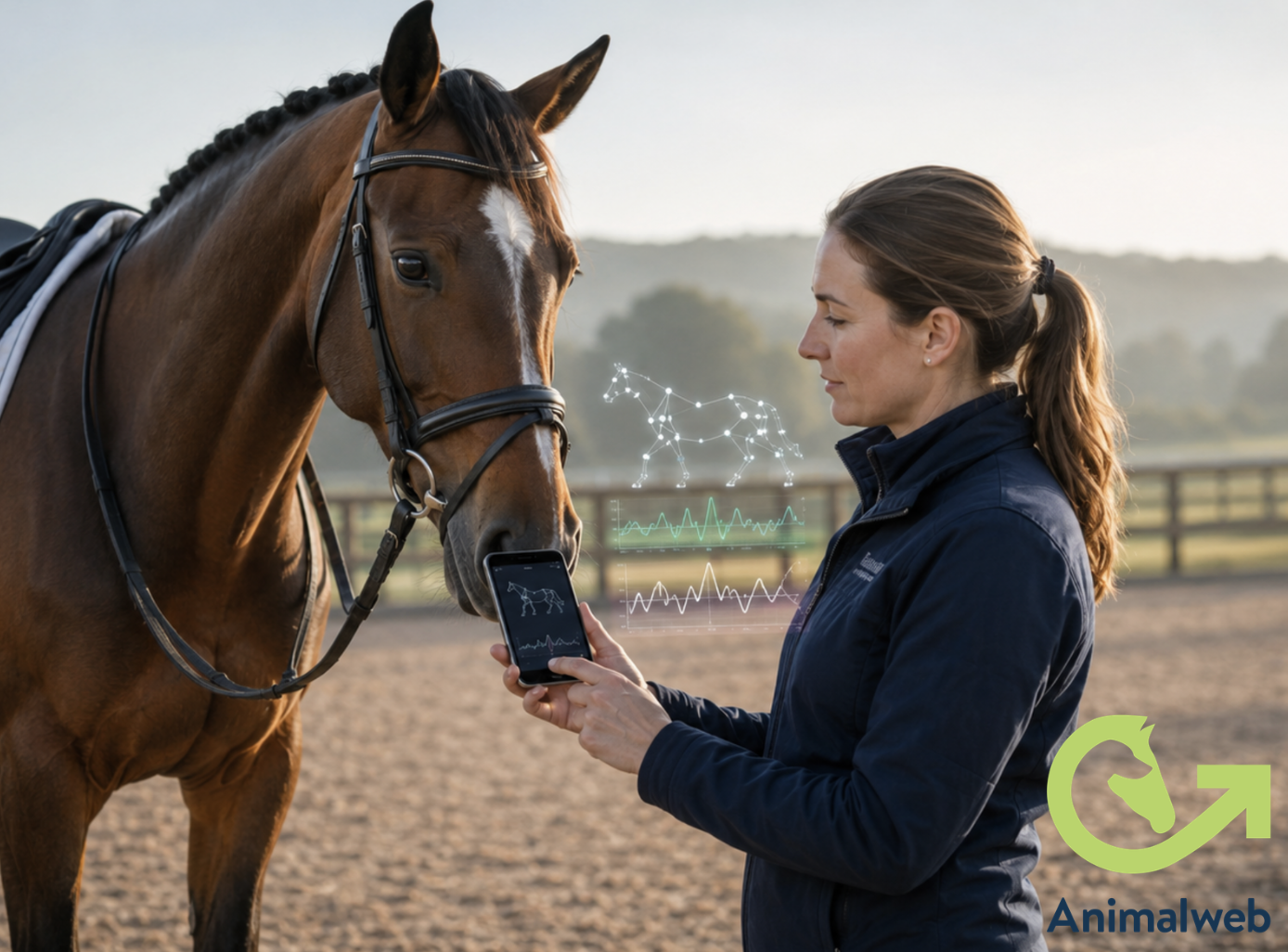
Smartphones could play an increasingly important role in monitoring the health, performance and welfare of sport horses, according to a new scientific review.
Researchers from the University of Bologna examined how smartphones, wearable sensors and artificial intelligence are being used in equine sports medicine. These technologies could help veterinarians, trainers and owners collect more objective information, monitor horses over time and identify subtle changes before they develop into more serious problems.
Bridging the gap between observation and objective evidence
Veterinarians and experienced horse professionals can learn a great deal by watching a horse move, behave and recover after exercise. However, visual assessments inevitably involve a degree of subjectivity, and small changes may be difficult to detect during a single examination.
The main value of smartphone-based technology is its ability to help bridge the gap between these subjective observations and objective measurements.
A smartphone can collect information in the horse’s normal environment rather than only during an occasional veterinary appointment or laboratory assessment. Measurements can also be repeated throughout training, competition, rehabilitation and recovery.
This makes it possible to build a longer-term picture of an individual horse instead of relying on an isolated snapshot. Changes in movement, heart rate, workload, breathing or behaviour can then be compared over days, weeks or months.
Because smartphones are widely available and relatively portable, this type of monitoring could potentially be used across different yards, training environments and equestrian disciplines.
A smartphone can perform two different roles
Smartphones can support equine monitoring in two main ways.
First, a phone can operate as a standalone measurement tool. Its built-in camera, microphone, GPS and movement sensors can collect information directly. For example, a smartphone video may be analysed to assess a horse’s gait or look for signs of movement asymmetry.
Second, the phone can act as a gateway for external technology. It can receive information from wearable sensors, heart-rate monitors, smart textiles, GPS trackers and other connected devices. The phone may then display, process, store or transmit those results.
This central role makes the smartphone more than a convenient screen. It can bring together information from several physiological areas and make it available to veterinarians, trainers, riders and owners in close to real time.
That could support faster and better-informed decisions about whether a horse should continue exercising, reduce its workload, receive more rest or undergo a veterinary examination.
Monitoring horses over time
One of the greatest potential benefits is longitudinal monitoring—the repeated collection of information over an extended period.
A single measurement may show whether a result falls within an expected range, but repeated measurements can reveal the direction in which a horse’s condition is changing.
For example, technology might detect:
- A gradual increase in movement asymmetry
- Slower recovery following exercise
- Changes in heart rate during a familiar workload
- Altered speed or distance during training
- Unusual behavioural patterns
- Differences between training sessions or surfaces
Recognising these trends could help professionals intervene earlier, potentially before an issue becomes obvious through traditional observation alone.
However, collecting more data does not automatically improve welfare. The information must be accurate, interpreted within its proper context and used to make decisions that prioritise the individual horse.
Spotting subtle signs of lameness
Movement analysis is currently one of the most promising applications.
Video and artificial intelligence can be used to examine a horse’s gait without requiring physical markers to be placed on its body. These systems may identify small asymmetries that could be associated with pain, discomfort or developing lameness.
The review found that locomotor monitoring is among the better-validated areas of smartphone-supported equine technology. It may help veterinarians and other professionals assess changes, monitor rehabilitation and make more informed return-to-exercise decisions.
Nevertheless, results can be affected by lighting, camera position, image quality, filming technique and the surface on which the horse is moving. Fast movement can also create distortion or motion blur.
A result recorded in one environment may not therefore be directly comparable with one collected under very different conditions.
Monitoring the heart, workload and recovery
Smartphones can also connect with heart-rate monitors, electrocardiogram devices, smart textiles and other wearable sensors.
These systems may provide information about a horse’s:
- Heart rate and rhythm
- Response to exercise
- Recovery after training
- Speed and distance travelled
- Training intensity
- Overall workload
Cardiovascular monitoring is another relatively well-developed area. When measurements are repeated under consistent conditions, they could help trainers recognise whether a horse is adapting to its workload or showing signs that further assessment may be needed.
Real-time information may be particularly valuable during training. Instead of waiting until the session has ended, a rider, trainer or veterinarian could potentially review certain measurements while the horse is exercising or recovering.
However, the accuracy and reliability of individual devices can vary. Heart-rate information and other measurements must be interpreted alongside the horse’s clinical history, workload, behaviour and environmental conditions.
Artificial intelligence could make the data more useful
Artificial intelligence can process video, sensor readings and other information much faster than a person could examine the same volume of raw data.
AI systems may be used to recognise patterns, estimate a horse’s pose, identify gait asymmetry or highlight unusual changes. This could make repeated monitoring more practical and help transform large amounts of information into results that people can understand and act upon.
The technology may also make assessments more consistent by applying the same analytical process each time.
However, AI is only as reliable as the information and methods behind it. Results can be influenced by image quality, environmental conditions, biological differences between horses and limitations in the datasets used to train the system.
An algorithm developed using a particular population of horses, discipline or environment may not perform equally well in every situation.
Not every application is equally advanced
The review found that smartphone-based technologies have not reached the same level of development across all areas of equine health.
Locomotor and cardiovascular monitoring currently have some of the strongest supporting evidence. Respiratory, behavioural, thermographic and eye-related applications remain at earlier stages.
For example, microphones and AI might eventually help recognise changes in a horse’s breathing during exercise. Cameras may support the analysis of facial expressions associated with pain, while thermal imaging attachments can measure patterns in surface temperature.
These approaches are promising, but their results may be especially sensitive to external influences. Wind and background noise can interfere with respiratory recordings, while skin temperature can change according to the weather, exercise, coat condition and surrounding environment.
Further research is therefore needed before every form of smartphone-based assessment can be recommended for routine clinical use.
Technology should support decisions—not make the diagnosis
Despite their potential, smartphones and AI systems should be treated as decision-support tools rather than replacements for veterinary diagnosis.
A numerical result may appear objective, but it is not automatically correct or clinically meaningful. Different phones, sensors, applications and algorithms can produce different results. Measurements may also change depending on how the device is positioned and how the information is collected.
Limited standardisation remains a significant concern. There is not yet one universally accepted method for collecting, processing and interpreting every type of equine monitoring data.
Technology may highlight that something has changed, but a veterinarian is still needed to determine what that change means. Clinical examination, professional judgement and knowledge of the individual horse remain essential.
Used correctly, these systems could provide an additional source of evidence. Used without appropriate context, they could create false reassurance, unnecessary concern or unsuitable training decisions.
Privacy, ownership and security also matter
The growth of connected equine technology raises important questions about data governance.
Information collected through a smartphone or wearable device may be stored online and shared between owners, trainers, riders, veterinarians, technology companies and sporting organisations.
Detailed records could reveal commercially sensitive information about a competition horse’s workload, fitness, injuries, treatment or recovery. It may not always be clear who owns this information, who can access it or whether the technology provider has the right to retain, analyse or share it.
Connected systems can also face cybersecurity risks, including unauthorised access, interception or manipulation of information.
The review argues that privacy, ownership, security and informed use need greater attention. Clearer rules and more transparent policies will be required as these systems become more widely adopted.
Keeping welfare at the centre
Smartphone monitoring has the potential to improve welfare by supporting earlier detection, more informed clinical decisions and better management of the equine athlete.
However, technology is not automatically welfare-friendly. Its ethical value depends on how the information is used.
Data should help professionals recognise when a horse needs rest, treatment or a change in management. It should not be used simply to push horses closer to their physical limits or justify increasing performance demands.
A welfare-focused approach must consider the whole horse, including its behaviour, emotional state, individual needs and ability to cope—not only its speed, workload or competition results.
What needs to happen next?
Before these technologies can become fully integrated into everyday equine practice, researchers and developers will need to improve validation and standardisation.
Future work should determine how reliably individual systems perform across different horses, disciplines, surfaces, devices and environmental conditions. Clear guidance will also be needed to help users collect information consistently and understand what the results can—and cannot—tell them.
New technologies may eventually expand monitoring into areas that remain difficult to assess outside a laboratory. Smartphone-connected systems could potentially analyse small samples of sweat, saliva or blood, helping to monitor markers associated with fatigue, stress, metabolism and recovery.
Respiratory and endocrine monitoring are also likely to receive greater attention as wearable sensors and portable testing systems become more advanced.
A valuable tool when used responsibly
Smartphones are unlikely to replace veterinarians or established diagnostic equipment. Their greatest contribution may instead be making objective, repeated and context-specific monitoring more accessible in everyday equestrian settings.
As standalone tools and as gateways for wearable systems, smartphones can bring together information from several areas of a horse’s health. They may support monitoring over time, provide near-real-time information and help professionals make earlier, better-informed decisions.
Artificial intelligence could further strengthen these capabilities, but measurement variability, environmental influences and limited standardisation mean that results must be interpreted cautiously.
When properly validated and responsibly integrated into veterinary practice, smartphone-based technology could become a valuable part of welfare-led equine management—supporting human expertise rather than attempting to replace it.
