


Respiratory health is one of the most overlooked aspects of equine performance and welfare, yet the horse’s respiratory system is often the limiting factor during exercise. Whether you compete in dressage, eventing, show jumping, endurance, racing or simply want your horse to stay healthy and comfortable, understanding how your horse breathes can transform the way you manage and ride them.
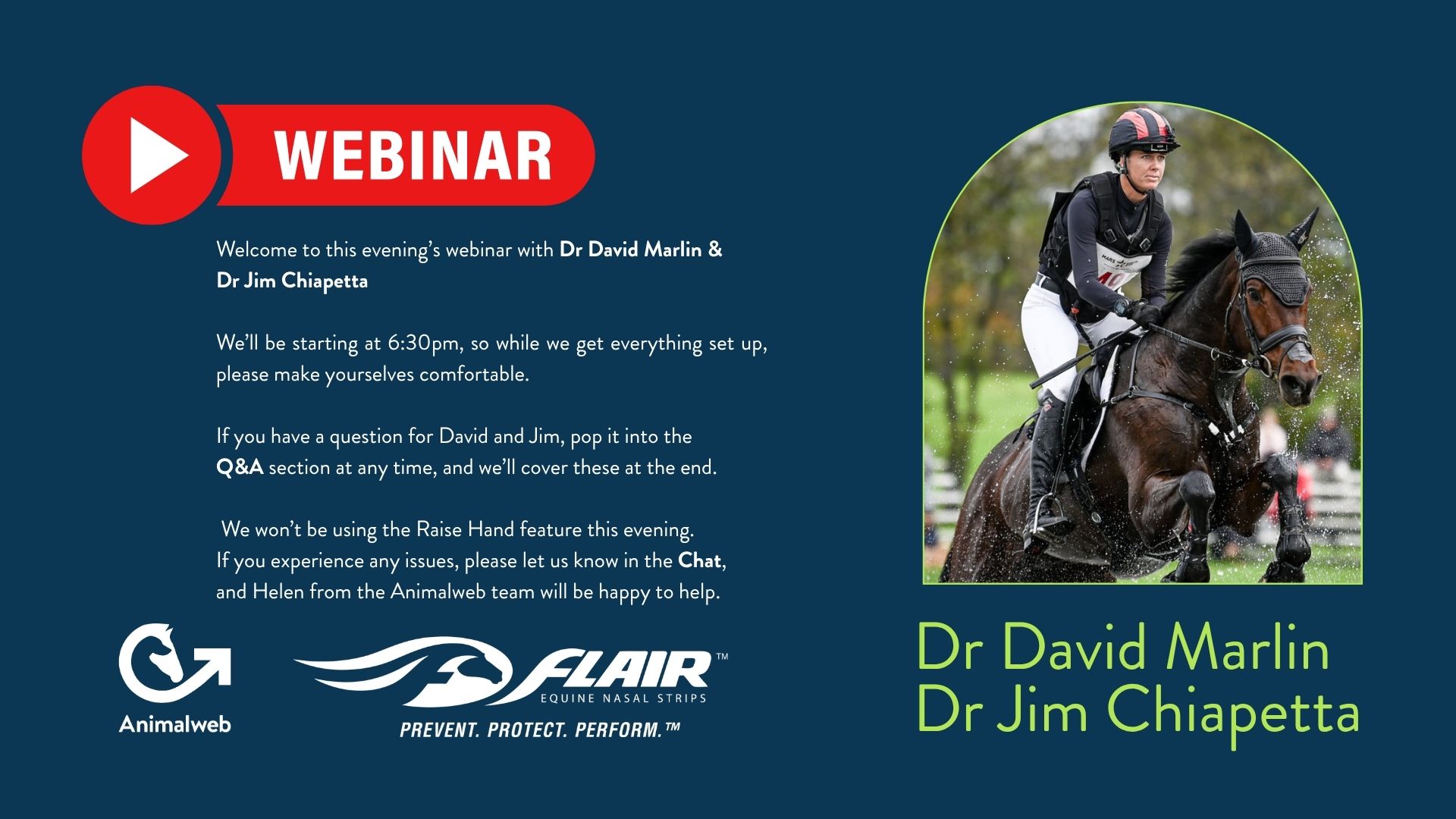
In this fascinating webinar, internationally respected equine scientist Dr David Marlin is joined by Dr Jim Chiapetta, one of the world’s leading authorities on equine respiratory physiology and performance, to explore the science of breathing in horses.
Together they explain how the equine respiratory system works, why horses are unique as obligate nasal breathers, and how even small changes in airflow can influence performance, fatigue and long-term lung health.
During the webinar, you’ll discover:
- Why up to 20% of a horse’s energy during fast work is used simply for breathing, leaving less energy available for performance.
- How the horse’s upper airway creates the greatest resistance to airflow during exercise.
- Why breathing and stride are inseparably linked, and how restrictions in one can affect the other.
- The fascinating anatomy of the equine airway, illustrated using endoscopic footage, imaging and real clinical examples.
- Why respiratory health matters for every discipline, not just racing.
- How airway resistance may influence relaxation, performance and fatigue, even in dressage and show jumping.
- The science behind Exercise-Induced Pulmonary Haemorrhage (EIPH) – why it occurs, how common it really is, and why it’s not just a racehorse problem.
- What current research tells us about managing respiratory health and reducing long-term lung damage.
- Practical ways owners can support respiratory health through stable management, forage, bedding, veterinary monitoring and training decisions.
The discussion also explores some surprising facts that many horse owners have never considered, including why healthy horses should not cough, why cold-weather exercise can increase respiratory stress, why the lungs cannot be “trained” like muscles, and why breathing efficiency plays such a critical role in athletic performance.
Packed with evidence-based science, practical advice and decades of combined experience, this webinar will change the way you think about your horse’s respiratory system and provide valuable insights that can help protect both performance and long-term welfare.
Whether you’re an owner, rider, trainer, coach or veterinary professional, this is an essential watch for anyone wanting to better understand one of the horse’s most remarkable – and most vulnerable – body systems.
Viewer discretion is advised.
In the slides presented in this webinar, there are some photographs of (dissected) equine lungs – some people may find the images graphic.
CPD Certificate for Respiratory Health for Performance, and the dangers of EIPH
