


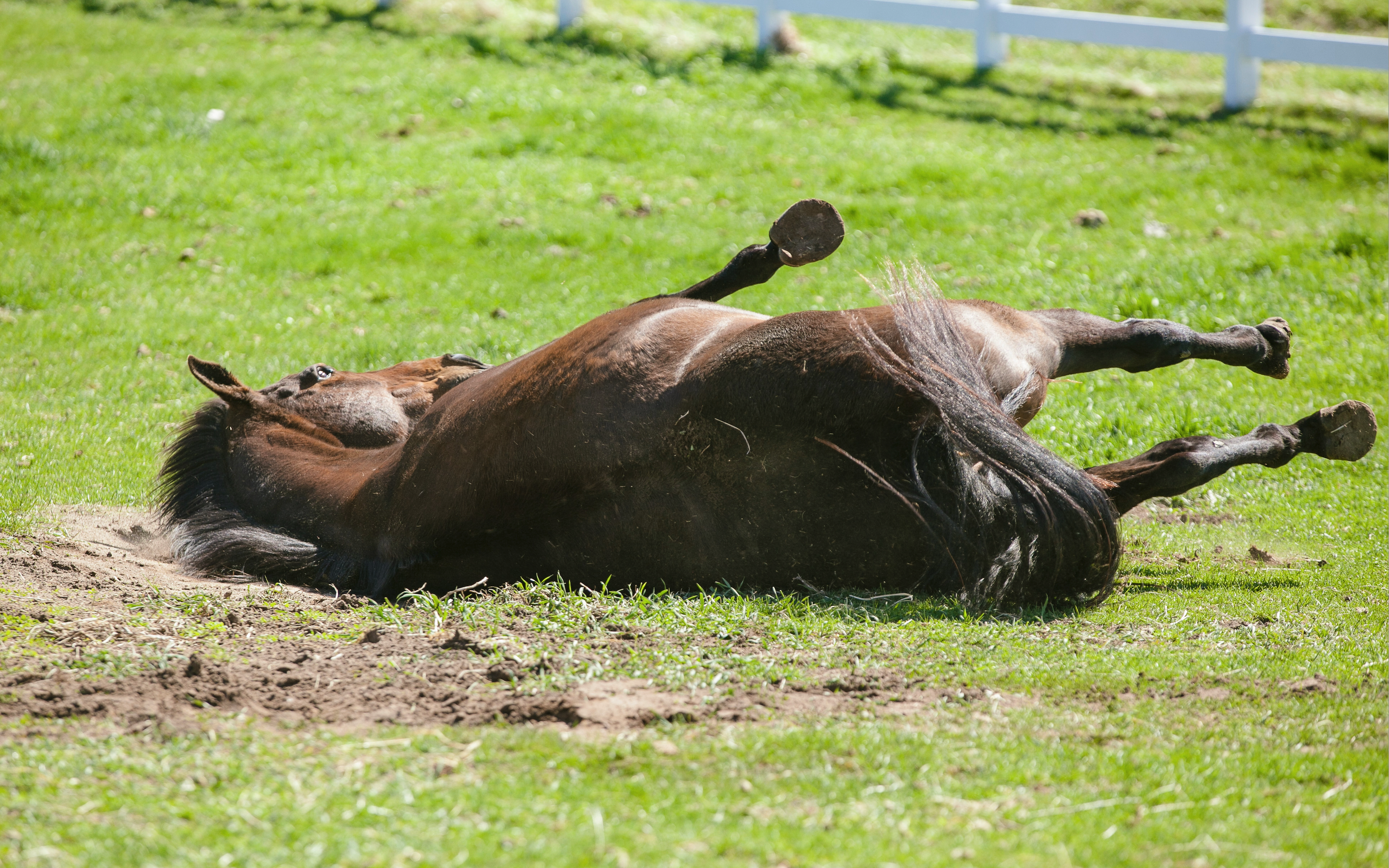
Do Changes in The Weather Increase the Risk of Colic in Horses? Why is Spring a Peak Time for Equine Colic?
The short answer – yes! But perhaps not for the reason you may be thinking! If you’ve spent any time around horses or on social media, you’ve likely heard the warning: sudden weather changes can spell trouble for your horse’s digestive system. From temperature swings to storms and heavy rain, it’s commonly believed that weather shifts can increase the risk of colic.
Horses are known for having sensitive digestive systems. Sometimes it feels like even minor changes in their environment can tip the balance. For years, horse owners and veterinarians have debated whether shifts in weather could directly influence equine gut health and trigger colic. Various theories exist, such as changes in barometric pressure, which in turn could alter the gases within a horse’s large intestine. With storms come low pressure, and it’s hypothesised that this pressure drop may cause gases in the hindgut to expand, potentially leading to gas colic or spasmodic colic. Gas colic is where excessive gas builds up, leading to painful bloating and discomfort whereas spasmodic colic involves abdominal pain and intestinal spasms, which can be caused by things like gas buildup, dehydration, or parasites. Let’s review some of the research studies in this area.
What does the research tell us?
Cohen et al., 1999: A case-control study from Texas evaluated 2,060 horses – half with colic and half with other emergencies. Results linked colic with several risk factors: recent diet or hay changes, prior colic history, weather changes, recent housing adjustments, recent or lack of deworming, older age (>10 years), being an Arabian breed, and being kept in stalls rather than on pasture.
Archer et al., 2006: A UK study looking at 2,580 colic cases found a cyclical pattern – colic episodes increased during periods when horses were more likely to be intensively managed (e.g., more stable time or management changes). The highest number of cases seen were in April and May in the UK.
Diakakis & Tyrnenopoulou, 2017: This Greek study analysed 823 horses over three years. Of the 245 horses that developed colic, there was a statistically significant correlation between colic and abrupt 24-hour temperature changes in late spring and fall (P<0.05).
Curtis et al., 2019: A systematic review of existing studies linked management-related changes (such as feed or housing alterations) to increased colic risk. This is important because we often change feeding routines or stable horses longer during adverse weather, adding stress and risk of colic.
Cianci et al., 2021: This study of 3,108 equine cases found no direct correlation between barometric pressure and colic (P=0.1). However, colic incidents did rise in more northern regions (P=0.04) and during spring, summer, and fall (P<0.05).
Bouton et al., 2023: In California, 3,071 emergency cases showed increased frequency on hotter days (P=0.05), during high barometric pressure (P=0.005), and with sudden barometric drops (P=0.05). While this study involved various emergencies – not just colic, the link is noteworthy.
These studies and others suggest that weather and seasonal changes likely play a role in colic risk, but it’s only one piece of a complex puzzle. It’s rarely as simple as blaming the weather alone. More often, it’s a combination of weather-triggered management changes (e.g., abrupt stabling, feed changes) or horse-specific factors (e.g., prior colic history) that increase the risk.
Practical Tips
Make gradual management changes
Management factors are likely to play the biggest role in colic risk in Spring. At all times, if you need to adjust feed, forage, exercise or stabling or pasture time, do it gradually. Watch out for sudden Spring grass growth and introduce slowly, limiting grazing time on new growth. If you have lots of lush grass and horses or ponies at risk consider a grazing muzzle. Abrupt changes in management are known to be a significant risk factor. (Follow this link to read more about grazing muzzles and which brands are recommended.)
Prioritise hydration
Ensure your horse has constant access to water. Adding salt to their diet (1 x 25ml scoop of table salt a day for a 500kg horse) can encourage drinking. Providing high water content forage such as haylage, soaked hay, steamed hay, and wetted feeds can all help reduce the risk of impaction colic.
Worming
Make sure you are following an effective worming programme. (Follow this link to learn more about worming).
Veterinary Support
Remember, colic is serious. Remember that colic can progress rapidly. If in doubt, consult your vet sooner rather than later for advice.
The Bottom Line
Keep things simple and manage each horse as an individual. Remember that management rather than weather is the biggest risk for colic.
References
Archer, D. C., Pinchbeck, G. L., Proudman, C. J., & Clough, H. E. (2006). Is equine colic seasonal? Novel application of a model-based approach. BMC Veterinary Research, 2(1), 27. LINK
Bouton, J., Fielding, L., Major, D., Deane, E., Mayer, J., & Rhodes, D. (2023). Retrospective evaluation of factors associated with emergency frequency and survival in equids presenting for emergency care (2019–2020): 3071 cases. Journal of Veterinary Emergency and Critical Care, 33(5), 598–605. LINK
Cianci, J., Boyle, A. G., Stefanovski, D., & Biddle, A. S. (2021). Lack of association between barometric pressure and incidence of colic in equine academic ambulatory practice. Journal of Equine Veterinary Science, 97, 103342. LINK
Cohen, N. D., Gibbs, P. G., & Woods, A. M. (1999). Dietary and other management factors associated with colic in horses. Journal of the American Veterinary Medical Association, 215(1), 53–60. LINK
Curtis, L., Burford, J. H., England, G. C., & Freeman, S. L. (2019). Risk factors for acute abdominal pain (colic) in the adult horse: A scoping review of risk factors, and a systematic review of the effect of management-related changes. PLoS One, 14(7), e0219307. LINK
Diakakis, N., & Tyrnenopoulou, P. (2017). Correlation between equine colic and weather changes. Journal of the Hellenic Veterinary Medical Society, 68(3), 455–466. LINK
