


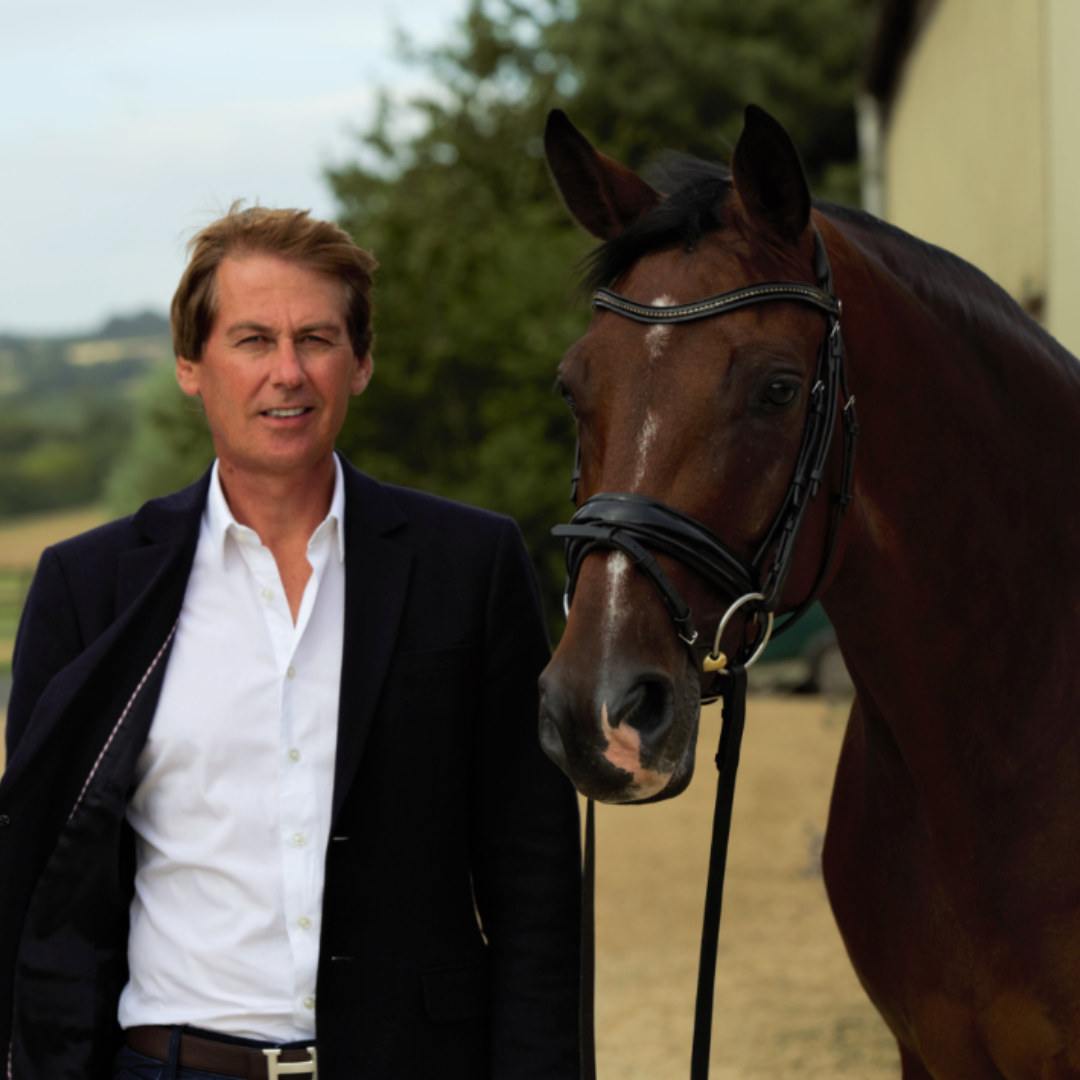
Join us as we sit down with the legendary Emile Faurie, a stalwart in the world of dressage, for an open and honest interview. Emile shares his incredible journey, including his recent challenges with cancer, from which he is now in remission.
In this heartfelt conversation, Emile discusses:
– His training philosophy and approach with riders and horses, including updates on Tom Goode and their progress.
– The challenges facing the equestrian industry today, why he believes the sport is “in real trouble,” and how we can come together to support each other and the future of equestrianism.
– His definition of equine welfare, which he sees as rooted in respect for the horse, and what that truly means to him.
– The myth of money being the ultimate barrier to success in the equestrian world, and what really makes the difference.
– Practical suggestions to better support dressage stewards and riders during competitions.
– The importance of truly understanding and knowing your horse to provide them with the best care and opportunities to thrive.
We’re thrilled to announce that Emile has joined the Animalweb team as an expert, bringing his wealth of knowledge and passion to help riders and the wider equestrian community.
Tune in for this inspiring and thought-provoking conversation with one of dressage’s most influential figures!
Emile is also offering an exciting training opportunity for our members – so log onto the website to learn more and take up the offer!
CLICK here to head over to the main Podcast page to see the complete list of podcasts available.
Transcription
Here is a transcription of the podcast. (Please note this is an automated transcription, so we apologise for any errors from the original podcast.)
Emile Faurie
Okay. Yeah, I’m doing okay. For the moment I’m in remission. Still got, you know, annual checkups and so on to do, but, you know, you can’t keep me down for too long. I think that the fact that I love what I do has been a great…
A great sort of way to keep me positive, you know, everybody straight away after my diagnosis said the one thing that you have to do is have a keep a positive frame of mind. And I suppose having never been ill in my entire life, and in fact, up until my diagnosis, I’d only ever been to a doctor three times in my entire life. it’s sort of…
The seriousness of it never really hit me until I had to be operated on, was quite an ordeal. But, you know, as I say, I think the fact that I do what I do, that you have horses, and also that I have a team here at home who…
I am responsible for and a team that are, you know, I couldn’t wish for a more supportive team. And, you know, I’ve got a really close, small, but close group of friends that have been just incredible without whom I don’t know how I would have managed. But, you know, Tom and Kelly, who are my two great friends and also my sort of right-hand people.
drove me up and down to London, appointment after hospital appointment and you know all the treatments and so on so you know I’m doing okay. Thank you goodness for that. Back in the saddle? Yeah I didn’t waste much time I got back probably a bit too soon but I’ve been riding again now for a year.
I wasn’t out for that long, probably only about four months in total. Probably started sooner than I should have, which created a few other problems, on the whole, yeah, I then picked up with Bellevue where we left off because I was very lucky that Tom kept her going whilst I was off. And she came back brilliantly and…
had a really great sort of beginning of the season this year until Leona decided that she was going to ride her herself. So that brought a great sort of start to the season to a very nasty end. That’s a real shame. You mentioned Tom. Let’s talk a little bit about him and how he’s doing his other phenomenal season. So tell me where he’s at.
I mean he is doing great, he’s very very lucky in the fact that we’ve managed to get together a string of really lovely horses for him. But you know all credit to him as you he’s trained, he’s now trained six horses from novice to grand prix.
You know, he’s not hit the big time yet because the horses probably haven’t been of the caliber that is needed. But now he has got the horses and he’s sort of just about to sort of start really seriously campaigning. Freddie, was a horse that Richard Jackson very kindly bought for him.
a five-year-old actually was when he came and he has a very hot horse and as a young horse he was incredibly naughty but you know with the system that we have
with patience and just sticking to the system. mean, that’s the great thing about Tom is, you know, he will follow to the letter of what I tell him. And he never deviates, never. will never, if I’m not here for a week, he will not deviate from our program, from how we do it. He follows what I say down to the letter and it’s paid, it’s, you know, it’s paid dividends because the horse
is now only nine. He’s done a handful of Grand Prixs this year. Still a bit green at that level but I think next year he can certainly be one to watch. So let’s dive into that a little bit more. You’ve mentioned about a hundred things in there that are really key to pick up on. So the partnership and the relationship that you and Tom have.
how you communicate, what do those programmes look like, how do you transfer those training programmes onto the different horses at the different levels, and how key is the consistency that Tom has learned. So I’m trying to get to, people need to commit to training over periods of time that it flexes. Just talk me through that. Well, I mean, I can only give you the example of Tom. When Tom started with me 15 years ago,
I mean he rode two or three horses a day and those were horses that he tried to get on a bit and then he moved on from that to a few more horses, one either naughtier than the other or one more stiff than the other. They were very basic and normal horses but
I think because he found in me and then the support that I gave him, a system that he found was logical and that he could relate to. he, there was very little, well, there was no doubt ever that he would move or change or…
question and maybe think, well this one says that on Instagram or the other one says do it this way. Once he bought into the system he never deviated, never. And as I say the consistency of that is what’s made him
you know, train so many good horses and also don’t forget he’s also a brilliant young horse rider. You know, he’s won the young horse championships now, what, one, two, three, four, maybe even five times. Sadly, it’s not always as documented as other names are, which I find sad for him, but he is incredibly liked by his peers.
And he’s very popular with the fellow riders because he is just genuinely a really nice guy. But I think the whole reason for his sort of slow rise, I mean, it didn’t happen quickly for him, definitely not, as I said, because we never really had the horses. But I think as he progressed, he just…
He soaks up information and even now, after 15 years, we work together on at least three, four horses every day. And it’s the same as though I taught him 15 years ago. There’s never any… We discuss a lot more and I respect his opinion an awful lot because he gets the feel and that…
you know, I need to know what he feels. And wasn’t always good at coming back at me and saying, this is what I feel, but he now does. And that means that we have a better dialogue. And it means that actually he’s just writing better and better as a result of it, because it means he gives me feedback, which means I can help him more.
But, you know, as I say, the fact that he is where he is today is because of consistency and because he never questioned anything I ever told him. I mean, if I told him to get on backwards, he would get on backwards. You know, he just is, he bought into the system because he understood it, because it was…
relatable and also because he started seeing the results. Quite quickly, yeah, I get that. So we’ll revisit the training programmes in a minute because I know you’re going to offer the listeners an opportunity to come and train with you and start to understand that system a little bit more.
Interviewer – Jo Warrilow:
You mentioned in there about Tom’s peers, which touches on actually competing, which is what it’s all about. There’s been a lot going on in the industry lately with things happening and things changing. You came up with a great saying the other day, there’s a difference between bad riding and rough riding. The stewardship is all changing. They’ve been trained. Talk me through how you feel about what’s happening within the competitive world of dressage over the last few years and where it is today.
Emile Faurie:
Look, mean, there’s no denying that our sport is in trouble.
We need to, everybody needs to realize that. And I think we need to not bury our heads in the sand about it. And we need to work more together about fixing it. The nature of our sport is such is that it is so competitive and in our country, it’s also a very small world.
It is very fragmented and there is a sort of pecking order hierarchy that needs to…
that needs to be more all encompassing. It needs to cover more areas. It needs to bring more people into the fold. It needs to be clearer to everybody where they stand.
I think the social media is to blame for a lot of it. There’s absolutely no question. I’ve said from the beginning on, if we could all just bear it to go completely dark for three months, if everybody simply switches off Instagram and Facebook for three to five months and just not, not taking it at all. I think…
I think our lives would be so much better for it and I think that it’s so difficult to read negative things and not want to retaliate and I think that it also makes so many people look past what is good in our sport and what is beautiful in our sport and what is, you know, that that…
it gets overlooked and people start focusing on the negative aspects of it. And really, I don’t know what the answer is and I don’t think anybody knows what the answer is, to be honest, but I do think that we have to address the issue, but we have to address it more together and not, it shouldn’t be addressed only by certain people.
It should be addressed by everybody who’s involved in the sport. And I think…
What happens quite quickly in the sport is exclusion, which is devastating for anybody to be excluded. And I think what we need to do is to try and avoid anybody being excluded and to try and bring everybody into the fold.
regardless of their standing or their popularity or their amount of followers or things like that. And I think it needs to get to a point where everybody’s voice matters and we should all try and learn from that.
I think learning education is a way forward obviously you’ve come on board with animal web to be the expert with the training side of things and we’re very much a welfare-led platform if you like what does the word welfare mean to you and how do you think riders interpret the word welfare i mean first of all the word welfare to me means respect for the horse and
being an educated rider, therefore not being in the sport for the sake of recognition, but doing it for the love of actually…
the horse itself and the quality of riding. Striving to be a rider that respects your horse and that always endeavours to have real quality to your riding with technique.
that’s what it means to me and it means listening to horses. If you spend enough time with your horses, they talk to you in ways that they tell you what their bodies feel like. Through behavioral patterns, can read so much into it, but it’s having…
the mindset to want to do that and the time to do it. And do you feel riders are under pressure by the nature of the industry now? Prize money is harder to get, horses are becoming more more expensive if you want to get to the top and they’re trying to get there quicker and it becomes a bit of a financial thing and then welfare and training techniques are compromised because people don’t have the time.
I don’t really know is the answer, but I do think that the whole money aspect of it, yes, it is an expensive sport, of course it is, but then you know what, so is sailing. So it’s, you know, I have a friend whose young boy is just made the GB Fencing team. How old is he?
12, 13, and the amount of money that it has cost them to traipse across Europe to get in to qualify for championships and so on. So yes, our sport is expensive, but you know, it’s not the be all and end all of it money. I mean, I’ve never really had, I’ve had one.
expensive horse in my life and it was also the biggest failure. Okay, I’ve not won a gold medal but you know the Valegro road didn’t cost an arm and a leg.
So yeah, I think that the financial aspect of things is there. We’re never going to change that. That has to, but it’s not a factor that could prevent anybody from becoming a gold medal winner. I think if where there’s a will, there’s a way. I think definitely anybody that throws their hands up and say, can’t do it because I just don’t have enough money. Well, that’s just defeatist.
And I think that there are good horses. mean, there are good horses. And I’ve always said a gold medal horse isn’t bought, it’s made. But then you look at aspects where very, very famous horses have changed hands for huge amounts of money, but those are singular cases. And I don’t think, and certainly never has it been a deterrent for me.
to stop being ambitious or to stop wanting to still achieve. Even at my great old age, I still wake up every day hoping that I’m gonna win another medal or that I still look forward to riding and competing. But yeah, competing is expensive, but it’s doable.
think that we have it quite good in this country in the fact that we have a lot of very good venues and you can still do it. I you mentioned prize money. Well, prize money is really, it’s hardly worth the mention unless you get to the really big stuff. prize money locally doesn’t really come into it. But we’ve got some super venues, especially down in our area here that I know of.
We’ve got venues that work so hard at running good and professional shows where certainly I have never seen anything that made me think, dear, that shouldn’t be happening or so on. And I think that…
The worst thing that we could do is overreact. Unfortunately, I do feel there has been an overreaction to the current events, maybe. I’ve always believed that stewards should be trained by trainers and not by judges or anybody else for that matter because…
One has to be able to assess a situation sometimes within seconds. And you need to be able to make that decision with knowledge and with an understanding of horsemanship, of the sport of dressage, of…
You need to be able to read the situation. Sometimes the walls can react to an outside influence, which throws the rider off balance, which can result in a moment where it might not look so pretty. And for a steward to then jump in and say, actually, that was unacceptable is unfair, I think, because it wasn’t anything that the rider did that…
was by any means damaging to the welfare of the horse. So I think I would really like to see a programme where our stewards are given…
training by trainers, by proper international competitors who, you know, you also need to understand the pressure that competitors are in, you know, and I feel it’s sad if riders feel as though they’re being policed because that shouldn’t be what our beautiful sport is about. Is there going to be the odd bad apple year in there? Of course.
happens in every sport, every aspect, in every sphere of life. It’s not just in our sport.
And should it be penalized? Of course it should be. But it should be done so in a way that is humane and it should be done by somebody with the correct training and knowledge to be able to assess the situation and make a judgment call.
What do you think about the gadget for the nose band? you seen what they’re using for that? What should we I have, to be honest, it’s so difficult to… That’s why I’m saying that a steward should be trained by people who know. Because I have a horse at the moment that…
choose when when Riddon he’s absolutely quiet in the mouth his nose band is quite nice and loose but the moment that you come out of the arena he chomps on the bit and he chews so you need to have somebody that’s very good and quick at finding the right second to push that little piece of plastic up horses
when they come out of the arena are filled with adrenaline, especially when you ride at massive championships. I mean, if you look at the Olympics in Paris, where I think they got it so right, you know, the stewards there were just brilliant, but they were.
tens of thousands of people watching, spectators and atmosphere and noise and not every horse reacts in the same way. So some horses came out and were very excitable because their adrenaline is high. You know, watch a Formula One driver when they come out, get out of that car at the end of the race, you know, they don’t just gingerly slide out and you know and…
throw a little wave, they jump and they, you know, as any sportsman who, where your adrenaline level gets so high because of performance and concentration, to suddenly come out and stand dead still whilst, you know, a piece of plastic is shoved up their nose, but I don’t know that it’s going to give us the desired result. Horses don’t stand still, riders are.
more concerned about cooling their horses off. So for me that’s a hugely more important thing that your horse does not come out of the arena, you know, having exerted himself and then suddenly has to stand absolutely dead still without being cooled down, without having any for horses, you know, that could take.
quite some time if a horse isn’t standing still or if a steward is not tall enough or a big horse or you know there’s so many factors. Why not just train stewards properly that can assess the tightness of the noseband purely by feeling and rather than having because all of this is also going to be open to the interpretation of the steward.
did, you know, it leaves room for so many difficulties. You know, could the owner or the trainer or the rider…
could all say, well, you didn’t push it, you you pushed it too far up or you didn’t push it all the way in or you did this or you did that. You didn’t give my horse a chance. You know, if we’re really talking about the welfare of the horse, why can’t the horse just be given a chance to cool off first and then be assessed by a steward who’s been trained, who has enough quality of horsemanship to make a more…
a more sort of accurate decision on whether a noseband is too tight or not. And I mean, anybody that really knows this stuff knows that a tight noseband doesn’t work for anything. I mean, I’m sorry, but I’ve been in this game for a long time. And honestly, the tighter the noseband, the worse it all goes.
Again, education. Education. Is there anything else you’d like to see change or improve within the competition, literally the day of a competition?
I mean, judging is a thing that is constantly under scrutiny. It’s a very, very difficult thing being a judge myself. I know I’ve judged in panels before, not recently, I admit, but I do feel that when there is percentage differences of 10, 11%, that that…
and I’m talking about it more in our country, that it needs greater scrutiny. And I think that it should, you know, I think that on the whole we have some of the best judges in the world in But I do feel that in our country, that the sport, has become too fragmented, I think.
if you think of the amount of competitions that are running and that you would go to a local show and there would be entries of two to three per class, I think it’s a shame. think that it would be easier for competitors, judges, organizers alike to have…
not quite as many shows run on exactly the same day at venues that are closed together. So that you can have a greater assessment as a rider for yourself where you are standing for the national championships at the end of the year. Our premier leagues are very well attended, really well attended. And I think that they, that the system of our premier leagues and our.
High profile shows are very, they’ve got the system down to the tithes. That’s all around really well. And we, as I said, I think we’re incredibly lucky, know, of some of the venues that we attend for those shows are so brilliant. And the facilities are great. But I think that if we could just get a little bit more inclusion from more parties.
in the whole make-up of the sport.
as I say, make it slightly less fragmented. Just to finish and wrap up on competing and showing, I know we’re going to cover it in the training options, but warming up, people always have very differentiating opinions on how it should be done. What’s your overview and opinion on how to deal with that on the day? What should a warm-up look like? Well, it varies from horse to horse. I mean, there’s just not one single way of warming
is different. re-orce requires a different warm-up period, time. For me, what is very important is that my orces don’t get confused during working in, like I did when I was a lot younger. I I got to a show and suddenly started riding like a complete maniac.
completely different way, throwing my horse into such situations that he didn’t know whether he was coming or going, because of nerves, because of ignorance, because of lack of experience. But I’ve learned that if I stick to a certain program of working in, which I do with all my horses, the same type of program, of course it gets slightly adapted.
from horse to horse as they differ, but we stick to a very similar process of working in to try and make sure that it gives the horse a bit of a security blanket.
if you have a horse that gets a little bit nervous or a bit tense in the working in, especially at some shows when there’s sort of, you know, seven, eight people working in a 20 by 60 arena, all with their own agenda, their own lines, their own thought process, then it gives your horse a bit of a security blanket. And as a rider, it stops you doing silly things.
it helps you to be focused and concentrated.
especially for lesser experienced riders who can quite easily go to show and think, gosh, they’re so-and-so or so-and-so, my goodness, you I’m in the working in arena with somebody who’s written on a team or who’s won a medal or, you know, they look at the sides and think, they’re such and such watching, I don’t want them to see me ride. You know, there’s all those things that go into it. And as a rider, when you’ve got your program and you can
fix your mind on what you’re going to do. It helps you to also listen to your horse a lot more.
it keeps you focused, it keeps you in tune with your horse in a way that you cannot be distracted from outside influences. So for me it varies very much from horse to horse the amount of time but more or less what we do more or less stays the same unless of course we’ve got a horse that is super hot or a horse that is maybe a little bit lazy or a horse that is easily distracted then of course you you vary it a little
but the basic principles of our working in program stays the same for every one. And I think that is a really good point to make and is the differentiator between you and a lot of other trainers is that you give people assistance and a program so that they do know what they’re doing when they go home and you’re not there and when they turn up at the show would that be a fair summary of how you train? It is how I train, I wouldn’t say I’m the only one that does that but I certainly what I do I mean I
think it is very important when you train people to make sure that when they go home they have the tools that they need that are easy to follow because when a lot of riders are on their own they also have distractions. They are people that maybe run a yard and that there’s a horse galloping out in the field or the phone is ringing or somebody wants to ask them a question.
And it’s very difficult to keep your focus, especially if you run your own place like that, to especially smaller, more what we call pro-annagers that have smaller businesses that maybe don’t have the backup staff yet when they’re in the way of working up the ladder.
that it is important that they should have the tools that they can literally come back to quickly because it is a very clearly set out plan that is easy to follow.
makes life a lot easier for somebody that has to maybe work on their own. And facilities as well, not everybody has an indoor school for coming into winter, it’s brutal to stay motivated. Yeah, I mean even with an indoor school, it’s yeah, I mean when it gets dark and you know some of these
people ride after work in the dark with not such great lighting and so on. And it is raining. To keep yourself motivated is not always that easy. Our current government is going to make it even more difficult for us to run small businesses as we are. Everything is getting more expensive. We can’t exactly charge more than what we already are.
you know, national insurance is going up, minimum wage is going up. So to get everything to work together is very, very stressful. And I think a lot of younger riders now must struggle with that tremendously. And I think if they have support of a trainer that is accessible,
that is sort of consistent then it gives them a great deal of sort of mental support as well to stay focused over the winter months when it’s everything is more difficult let’s face it you know we’re on clay here and you know turning horses in and out which is an ongoing process all through the day here.
for the south become quite laborious, know, having to sort of change into wellies and plough out into the mud and so forth. It is tough in the winter.
Yeah, think if, and I think if you have a smaller business, as I said, first of all, you know, it’s becoming very, very difficult. And if you have a little bit of a system that when you write, you can put all of that aside and you can say, now is my 40 minutes or hour or whatever long it takes.
And in that period of time, I know exactly what I want to achieve. I know the tools of knowing how I’m going to make it achieve. Does it work every single time? No, probably not. But if every problem I come across, I have one or two, three different options of how I can fix that problem with technique, then that’s the way to go.
Interviewer – Jo Warrilow:
Just going back to welfare as a general term, I know you also spend a lot of time with your team and yard management, nutrition, it’s not just about providing the training to get a competition horse to where it needs to be. Just talk me through a little bit about your feelings about all of the other touch points that you look at with the everyday care of the horses here. I mean, absolutely every single aspect of it.
Emile Faurie:
And I am lucky in the fact that I have had, you know, my Tharir has been with me for 20 years, my vet for however many years, you know, and that means that we’ve built a relationship that he listens to me, I listen to him. And there’s not one aspect.
of the sport and of the keeping of a top competition horse that you can not be 100 % aware of and 100 % involved in because if you leave all of that up to other people you don’t know your horse and if you want to be a top competitor you have to know your horse it’s got to be your wife, your husband, your partner, your…
best friend and you have to know absolutely every single aspect of that horse and that means spending time with that horse. I quite often like to tack up you know my horses every now and then by myself because you learn a lot by doing that. Tom does too, you know he’ll quite often come out 10 minutes earlier after lunch or something so that he can tack up one by himself.
The whole feeding aspect again, you know, I’ve been around a bit, so I know from experience that I need to investigate, know, when it came to investigate into choosing a feed company, it’s very difficult because there’s so much on social media about it.
that you look at something and you think, my God, I really should, you know, you almost feel guilty that you’re not feeding that. And then you look at the supplement and you think, well, I’ve got to feed that because, know, and it becomes, it becomes very, very easy to overbuy into what we are fed with on a daily basis.
And Tom’s always said, I’m a salesman’s dream because I’ve always wanted to try everything and do, you there’s something new. think, well, maybe we should try that. But I’m lucky in the fact that when they came to choose a feed company, I actually met with very, a few different companies. And when I chose TopSpec, it was because they took the time.
to sit and talk me through it and it all seemed logical. seemed it was easy for me to understand why I should feed what I feed, what every horse’s needs are, the different kinds of feeds and so forth. And you know just the fact that it’s made here in England and
that it is, you know, it worked for me. So the way you run the business and the way you choose what the horses have or what they need, would you say you do that from a preventative point of view rather than waiting for an issue to then fix it? Have you got an instinct of how you make those decisions? Well, the horse tells me. It’s a question of listening to your horse. I if your horse is a little too hot and then you know…
you know, you need to go down a different route or if you need a bit more of this or a bit more of that, if their drop-ins are a bit loose. it’s being aware of your horse’s behaviour and their patterns in the stable as much as when ridden, watching them out in the field. It’s just, you know, it’s like…
It’s like a marriage, you can’t be married to somebody and only know one aspect of their personality. It’s all encompassing. Obviously, prevention is always better than cure, but quite often, you know, you find out things.
over a period of time. It’s not always, you know, we don’t have crystal balls that we can look into to the horses. Sometimes behavior patterns change as they go up the levels in training.
sometimes you find that a horse that was really on its toes as a young horse when the level of training goes higher that you then do need more protein, more energy feed. But I mean, you know, that’s just one aspect of a million aspects. What Tom and I do is we regularly, and I mean regularly at least once a week,
sit down and discuss horse after horse after horse what how they were this week mostly we do it on Saturdays on Saturdays we don’t really train we hack the horses we play around with them we stretch them we we don’t train on Saturdays it’s a day where we sort of look at our horses and as we do it together in the school we’ll discuss them and we’ll discuss
where we are with them, what we’re going to do next week with them, have they got a competition on should we maybe change the bed, should we, know, when do their teeth last down, you know, Kelly’s very good because she keeps everything nicely on a digital calendar for us, so it is easy to check but you know sometimes the horse
needs a checkup with their teeth in between two checkups. We found that quite recently that all of he seemed less happy in his mouth, but his teeth had only been done sort of two months prior.
And then we discovered that he had a wolf tooth coming through. So, you know, that was immediately dealt with because we, we acted there and then. What do you worry about most? Give me a couple of examples of three things that you worry about. How long have you got? Do you worry about them getting collate? Do you worry about feeding the wolf thing that get ulcers? Do you worry about? Everything.
I worry about everything. I worry about horses not being well or staff not being happy or am I going to make the mortgage payment this month? Is the place tidy enough? Have the horses got the right…
program for them. Are they going well enough? Are we pushing one maybe a little bit too much? I mean, you never stop worrying when you’ve got, as we have here, 30 horses. You worry about every single one of them.
And we have client’s horses so you worry about making sure that your client is going to be happy with the progress of the horse. worry is what you go to sleep with and wake up with.
Interviewer – Jo Warrilow:
Right, just finish on this one. If money wasn’t an object, how would you buy a What type of horse would you buy to ride to take to Grand Prix? What would you go after and why?
Emile Faurie:
Gosh, I don’t know. I actually saw a horse advertised the other day on Facebook. And I immediately messaged her. The horse was in America. And I immediately messaged her and asked how much it was. And I showed the video to Tom and he said, why on earth would you want to buy that?
And I knew that it is going to be an absolutely, would be the perfect match for me. Sadly, she wouldn’t sell it out of America. She said she, wouldn’t have been able to afford it anyway. It wasn’t very expensive, but I don’t know that I would, you just know when you see a horse. When I saw Freddie Fierston wrote,
I saw a video of him and that’s where I chose him from. From a video. He turned up having never been ridden by any of Tom or me. Because I just knew he was going to be a top horse.
snoring in the background. So I don’t know, it’s not about the amount of money. I mean yes of course the more money you have the quicker you can go out and buy yourself a really really good horse.
But I honestly, I would probably buy 20 3- year olds rather than go out and buy one grand prix horse. But you can definitely see a connection through a video or a photograph then, so the energy of a connection, something there. I don’t know what it is, I mean, I’ve not always been right. I’ve also chosen one that was really not a good idea. Probably more than one.
But I think once you get to my stage in life, you know the type of horse that suits you. And I know the type of horse that suits Tom. I just do. So it makes it easier to choose because, you know, some people like lazy horses, some people like hot horses. We prefer hot horses.
because I think our training program works quite well with it, our setup here works quite well with it, the fact that they all go out and spend some time out in the field and that they are treated enough like proper horses. But I think
I don’t know if I had all the money in the whole world, I’d probably buy a hundred horses and also, you know, give a few to other people to ride because I get as much pleasure out of that as well. I actually love being an owner. Tom’s actually riding one of my horses at the moment, just gives me… I actually bought it for myself to ride, but I’m just scared to ride it because it’s too frisky now for me.
But I get so much pleasure out of helping him with it and seeing it progress and seeing how good a horse he is becoming. I definitely would buy a new horse box because mine is falling apart. So drastically I do need a new horse box. I would probably buy a lot of young horses and a new horse box. Bring them home in a new horse box. Right, just to finish off then.
Interviewer – Jo Warrilow:
Anyone’s welcome to come to train. Just tell me a little bit about how to contact you, how to come here and have access to Heath Farm.
Emile Faruie:
Well, basically my phone number is all over the internet so it’s quite easy to find my number.
ring up. We’re easy to find. Obviously one needs to book a little bit ahead of time but it’s very easy to find me. We have a lovely yard. It’s probably not the fanciest yard in England but it’s a functional yard.
it’s a clean yard and I think we pay attention to the things that really matter like the going you know we have to we our arenas are incredibly well looked after so for me that’s the most important thing is that the horses work on the surface that is good and kind to their limbs.
Interviewer – Jo Warrilow:
And it’s not just all about dressage riders either, you train a lot of top eventers and showjumpers too, right?
Emile Faruie:
I have done at the moment, I only train about one eventer, but I spent a lot of time training Rob Murphy who is now doing fantastically abroad, showjumper. I mean, he’s just an extraordinary talent.
and is going to be one of the best in England in no time. He’s 21, 22 and he now works for Jos Lansink. And he, I mean, he was so incredible to teach, soaked up any kind of knowledge that you could give him. And yeah, he’s doing extremely well.
