


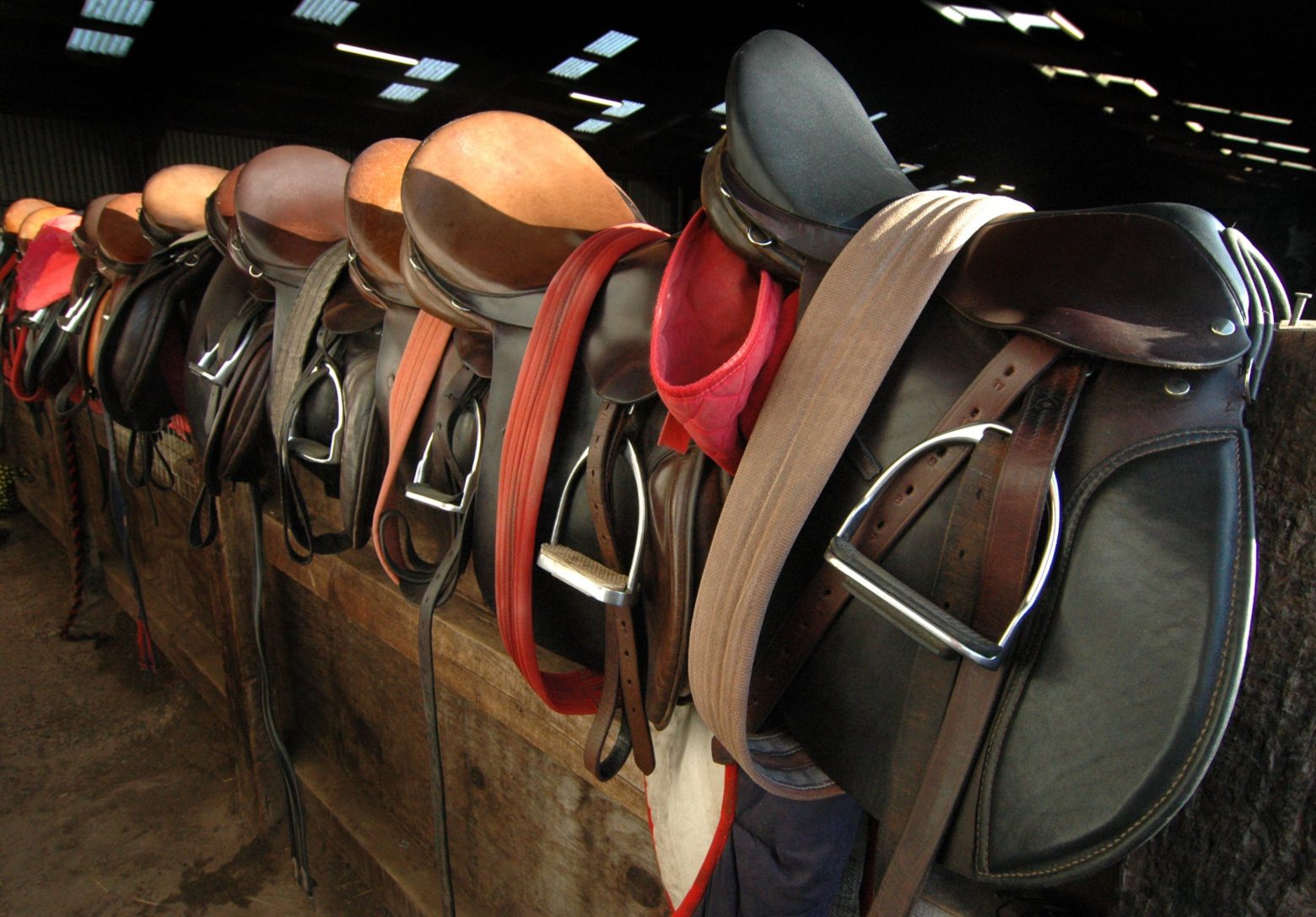
Royal Veterinary College and University of Southampton researchers reveal insights on saddle fit and horse welfare.
A recent study by the Royal Veterinary College (RVC) and the University of Southampton suggests that flatter saddles may better accommodate the shape of a horse’s back during movement, potentially improving welfare for ridden horses.
Researchers observed that horse backs flatten significantly during locomotion compared to when stationary. Saddles fitted solely to a horse’s stationary shape may not distribute weight optimally during movement, leading to potential back pain. Proper saddle fit is essential, as a well-designed saddle can evenly distribute load and reduce pressure, supporting a horse’s health, performance, and comfort.
Using cameras and a laser-scanned model horse, the research team studied five horses’ backs while walking and trotting. They found that saddle areas experience only minor shape changes during movement, suggesting that existing deformable saddle padding may accommodate these variations. The study underscores the importance of withers clearance, aligning with current saddle fitting standards.
This study lays the groundwork for further research, including examining saddle fit during faster gaits and under rider weight. Dr. Jorn Cheney, lead researcher, expressed optimism: “Now the exciting question is, ‘do we improve upon the design by fitting to the moving animal?’”
Catherine Morris of the Worshipful Company of Saddlers noted, “Understanding a horse’s back in motion is critical to achieving a comfortable fit for horse and rider. This research provides valuable insights that can enhance saddle fitting practices.”
This study was funded by the Worshipful Company of Saddlers and published in the Journal of the Royal Society Interface. Read the full study here.
