


Strangles, caused by the bacterium Streptococcus equi, remains one of the most common and disruptive infectious diseases affecting horses. Outbreaks cause significant welfare concerns, lost training or competition time, significant economic loss, veterinary costs, and biosecurity headaches for yards and owners. For years, many horse owners have heard mixed messages about the available vaccine Strangvac (a recombinant protein vaccine developed by Intervacc and available in the UK and Europe). Some have been told it is neither particularly safe nor effective. A focus article in the latest official UK surveillance report directly addresses the scientific evidence on efficacy and duration of protection.
The latest report in EQDSR
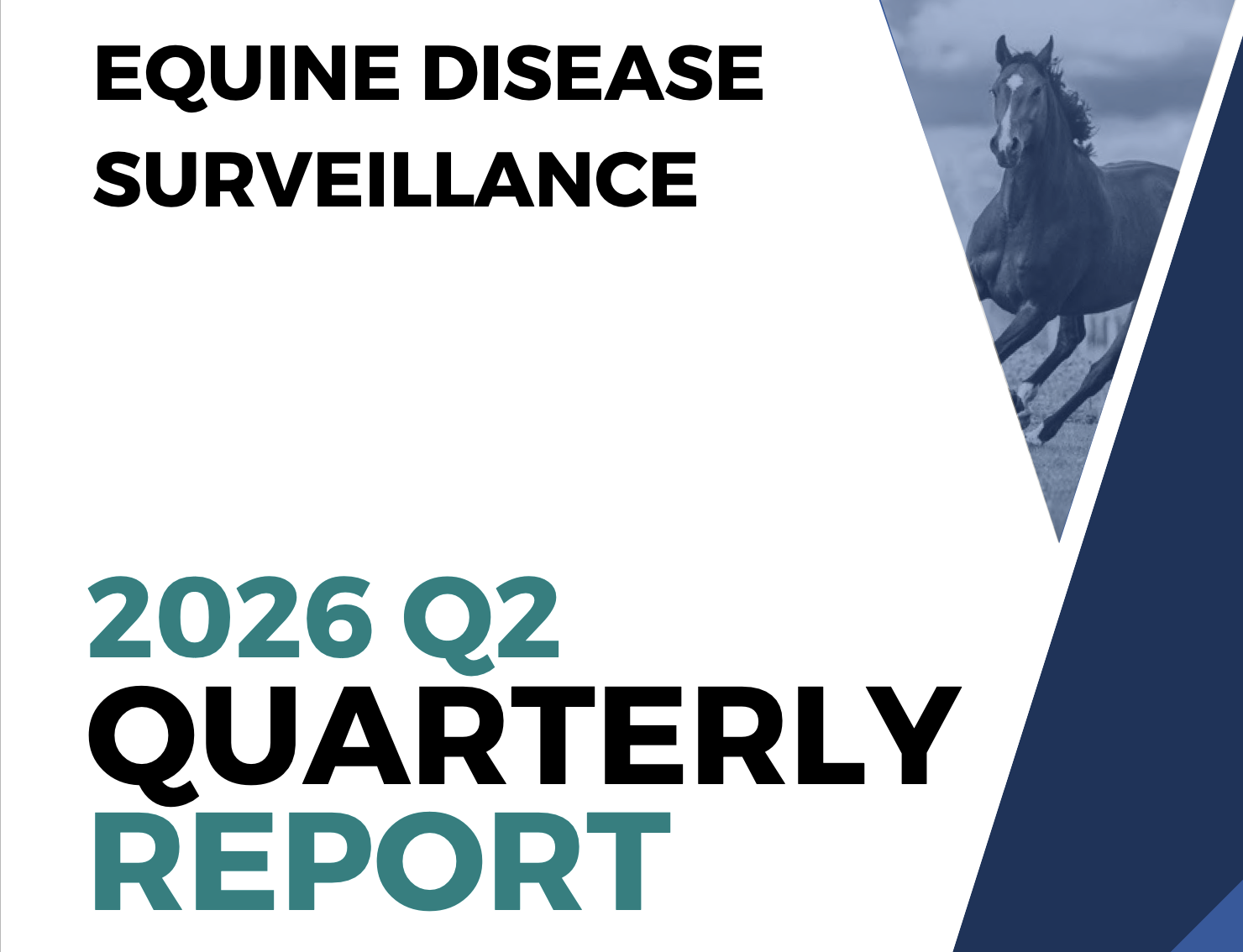
The Equine Quarterly Disease Surveillance Report (EQDSR) Volume 22, No. 2 (April–June 2026), produced by Equine Infectious Disease Surveillance (EIDS) at the University of Cambridge, includes a detailed focus article titled “Racing Past the Post: Vaccine-Induced Antibody Thresholds Predict Protection Against Strangles.”
The authors (including researchers linked to the vaccine’s development and independent analysis of trial data) examined results from multiple double-blinded, placebo-controlled experimental challenge studies involving 80 vaccinated ponies and 49 controls. They also looked at antibody kinetics in a clinical study of vaccinated ponies followed for up to a year after vaccination. The key finding is that antibody levels to the three main vaccine components (IdeE, Eq85 and CCE) act as reliable correlates of protection. Higher titres strongly predicted whether a horse developed clinical disease (specifically, fever of ≥39.0°C as a clear marker of infection).
In the challenge data, 93.9% of control (unvaccinated) ponies developed disease by the defined threshold, compared with only 21.3% of vaccinated ponies—a highly significant protective effect. Antibody levels remained above the thresholds associated with more than 78% estimated protection for up to 12 months after the second dose of the primary course. Vaccinated animals also showed a clear delay in the onset of fever compared with controls.
These results align with the vaccine’s performance observed under field conditions and support the idea that protective immunity lasts substantially longer than the two-month duration originally listed on the product information (based on the data available at the time of licensing). A formal application has already been submitted to regulators seeking to update the labelled duration of immunity to 12 months on the basis of this and related peer-reviewed work.
Safety in practice
Strangvac is a subunit/recombinant vaccine. It contains no live bacteria and no bacterial DNA, which means it does not interfere with the diagnostic tests used to detect natural S. equi infection (DIVA capability). This is a major practical advantage during outbreak investigations or screening.
Field and clinical reports consistently describe only mild, short-lived reactions in a minority of horses—typically modest injection-site swelling or a temporary temperature rise of around 0.8°C that resolves within 24–48 hours. Horses return to normal health quickly. Serious adverse events have not been a feature of the published studies or widespread use across Europe.
What this means for owners
No vaccine is 100% protective in every individual under every challenge dose, and Strangvac is no exception. It reduces the severity and likelihood of clinical disease and helps limit spread, but it works best as part of a broader strategy that includes good biosecurity, isolation of new or returning horses, and prompt veterinary investigation of suspects. The new antibody-threshold data give a clearer scientific basis for expecting meaningful protection lasting many months after a primary course (typically two doses four weeks apart, with boosters according to risk).
The official product information still reflects the original shorter duration claim while the regulatory update is considered. Individual recommendations on timing of boosters should always come from your own veterinary surgeon, who can take account of your horse’s age, risk of exposure (e.g., competition, livery, sales, or known outbreaks in the area), and overall health.
Bottom line
The focus article in the 2026 Q2 Equine Quarterly Disease Surveillance Report provides robust, transparent evidence that Strangvac induces protective antibody responses that correlate with reduced clinical disease and that these responses can persist at protective levels for up to a year. Combined with the vaccine’s favourable safety profile and diagnostic compatibility, this information should help owners and vets make more informed decisions rather than relying on outdated or second-hand claims that the product “doesn’t work” or is unsafe.
Speak to your veterinary surgeon about whether Strangvac fits your yard’s risk profile and how it can be integrated with everyday management practices. If they say its not safe or effective, refer them to The Equine Quarterly Disease Surveillance Report (EQDSR) Volume 22, No. 2 (April–June 2026), produced by Equine Infectious Disease Surveillance (EIDS) at the University of Cambridge.
Staying current with official surveillance reports such as the EQDSR remains one of the best ways for the equine community to base decisions on evidence rather than anecdote and hearsay.
