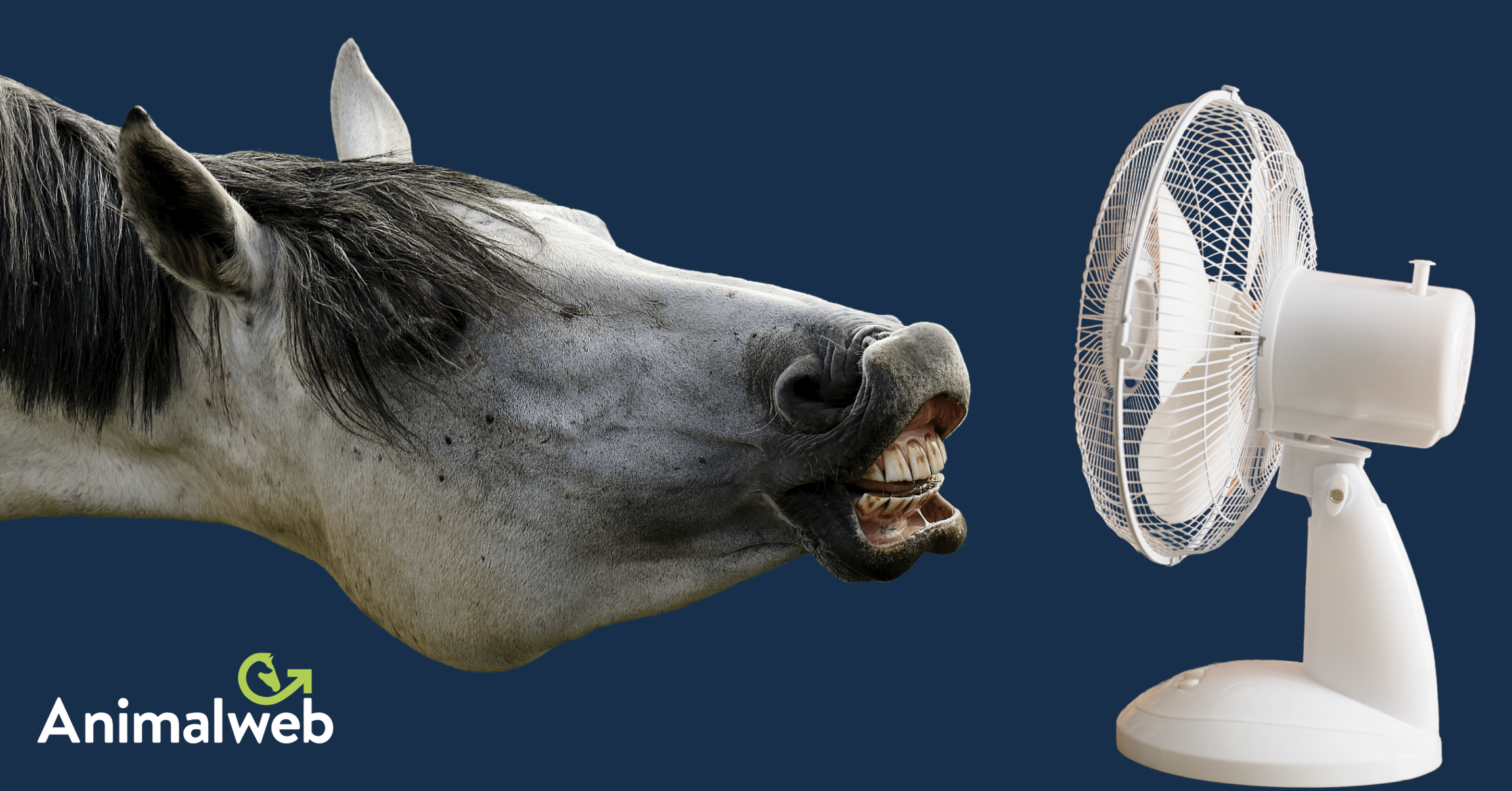
With summer heat prompting more discussions on social media and in livery yards, the question of using fans for horses keeps coming up. Whilst fans aren’t that common in the UK, they are much more common in hotter parts of the world, such as the USA. But are fans effective for cooling? Do they create respiratory or fire risks? Here’s a clear, science-based overview to help yard owners, managers, and horse carers make informed decisions.
How Fans Help (or Don’t Help) with Horse Cooling
Horses primarily regulate their body temperature at rest through convection (heat transfer to moving air), evaporation (sweating), radiation, and conduction. Fans primarily boost convective cooling (if the horse is not sweating and convective and evaporative cooling if the horse is sweating by moving air across the horse’s skin.
When they work best: Fans increase convective heat loss when the horse is dry and air temperature is significantly lower than the horse’s coat/skin surface temperature (roughly effective below 24–27°C / 75–80°F). They will also speed up evaporative cooling; for example, if your horse is sweating or you have hosed them off.
Limitations: As ambient temperatures approach or exceed ~35°C (95°F), especially in humid conditions, the cooling benefit of fans diminishes sharply. Fans do not lower the overall air temperature in a stall or barn; they circulate existing air. Studies, including research from the University of Kentucky, show that box fans often have minimal impact on barn temperatures and can sometimes make stalls feel slightly warmer if poorly placed.
In hot, dry climates, misting or evaporative fans (which add a water mist) are far more effective, as they actively cool the air by evaporation. In very hot/humid conditions, focus on turnout, shade, hosing, and good stable ventilation instead of relying solely on fans.
This aligns closely with US equine extension advice (e.g., from Penn State, University of Minnesota, and Kentucky research), which emphasises that circulation fans provide direct relief to the horse via airflow but are no substitute for proper barn ventilation systems.
Respiratory Concerns: Dust and Air Quality
Fans can stir up dust, bedding particles, and hay debris, potentially worsening respiratory issues like equine asthma (RAO, “heaves”, equine COPD, “broken wind”). This is a valid complaint in shared yards.
Practical tips:
- Choose low-dust bedding (e.g., large-flake shavings, pellets, or mats).
- Soak or steam hay.
- Position fans to circulate air without blasting the floor or bedding.
- Maintain good overall ventilation to dilute airborne particles.
US sources highlight that strategic fan use with open doors and windows, along with low-dust management, can help improve air quality by preventing stagnation.
Electrical and Fire Safety – A Serious Consideration
Electrical faults and fans are well-known contributors to barn fires. This risk is emphasised in both UK and US horse safety guidelines.
Best practices:
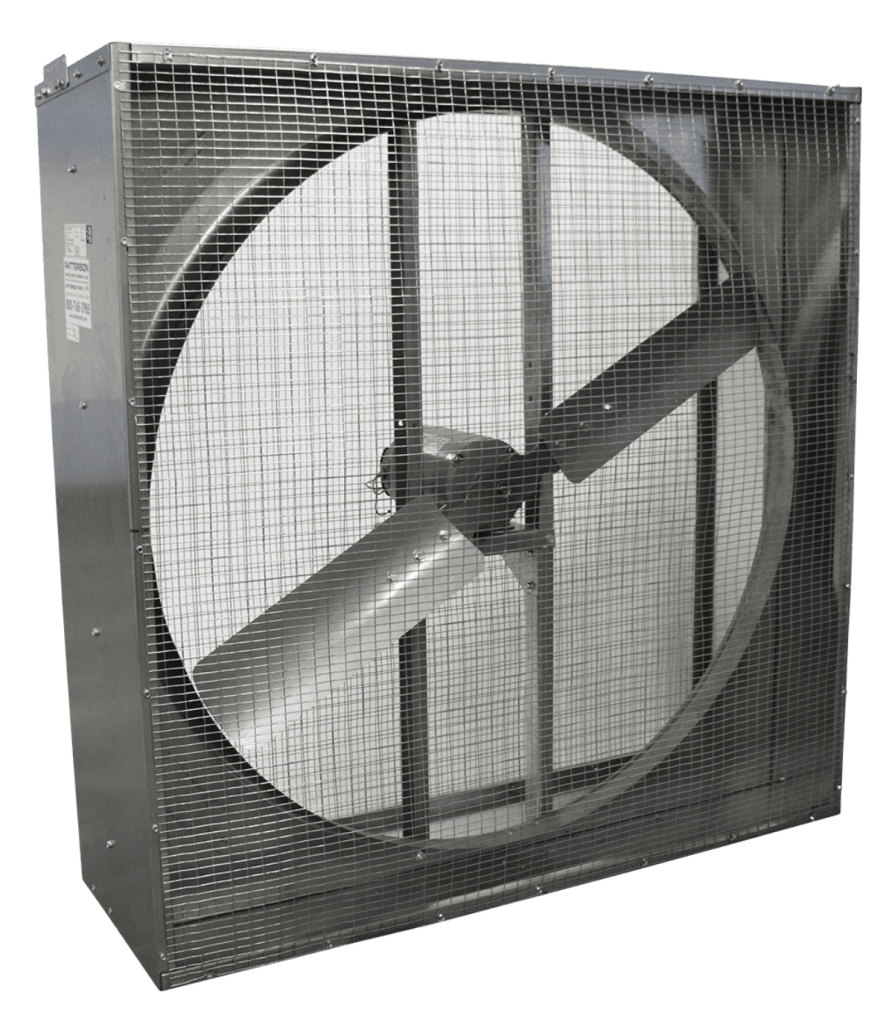
- Use agricultural-grade fans with fully enclosed (sealed/TEFC) motors designed for dusty, damp environments — avoid cheap household box fans.
- Have permanent installations done by a qualified electrician.
- PAT test (or equivalent) portable equipment regularly.
- Use GFCI-protected outlets, avoid overloading circuits or daisy-chaining extensions.
- Clean fans frequently to prevent dust buildup on motors.
- Consider fans with thermal cut-outs/overheat protection.
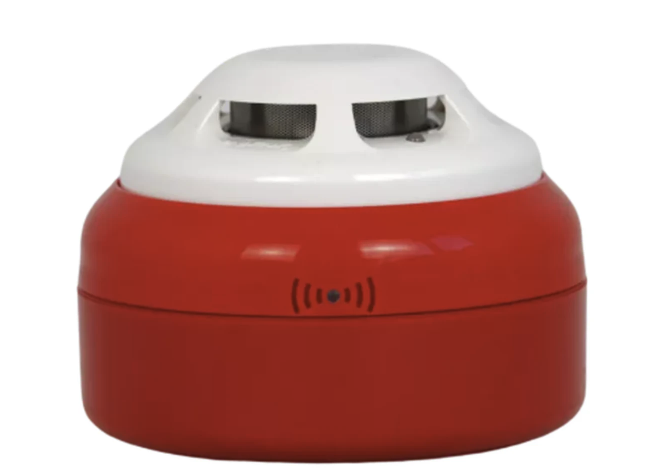
- Install smoke alarms and have clear protocols (e.g., unplug portable fans when unsupervised).
US barn safety recommendations strongly echo this: enclosed motors, proper grounding, and avoiding household fans are standard advice to minimise fire risk.
Key Takeaways
- Fans on their own can be a useful tool for moderate heat when used correctly, but they have clear limits in extreme conditions.
- As it gets hotter they can be used in combination with other approaches, primarily wetting horses down.
- Combine with good ventilation, low-dust practices, and other cooling methods (misting, hosing, shade).
- Prioritise safety: proper equipment, smoke alarms, installation and maintenance protect horses, people, and the property.
- Individual horses respond differently — monitor for signs of heat stress or discomfort.
Fans are not a one-size-fits-all solution, but with thoughtful implementation, they can improve horse comfort without unnecessary risks. Yard managers may consider developing a shared policy on fan use to address concerns from fellow liveries.