



New Research Reveals the Truth About Stirrups and Rider Falls
By Dr David Marlin and Prof Jane Williams
Falls from horses are an inherent risk in riding, but the role of stirrups in preventing, or even contributing to, injuries has long been debated. Do “safety stirrups” (those with mechanisms designed to release the foot more easily) live up to their name? Or are other factors, like stirrup leather detachment, foot clearance, and stirrup bar position, more important?
A large-scale survey conducted by Dr David Marlin and Prof Jane Williams provides some of the clearest evidence yet. The study collected data from 3,752 respondents via a 19-question Survey Monkey distributed through social media. It focused on falls within the previous 12 months, with no personal data collected. The survey achieved a strong 69% completion rate.
Key Findings on Falls and Stirrups
In the vast majority of cases (96%), neither stirrup leather detached from the stirrup bar during a fall. This challenges assumptions that leathers frequently “come away” as a safety feature.
At the time of their last fall, 33% were riding in a safety stirrup, whilst 60% were not, and 7% could not remember.
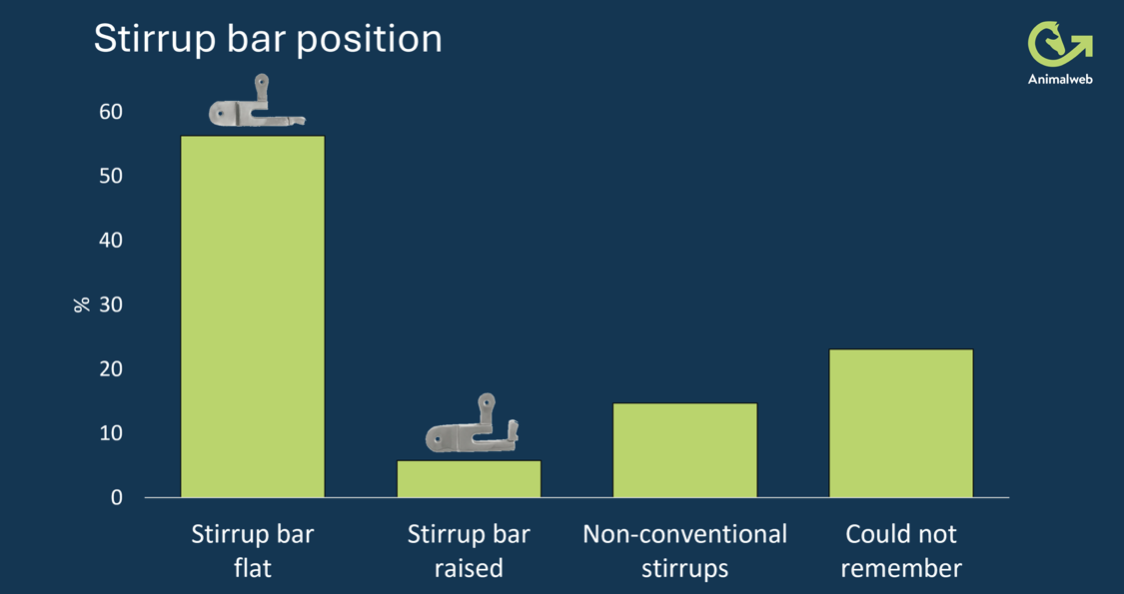
The majority of respondents (56%) were riding with the stirrup bar in the flat position and only 6% had it in the raised position.
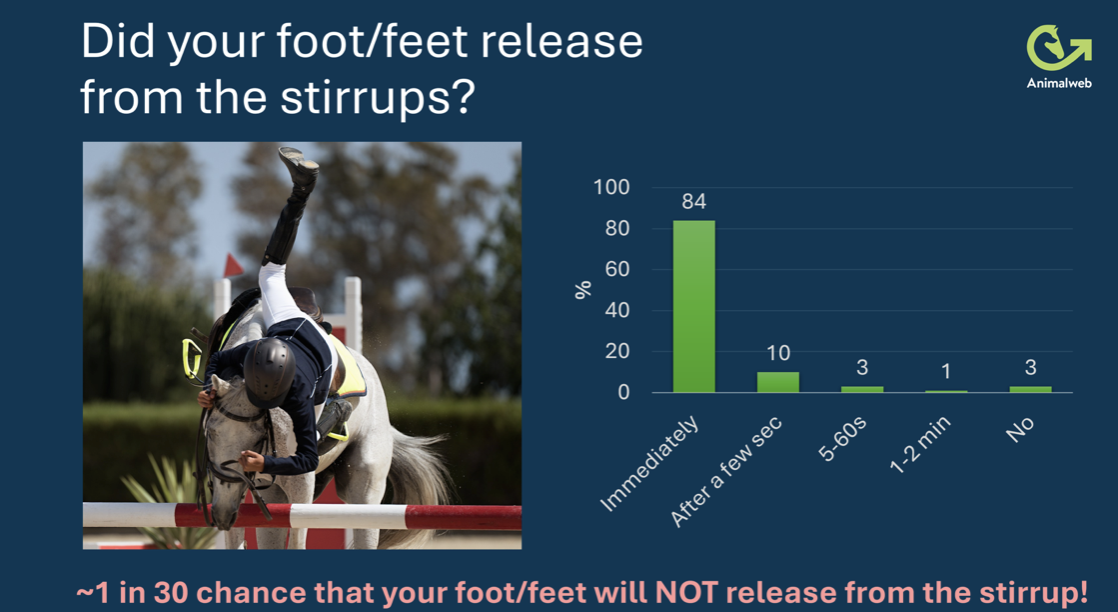
In 84% of falls, the feet were released immediately from the stirrups, but there was an approximately 1 in 30 chance that it would not. The highest risk scenario for being seriously injured in a fall is when riders are dragged for more than a few seconds.
What Actually Increases Injury Risk?
We used statistical modelling to predict injury risk based on various stirrup-related factors during falls. Here are the key predictors:
- Being dragged by the horse: Risk multiplier of 2.3 (highly significant, P<0.0001)
- Delayed foot release from the stirrup: Risk multiplier of 1.3 (highly significant, P<0.0001)
- Less than 10mm foot clearance in the stirrup: Risk multiplier of 0.6 (significant, P=0.012)
- Raised stirrup bar: Risk multiplier of 0.5 (significant, P = 0.038)
- Use of a safety stirrup: Risk multiplier of -0.1 (not statistically significant, P=0.480)
In simple terms, being dragged or having a foot that doesn’t release quickly dramatically increases the chance of serious injury – particularly to the ankle and knee.
Safety stirrups, however, showed only a modest, non-significant benefit once other variables (such as foot clearance and stirrup bar setup) were accounted for.
Brand differences among safety stirrups also appeared small when these controlling factors were taken into account.
Practical Summary and Best Advice
The study estimates a roughly 1-in-30 chance of a non-release event (foot getting stuck in the stirrup) during a fall. While safety stirrups can help, they are not a complete solution on their own.
Key recommendations for riders:
- Keep the stirrup bar flat (not raised)
- Use a safety stirrup
- Maintain more than 10mm of foot clearance in the stirrup
These simple adjustments, combined with awareness of the risks of dragging, can meaningfully reduce the potential for injury.
Why This Matters
This research stands out as one of the largest rider-focused surveys on stirrup safety to date. It moves the conversation beyond marketing claims and anecdotal experience toward evidence-based insights. While no equipment can eliminate all risks in equestrian sport, understanding the real-world performance of stirrups helps riders make informed choices.
Dr Marlin and Prof Williams’ work highlights that rider safety is multifactorial—good saddle setup, proper stirrup fit, and riding technique all play vital roles alongside any “safety” features.
Riders are encouraged to check their equipment regularly: ensure stirrup bars are in the correct (flat) position, verify adequate foot clearance, and select stirrups that reliably allow quick release without compromising security under normal riding conditions.
Falls may never be completely preventable, but data like this equips the equestrian community to ride smarter and safer.
To read the full Falls Research Findings, click here.
