J. Williams, M. Perlo and D. Marlin
Performance analysis in equestrian sport:
- Reliability of historic & anecdotal training practices used for the horse are increasingly being questioned (Williams, 2013; Ely et al., 2010; McGreevy & McLean, 2010)
- Need for objective, evidence-based practice in horse (and rider) training (Williams, 2013; Randle & Waran, 2017)
Follow on from Nations Cup work
Research question
Do the same factors affect success (scoring faults) in elite SJ apply in amateur level ShowJumping?
Hypothesis: There will be a difference in key factors which affectperformance in amateur ShowJumping
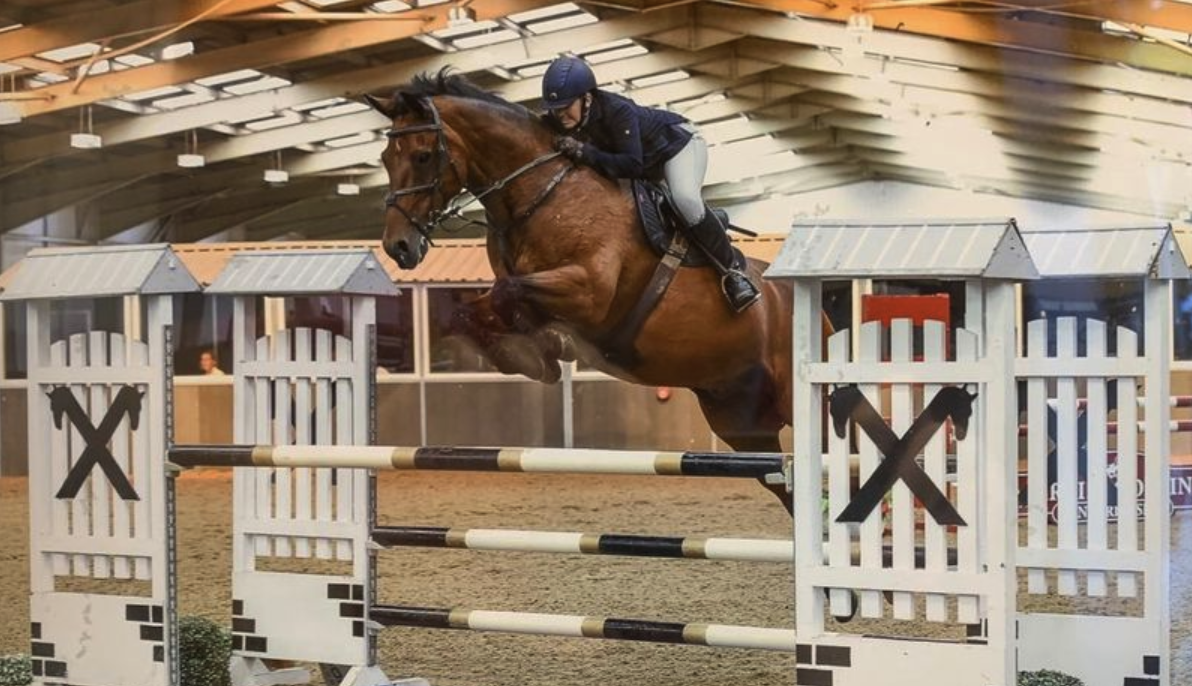
Defining Amateur Riders
What did we expect to be different in these riders?
- Experience: tactics
- Experience: position
- Novice horses
Method
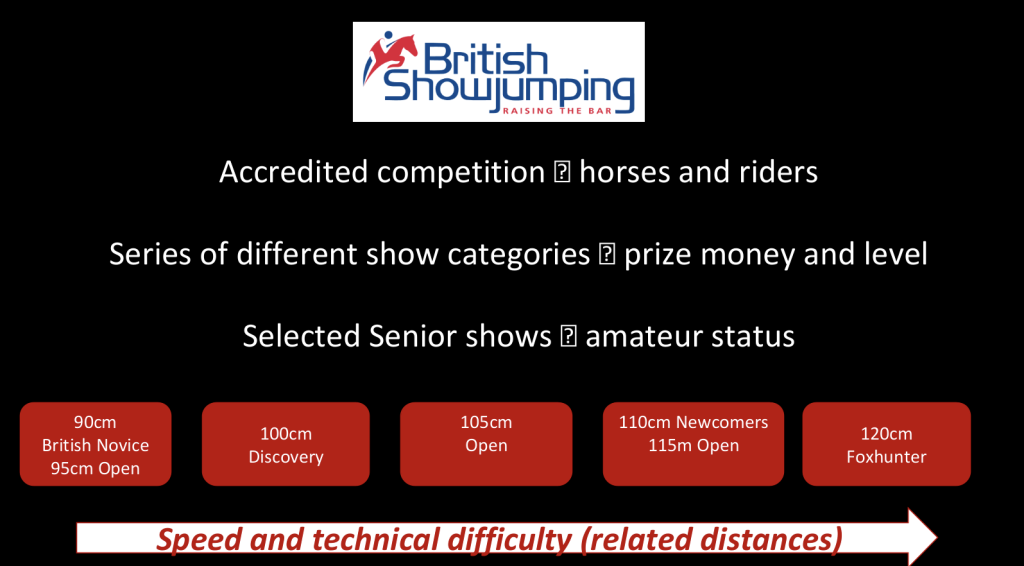
- 1 weekend (3-day) show 🡺 all rounds (n=11; height range:90cm to 120cm
- All classes video recorded
- Notational analysis: 1 consistent, experienced observer
- 5 height categories: 1: <95cm, 2: 100-105cm, 3: 110cm, 4: 115cm and 5: 120cm
- Frequency analysis: distribution of faults
- Univariable analysis 🡺 MV model building (P<0.05)
Variables
- Jumping effort number
(incremental), - Fence type (e.g. upright, oxer)
- approach line (straight vs.
not-straight) - canter lead (correct or not)
- total penalty score
- distribution of faults for every
quarter of the course - Not time (due to technical issues!)
Results
British Showjumping: 90 to 120cm
- 4055 jumping efforts
- faults: 91.8% (n=3721), faults: 8.2% (n=334)
- FAULTS:
- canter lead: incorrect x 6 (P=0.0001)
- fence type: uprights 98% more than oxers (P=0.002)
- class level: 100/105cm 7.8 times more likely to have faults than 90/95cm
- ROC predictability: 97%
Impact of class height
- <95cm: an incorrect canter lead was 4.9 times more likely to result in faults (P=0.0001)
- In 100-105cm classes jumping efforts 3, 6, 9, 14 (uprights) and 13 (oxer/combination) and in 110cm classes jumping efforts 1 (oxer) and 2 (upright) all increased the risk of scoring faults (P<0.03) compared to the final fence (ref category)
- No factors were found to be significantly associated with scoring faults for 115cm and 120cm (P>0.05) – which was a shock!
Discussion
- Approach was not influential, but the correct canter lead was – why?
- Uprights vs. oxers – jumping style (Walker et al., 2018)
- More faults at higher class heights than lower – why?
- Influence of rider and role of rider education/training?
- Need to remember performance is multifactorial – this is just a start!
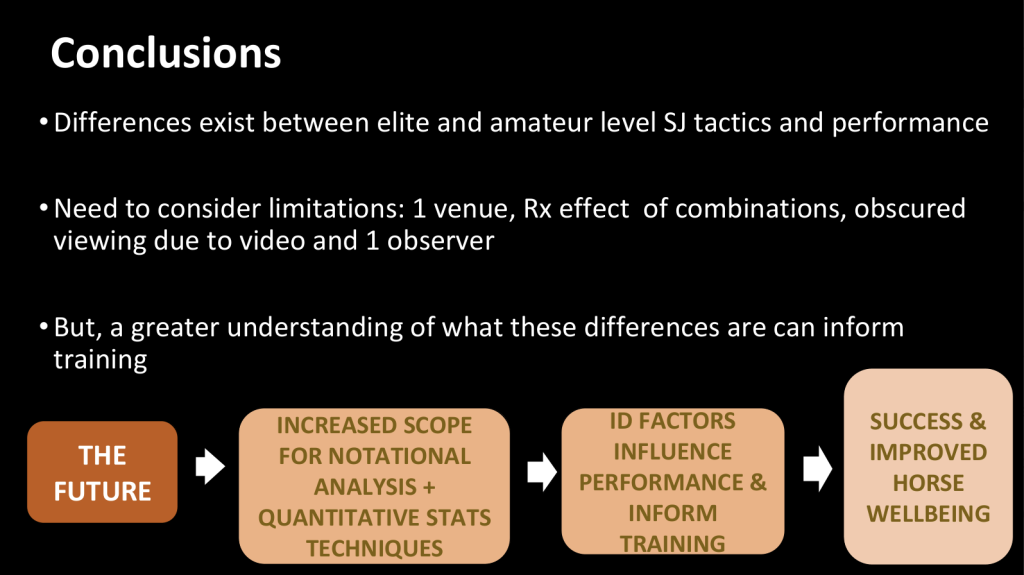
Conclussions
- Differences exist between elite and amateur-level SJ tactics and performance
- Need to consider limitations: 1 venue, Rx effect of combinations, obscured
viewing due to video and 1 observer - But, a greater understanding of what these differences are can inform
training