


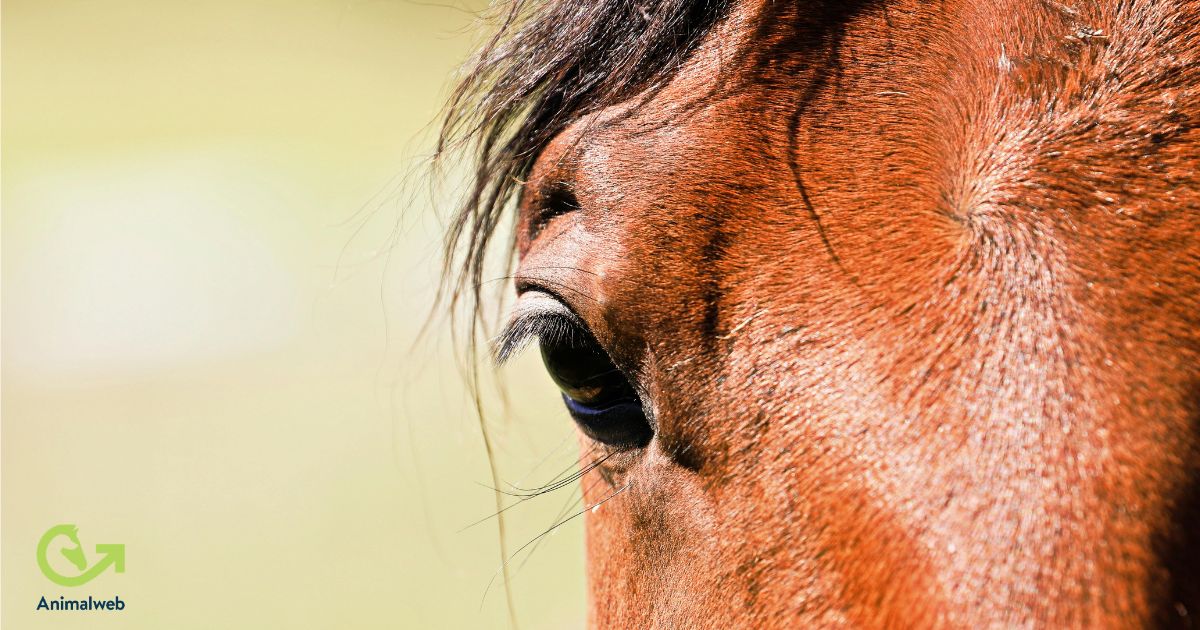
For generations, horse owners have believed that the position and shape of facial hair whorls may reflect a horse’s temperament, with certain patterns thought to indicate calmness, boldness, or sensitivity. A recent 2025 Master’s thesis from the Swedish University of Agricultural Sciences (SLU) set out to investigate whether this long-held belief has scientific support.
The study examined 56 Standardbred trotters from professional racing stables in Sweden. Researchers assessed temperament using both objective behavioural tests and subjective caretaker questionnaires. The behavioural tests measured horses’ responses to humans, novel objects, and unfamiliar surfaces, while the questionnaire evaluated traits such as nervousness, fearfulness, learning ability, and cooperation. Facial hair whorls were recorded and analysed for associations with these traits.
What the study found?
Interestingly, the study found no significant correlation between questionnaire responses and behavioural test results, highlighting the challenge of accurately measuring temperament. However, some associations between hair whorl patterns and behavioural traits were identified. Horses with feather-shaped whorls were linked to higher compliance, greater courage, and a better appetite. In addition, horses with a whorl positioned between the eyes appeared to show quicker learning ability compared to those with higher whorls.
Despite these findings, the author stresses that the results should be interpreted cautiously. The study was exploratory and based on a relatively small sample of one breed and discipline, meaning the findings cannot yet be generalised to wider horse populations. Larger, multi-breed studies would be needed before facial hair whorls could be considered reliable indicators of temperament.
Nevertheless, this research contributes to a growing scientific interest in the links between physical traits and behavioural characteristics in horses. Improving our understanding of temperament has practical implications for training methods, horse–human relationships, and welfare outcomes, particularly in performance settings where behavioural suitability can influence both safety and success.
