


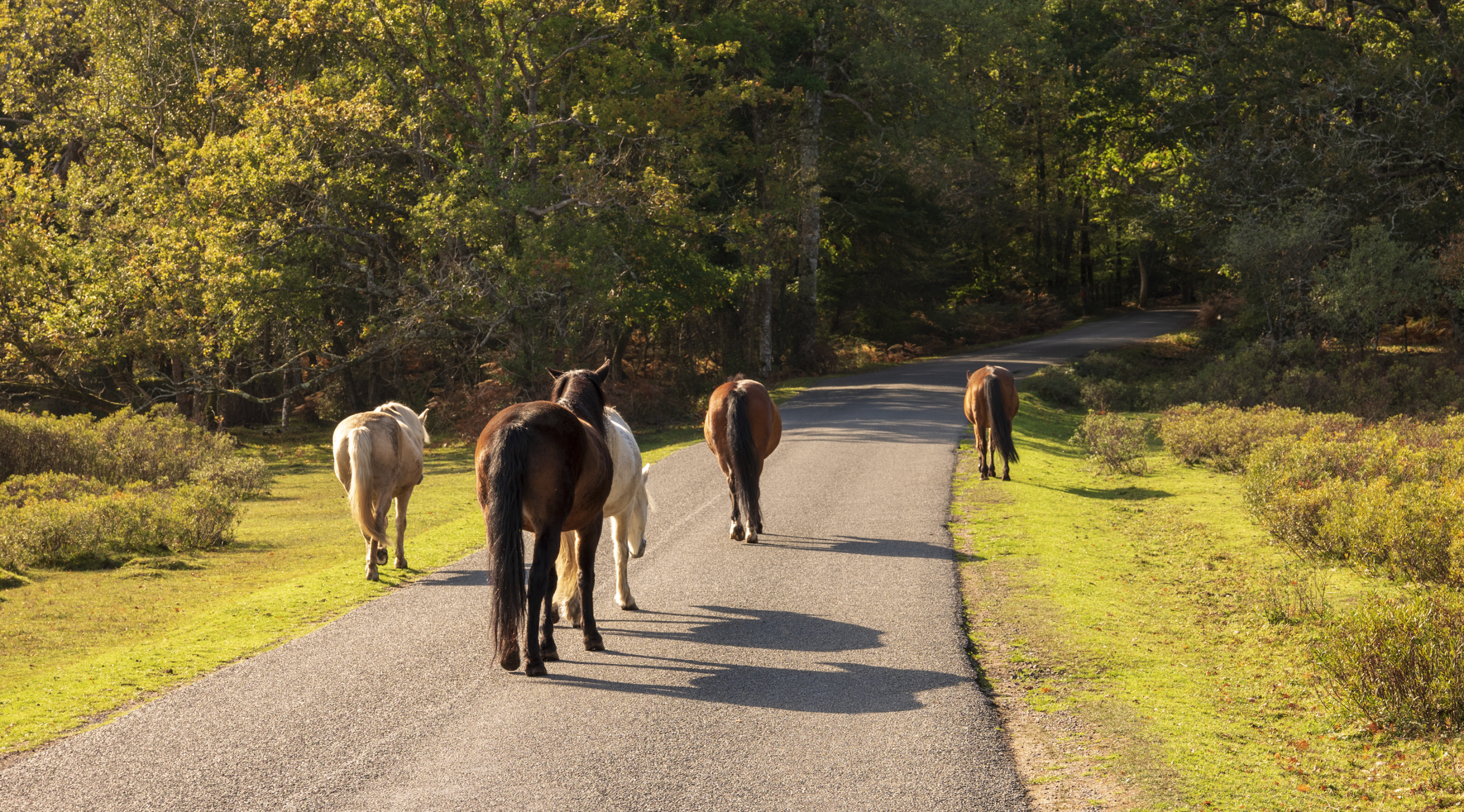
The number of animals killed or injured on roads in the New Forest has risen again, reversing recent progress made through safety campaigns and enforcement.
Figures released for 2025 show that 47 animals were killed on roads within the National Park, up from 37 deaths in 2024, which had been a record low year. The sharpest increase was seen in ponies, with 36 killed, representing a 64% rise compared with the previous year.
The statistics, published by the New Forest National Park Authority, come despite continued high-profile campaigns urging motorists to slow down and take extra care around free-roaming livestock.
Hit-and-run incidents remain a major concern. In 2025, 18 animals were involved in hit-and-run collisions, a figure described as “consistently high” and largely unchanged from the previous two years.
Although the number of accidents occurring at night fell compared with 2024, nighttime remains the period when most collisions happen. Notably, incidents during daylight and twilight increased, a trend that campaigners say is particularly worrying.
The New Forest is home to free-roaming ponies, donkeys, pigs and cattle, owned by commoners who hold ancient grazing rights. For many families, these animals represent generations of careful breeding and stewardship.
Andrew Parry-Norton, chairman of the Commoners Defence Association, said the loss of a pony is devastating. He explained that these animals are not simply livestock, but individuals that are well known and deeply valued by their owners and the wider Forest community.
In recent years, animal-related road accidents had been declining, helped by awareness campaigns, targeted police speed checks and mitigation measures such as placing salt licks away from roads to discourage animals from lingering on the highway. The latest figures suggest that progress may now be stalling.
Gilly Jones of the New Forest Roads Awareness campaign group said collisions involving livestock have serious consequences not only for the animals, but also for drivers, passengers and witnesses. She stressed that drivers should expect to encounter animals once they cross a cattle grid, adding that inconsiderate driving around livestock, not just speeding, is a significant factor.
Campaigners are renewing calls for motorists to drive slowly, pass livestock wide and remain alert at all times, particularly during daylight and twilight hours when visibility can be deceptive and traffic levels are higher.
