


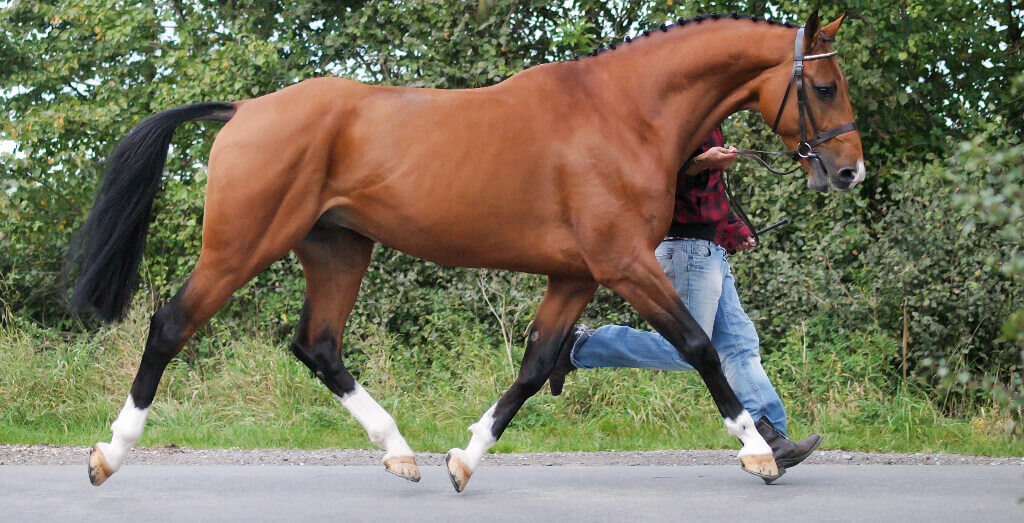
Smartphone gait analysis tool shows high accuracy when validated against the laboratory gold standard
A new study published in the Equine Veterinary Journal has shown that a handheld, smartphone-based gait analysis system can measure key aspects of equine movement with a high level of accuracy when compared with a laboratory-based gold standard motion capture system.
Researchers validated the RealHorse markerless computer vision system against the Qualisys multi-camera 3D motion capture system, widely regarded as the reference standard for objective gait analysis.
What the researchers did
The team recorded 59 horses trotting in a straight line and a further 24 horses trotting on a circle. Using standard smartphone video, RealHorse automatically identified anatomical landmarks at the eye, withers, back and croup, estimated a dynamic groundline, and calculated vertical displacement signals linked to movement symmetry.
These measurements were directly compared with synchronised data from the Qualisys system. Accuracy and agreement were assessed using established statistical approaches, including mean absolute error and Bland–Altman analysis.
Key findings
Across more than 2,600 strides on the straight line, the average error between the smartphone system and the laboratory system was just 3.8 mm. Errors were slightly higher during circular exercise, averaging 5.5 mm across more than 2,400 strides.
When data were analysed at the trial level, rather than individual strides, accuracy improved further. On the straight line, average errors were between 1.1 and 1.4 mm, while on the circle they ranged from 1.8 to 3.3 mm. Measurements at the back consistently showed the lowest errors, while croup measurements during circling showed the greatest variability.
Why this matters
Objective gait analysis is increasingly used to support lameness assessment and monitoring, but traditional multi-camera systems are expensive, fixed in location, and largely confined to research or referral settings. Smartphone-based tools offer the potential to bring objective measurement into everyday clinical and training environments.
This study provides strong evidence that a markerless, handheld system can deliver measurements that closely match laboratory-grade motion capture, particularly when data are averaged across trials rather than interpreted stride by stride.
Limitations and next steps
The authors note that accuracy was reduced during circling compared with straight-line exercise, particularly for croup measurements, highlighting an area for further refinement. However, overall precision remained high and well within ranges considered clinically useful.
The takeaway
The researchers conclude that the validated smartphone system measures vertical movement of key anatomical points with high accuracy and precision, supporting its use as a practical tool for equine gait analysis and lameness assessment in real-world settings.
For practitioners, trainers and researchers alike, this work adds to a growing body of evidence that accessible, vision-based technologies can meaningfully complement traditional objective gait analysis methods.
Here is a link to the study – Click Here.
