


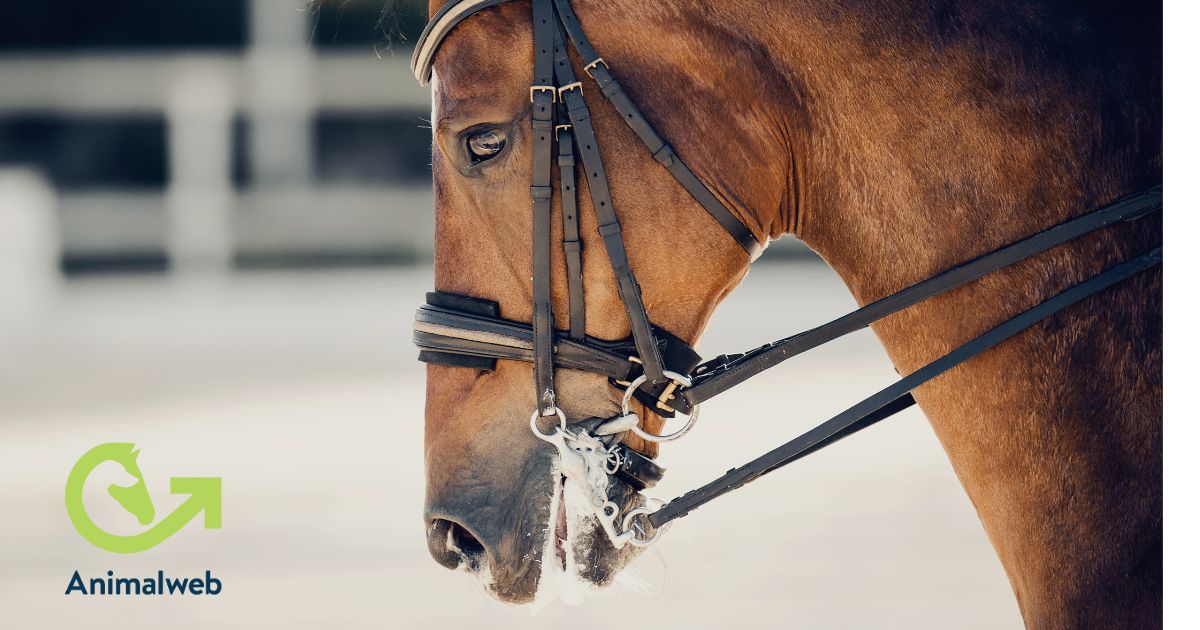
The news that the Danish Equestrian Federation (DRF) is implementing a ban on double bridles below Level 4 as part of their wider welfare reforms has got me thinking.
While I am not against the use of double bridles per se, I do question both the FEI making them compulsory at CDI3* and above as well as national governing bodies’ allowing them in relatively low-level competition. The study published in April this year, in which Dr David Marlin participated, showed that while there was significantly higher pressure exerted on the headpiece due to the inclusion of two bits, the total rein tension of the bradoon and weymouth was lower or equivalent to the rein tension applied with the snaffle. I concur with David’s comment that “these findings challenge the assumption that double bridles always apply more rein pressure or cause more facial pressure, showing instead that with skilled riding and correct fitting, both bridle types can be used responsibly.”
Any bit can cause physical and psychological distress if used improperly, but the potential for such distress, in my opinion, with a double bridle is greater than with a snaffle. This poses the question whether all riders at Elementary have sufficient skill and experience to ride in a double bridle with the lightness and precision required. With Elementary being the first level at which a double bridle is permitted at BD, it is the first level to introduce lateral work (leg yield and shoulder-in) and collected paces (trot and canter). I cannot help but wonder why a double bridle is required.
The BD equivalent to the Danish Level 4 is approximately Advanced Medium, which adds flying changes to extended walk and trot, walk pirouette and half-pass included in Medium tests, and I can see the logic behind the Danish decision.
Primarily, however, I am happy that Denmark is addressing this as part of their wider initiative to improve welfare in all horse sports and hope other nations follow suit.
Whatever your personal opinion, equestrian sport must continue to put the welfare of its equine athletes before competitive or commercial success – we continue to see photos and videos of blue tongue, hyperflexion and obvious signs of distress – this must change if our sport’s SLO is to survive.
