


If you’ve ever watched a dog launch over a hurdle, scale a wall, or twist through a weave of poles, you’ve likely marvelled at their speed, precision, and agility. These dogs aren’t just pets—they’re true athletes. But like any sport, the physical demands can lead to injuries.
As a researcher in canine biomechanics, I study how dogs move in sports like agility, flyball, and working trials. My mission? To help handlers, trainers and therapists understand the science behind each leap, turn, and sprint—so we can make these sports safer, without sacrificing performance and the thrill of the disciplines. It is very important to point that when we research the impact of the sport on dogs kinematics (movement) and kinetics (forces associated with that motion), we are not trying to bring a bad reputation to dogs sports, we are just trying to find ways that the sport can become safer to ensure the dogs welfare and the social licence to operate is kept positive.
Agility: High Stakes at High Speed
In agility, dogs navigate complex courses at breakneck speed. Our studies have looked closely at three of the sport’s most demanding obstacles: the A-frame, dog walk, and weave poles.
On the A-frame, we found that the distance of the previous jump dramatically affects speed, acceleration, deceleration (braking), and, consequently, the forces associated with them.. When jumps are placed closer to the A-frame, dogs develop less speed, needing less braking forces to prepare for the A-frame contact. The fun fact we found? Experienced agility dogs try to contact with the A-frame with similar ground reaction forces, regardless of the distance between obstacles, which could indicate some cognition in adapting the forces to reduce the impact with contact obstacles.
In the dog walk, dogs with greater experience moved more confidently across the obstacle and showed increased elbow flexion during the descent, a strategy likely to aid in energy absorption. However, those trained using a “running” technique exhibited higher vertical forces at landing compared to “stopping” dogs, indicating that training style can significantly alter the mechanical profile of the task.
As for the weave poles, some dogs “hop” through with both front paws, while others “step” with alternating feet. The hopping method leads to higher limb ground reaction forces, which may increase injury risk over time, especially on the shoulders.
Flyball: Fast and Full of Impact
Flyball is one of the fastest and most explosive dog sports. It’s a relay race where dogs jump hurdles, hit a spring-loaded box to release a tennis ball, and sprint back to the finish line.
Our recent research has uncovered some surprising findings:
The angle of the flyball box—which can range from 45° to 89°—has an impact on a dog’s movement. At steeper angles like 83°, dogs show more limb extension, while at flatter 45° angles, there’s more joint flexion, especially in the forelimbs. The 60° angle appeared to provide a biomechanical “middle ground,” though directional bias appears to be the more critical variable influencing risk.
Dogs consistently turning in the same direction (as most do) experience asymmetric loading, putting more stress on the inside shoulder and outside hip—which aligns with injury patterns reported in surveys.
The asymmetric loading was also seen on the impact forces, as we have identified higher impact forces on the inner forelimb and outer hindlimb consistently across box angles.
The so-called “swimmer’s turn” (where dogs angle into the box) seems to reduce jarring impacts compared to a “head-on” turn, where dogs strike the box straight.
We also found that individual dogs have consistent styles, even across different box angles—meaning that training habits and physical structure play a major role in how turns are performed and absorbed.
These data support the notion that encouraging bilateral turning techniques—similar to racing greyhounds switching leads—may reduce repetitive asymmetrical stress and improve long-term soundness. Therefore, our main recommendation, from our research was to establish training where the dog turns for both sides, even if they compete only on their “best” turn side, would decrease the asymmetrical loading and could possibly decrease injury rates.
Working Trials: A New Frontier in Canine Sports Science
Alongside agility and flyball, I’m now conducting groundbreaking research on working trial dogs, canines who must complete tasks like clearing a series of obstacles, including, on the agility tests: 5ft 6”scale (wall); 8ft long jump, a 3-ft clear jump.
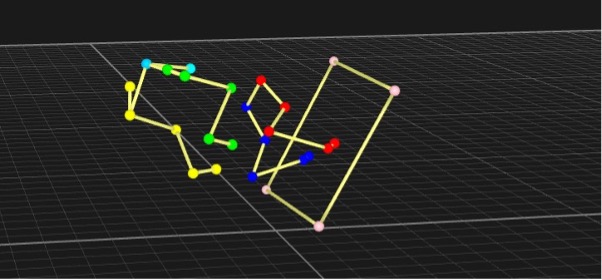
These dogs perform powerful jumps and landings repeatedly, so we’re using advanced motion analysis to study kinematics (movement) and kinetics (forces) as they take on each challenge.
Our aim is to understand how these obstacles load the body—and how breed, training, and technique affect performance and safety. This could eventually lead to evidence-based training methods that reduce injury risk in working dogs without limiting their capabilities.
For the working trials, we have collected nearly all the data, and watch this space for the results. We are currently using kinematic and kinetic analysis to quantify the joint angles in the limbs and back, stride patterns during each phase (approach, take-off, flight, and landing) and vertical ground reaction forces during landing.
Understanding these movement profiles will inform future evidence-based recommendations for obstacle design, training techniques, conditioning protocols, and rehabilitation strategies in working dogs.
Why It All Matters
Whether it’s a flyball champion or a weekend agility warrior, every dog deserves a safe sporting life. Our research is showing that small tweaks—like jump spacing, box angle, or training turns for both sides—can make a big difference in reducing joint stress, impact forces and preventing long-term injury.
It’s also highlighting the importance of treating each dog as an individual. Just like people, dogs have different body types, preferences, and learning styles. Matching training to the dog—not the other way around—can help protect them while letting them thrive.
So next time you cheer for a dog weaving through poles or soaring over a wall, remember: there’s real science behind our athlete’s movement. And thanks to biomechanics, we’re learning how to make sure they keep doing what they love—safely, and for longer.
Key Takeaways for Canine Sports Practitioners
Subtle changes in course design (e.g., jump spacing, box angle) can significantly influence biomechanical load, which is very important taking in account that these athletes work close to their physiological limits..
Asymmetrical movement patterns, especially in sports like flyball where dogs habitually turn in the same direction, likely contribute to injury risk via repetitive uneven loading.
Training style (e.g., running vs. stopping contacts; swimmer’s vs. slammer’s turn) alters impact forces
Ongoing research in working trials is beginning to fill a significant knowledge gap around jump-related forces, particularly in vertical scaling and long-distance obstacles.
Our research continues to address the need for sport-specific conditioning, individualized training approaches, and biomechanical awareness in performance dogs. With more biomechanical data becoming available, trainers and clinicians alike can make informed decisions to reduce injury risk and prolong canine athletic careers.
References and further reading:
Roberta Blake is a Professor of Animal Performance Science at Anglia Ruskin University, Writtle campus. Her current canine studies focus on agility, flyball, and working trials, with a special interest in kinematic and kinetic analysis of sport-specific obstacles.
Roberta’s research is published Open Access, meaning it is freely accessible to anyone interested in reading.
The full publication on how dogs negotiate the dog walk obstacle in agility can be found at LINK
The A-frame publication can be found at: LINK
