


Motion Capture Breakthrough for Equestrian Research
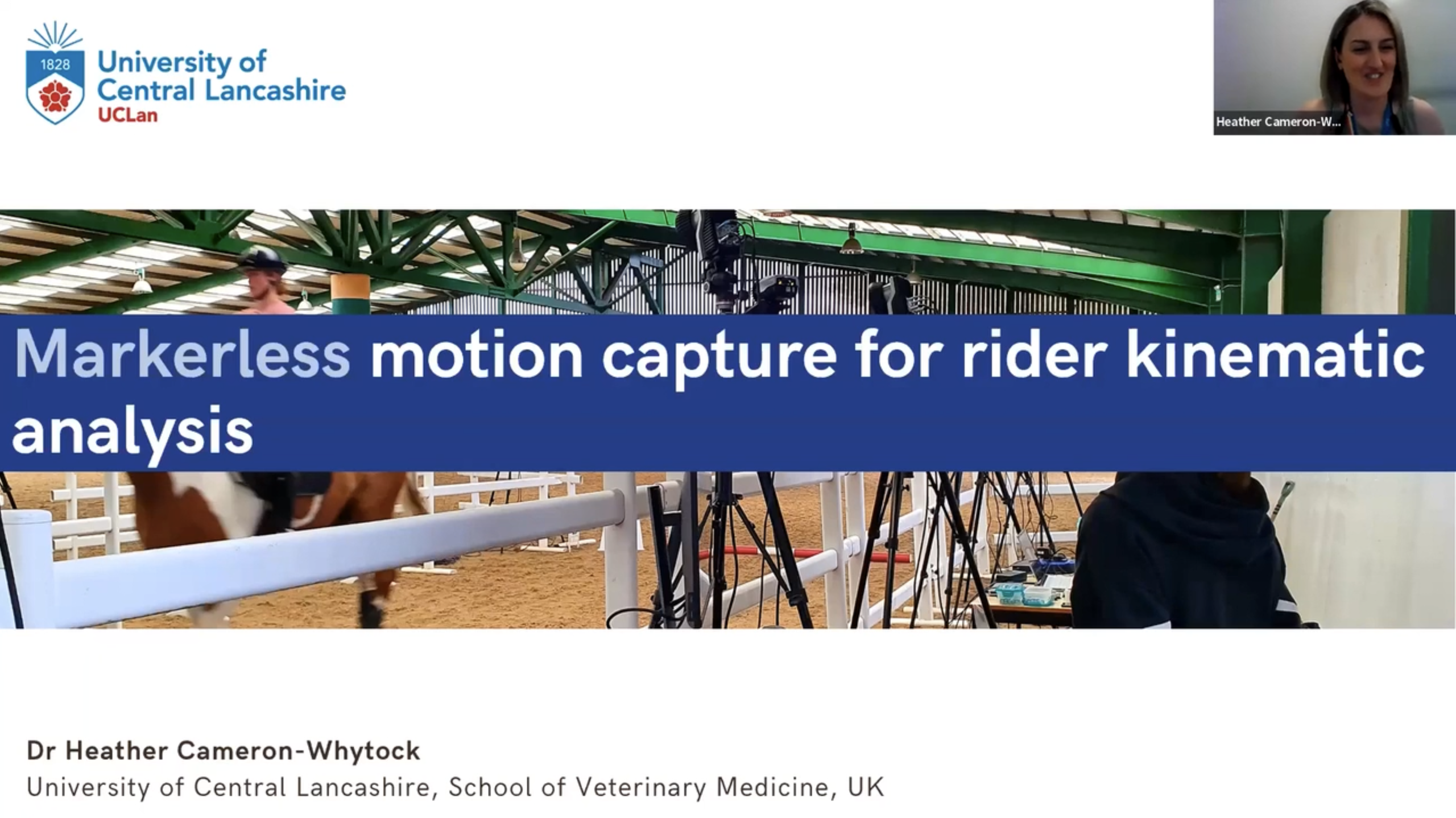
In this cutting-edge Animalweb webinar, Dr Heather Cameron-Whytock shares the results of a pioneering study exploring markerless motion capture technology in equestrian sport, the first of its kind to test this system on horse riders.
Heather walks us through how this emerging AI-based tech, which builds 3D rider models from video footage alone, could revolutionise rider analysis. Compared to traditional marker-based systems (involving over 40 reflective dots placed on the body), the markerless method is quicker, less intrusive, and opens the door to analysing real-life competition performance, something previously impractical.
Watch this webinar and learn:
- See how artificial intelligence is being used to track rider biomechanics with no physical markers required
- Understand the benefits and limitations of both systems in rider analysis
- Explore real-world applications in competition, coaching, and safety studies
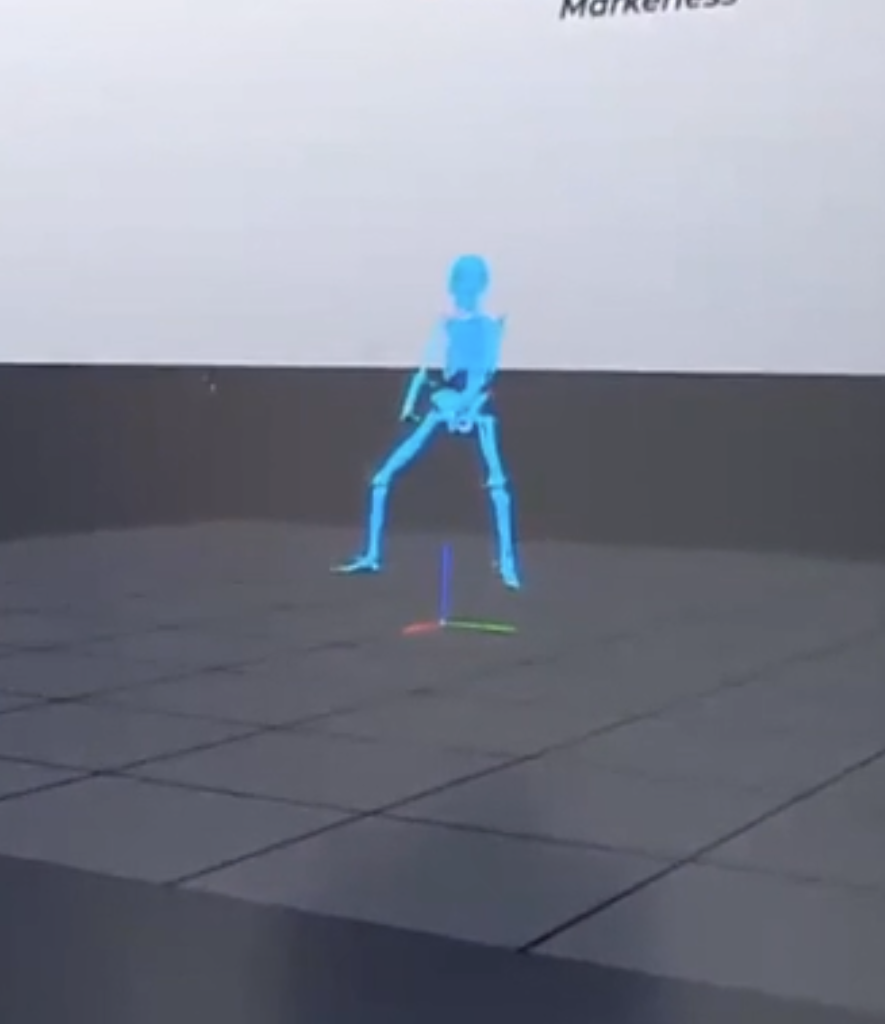
- Watch the technology in action, including the incredible “blue skeleton” visuals
- Learn how this could pave the way for instant biofeedback and improved rider-horse harmony
- Hear how this cross-disciplinary collaboration came to life, and what comes next
Whether you’re a coach, rider, researcher, or biomechanics enthusiast, this is an exciting glimpse into the future of equestrian science.
MEMBERS CAN LOG IN TO WATCH

To read the rest and learn how this will help you, join us by clicking the banner below.

Already a member? Log in here
Join us now to view this article PLUS 1000s of
- tips
- articles
- videos
- money saving ideas
- reviews
- webinars
- podcasts
- news
And so much more!
Science backed horse care at your fingertips - dip in for information when you need science to help you care for your horse.
Transcription
Here is a transcription of the webinar. (Please note this is an automated transcription, so we apologise for any errors.)
Here’s a cleaned-up version of the transcript with all timestamps and speaker names (like “Helen Stock” or “Heather”) removed, keeping the content intact and readable:
So then, and welcome to another Animalweb webinar. Today we have Dr Heather Cameron-Whytock back again with us and today she’s talking to us about some exciting new research and analysis that she’s been working on.
If you’re interested in what she’s talking about, please don’t forget to go to the expert section where you will find links to all of her other webinars, research and the different things that she’s working on. It’s all quite exciting, cutting edge and really helping to move our sport forward.
Today I’m going to talk about a recent study that we published, which is about markerless motion capture for rider kinematic analysis. When we say the term motion capture, we’re talking about capturing motion over time. That allows us to look at things like joint angles, asymmetry, how the body moves in space — for both horses and riders.
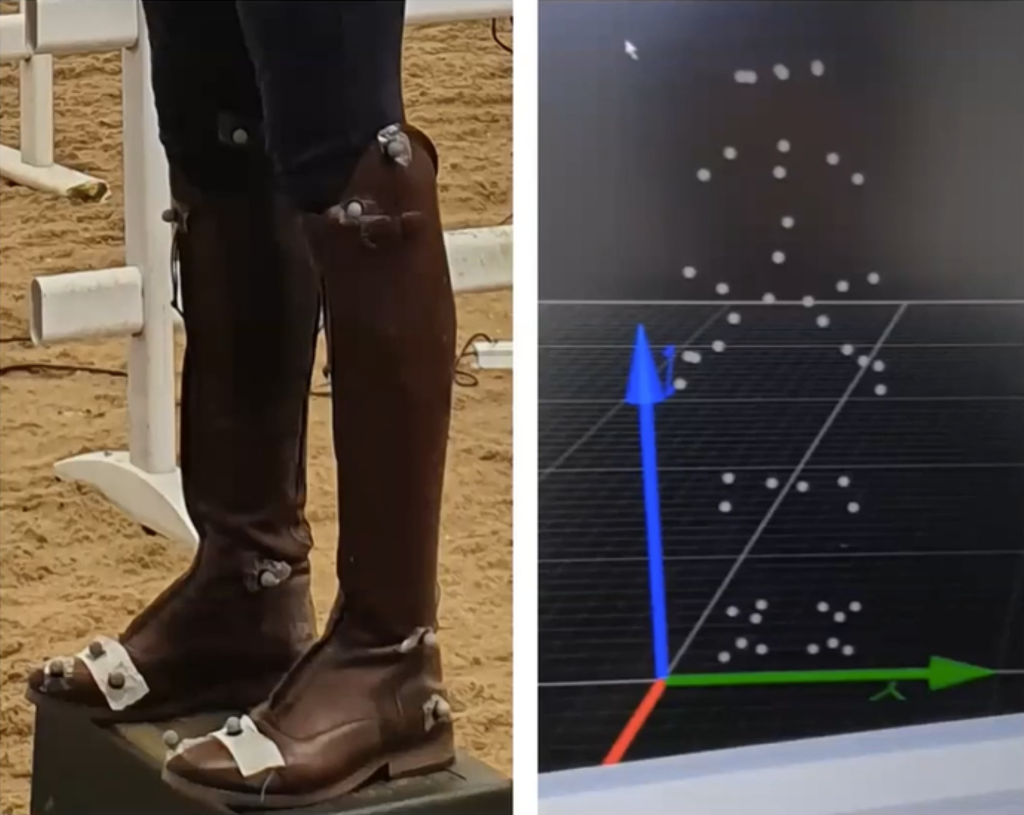
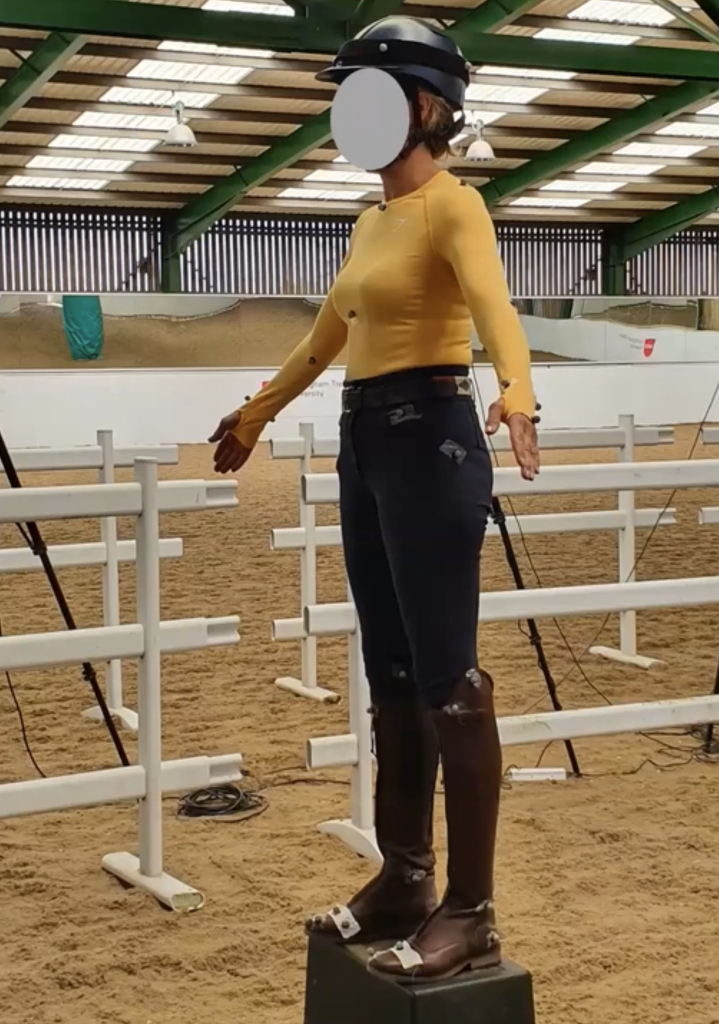
The current gold standard is marker-based motion capture. That means we stick retro-reflective markers — little balls covered in highly reflective material — onto anatomical landmarks on the subject. A camera system tracks the movement of those markers through space, allowing us to analyse joint angles, stride length, and more.
Marker-based motion capture, while accurate and scientifically validated, has limitations. It’s very time-consuming. For a full body 3D analysis of a human, it involves placing 47 markers. There’s also a potential for human error in the placement of markers, especially if different people are applying them. Markers can fall off during movement, which is particularly problematic with horses. And, having so many markers on a rider can interfere with their natural movement, especially with markers placed inside the ankle or knee.
Because of this, it’s harder to do motion capture in live or competitive settings. People behave differently in competition compared to a mock-up study setting. Although highly accurate, marker-based motion capture isn’t always practical.
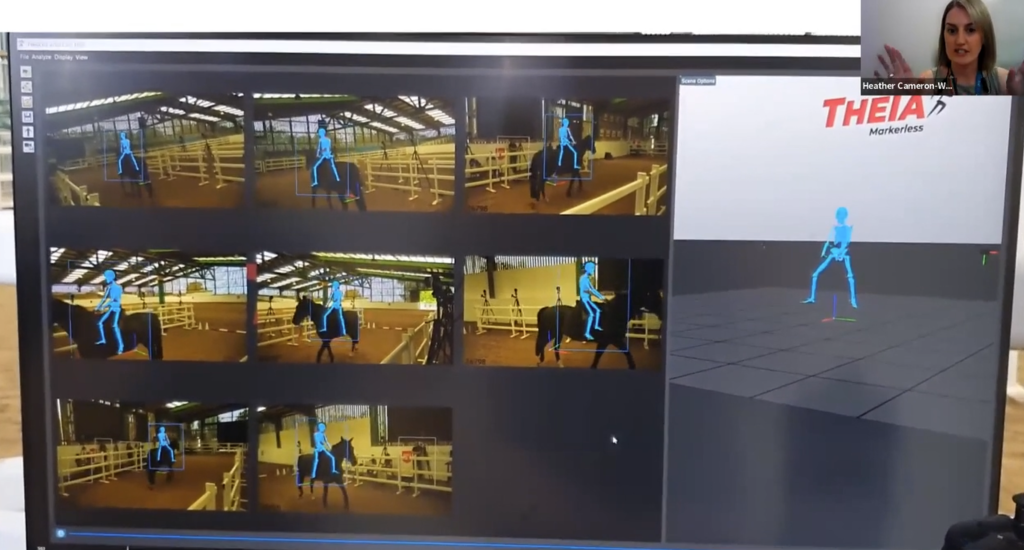
We wanted to test a markerless system — one that doesn’t use markers at all. Instead, it uses AI and deep learning neural networks to track humans through space, recognising anatomical landmarks from video footage. This method has been validated in sports like dance, running, and cricket, but never in horse riding. The system we used is called Theia (T-H-E-I-A).
Our first question was whether it would work for riders at all. The system, trained on people walking on the ground, had never seen a human ‘floating’ in space — which is how it might perceive a mounted rider. The horse isn’t recognised, so it just sees a person suspended above the ground.
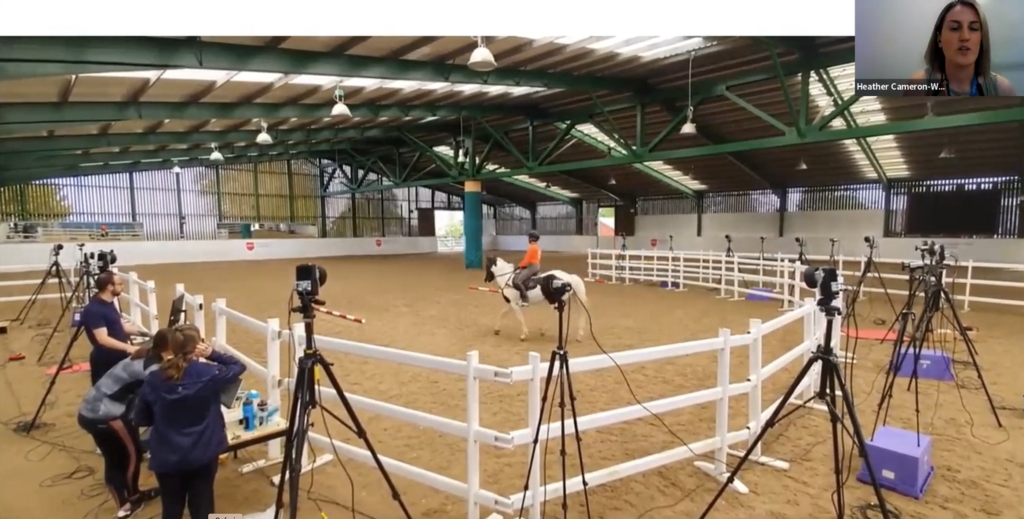
We ran a pilot test, setting up a semicircle of cameras to test the marker system and the Theia system side by side. The moment we saw the Theia system start to generate a skeleton in the footage, we knew it worked and could move on to a formal study.
On the left-hand side of our test footage, the marker system shows lots of markers — and even some errors due to sunlight reflecting off surfaces. On the right, you can see the blue AI skeleton. We also added a single marker to each of the horse’s fetlocks to track stride.
In our formal study, we compared the accuracy and feasibility of the markerless system against the gold standard marker-based system. We used 10 riders, each doing five walks and five trots through the camera system. We looked at joint angles (hip, knee, elbow, shoulder) and segment angles (pelvis, trunk) from both systems and compared them.
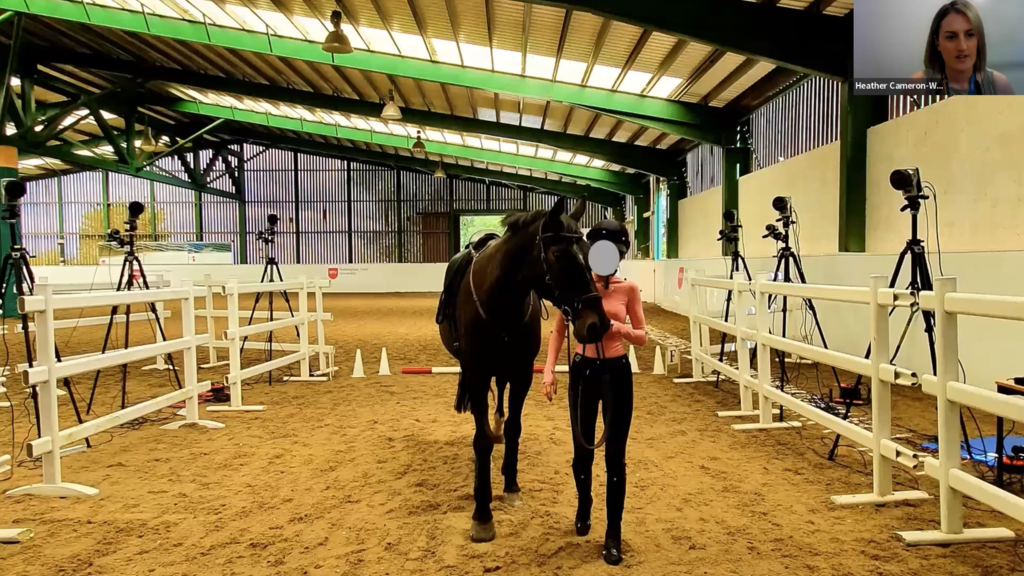
The formal study setup used a channel of cameras angled to create a full 3D view. Cables from the marker-based system were buried under the arena surface for safety. Riders walked and trotted through the channel with full marker sets applied for comparison.
Some fun behind-the-scenes clips showed our researchers dancing to test full-body movement, and how the marker-based system needed calibration — including riders standing on mounting blocks to simulate being on a horse.
You can see the difference in how the systems work — the markerless AI builds the skeleton in real time as the rider passes through, which is fascinating to watch.
We conducted the data collection at Nottingham Trent University, with Dr Charlotte Apps as the other lead researcher on the project.
So what did we find? The markerless system worked well in the sagittal and frontal planes — that is, forwards/backwards and side-to-side motion. It was less reliable in the transverse plane, which captures rotation (like a rider’s hips turning as they move). It also struggled to identify elbows, possibly because riders keep their elbows in tight to the body — unlike in other sports. And it wasn’t great at tracking ankles and feet, likely due to stirrups blocking the view.
The results are from a single study in a controlled setup, and future work could test other setups — like expanding the volume of space the cameras cover. That might improve accuracy.
We concluded that the markerless system is a promising alternative to marker-based motion capture, especially for real-world or live environments like training or competition. It’s not about replacing marker-based systems in controlled lab studies, but rather filling the gap where real-time, unobtrusive analysis is needed.
One of my dreams is to use this system at competitions — for example, around cross-country fences — to collect performance and safety data from real events. That’s not feasible with marker-based systems.
I’d like to acknowledge my co-author Dr Charlotte Apps, Dr Martin Lewis from Qolisis who provided the hardware, and Hannah DeValle, a technician at Nottingham Trent University. The study was featured in Horse & Hound and is available open access.
How did this come about? I was encouraged to collaborate across departments at my university. I met Charlotte, a biomechanist, and we brainstormed ideas. She suggested using their markerless system, and I thought it could be amazing for horse falls research. We realised we first needed to see if it worked on riders — and that’s where this study began. Neither of us had used these systems before, so we learned a lot and had a great time doing the work.
The system reminded people of what you might see in football or tennis analysis — those blue skeletons you see on TV. But we’d never seen anything like this in equestrian sport. It’s exciting to think about using it to study subtle rider movements in disciplines like dressage, or analysing rider position in falls.
As for future developments — it would be incredible if the system could eventually be trained to track horses as well as riders. There are separate systems for horse motion capture, but none that can do both horse and rider together — which is essential for equestrian analysis.
It could even help identify marginal gains in performance or understand how adding a rider changes a horse’s movement over jumps.
Markerless systems also open the door to live biofeedback. Imagine smart goggles or wearables telling you your hip alignment or posture as you ride — something that’s already happening in swimming. It’s early days, but it’s an exciting possibility.
And for students, this kind of research is inspiring. One of our rider participants went on to pursue a PhD in biomechanics. It’s great to know we’re helping train the next generation of equestrian scientists.
Thanks for having me.
