


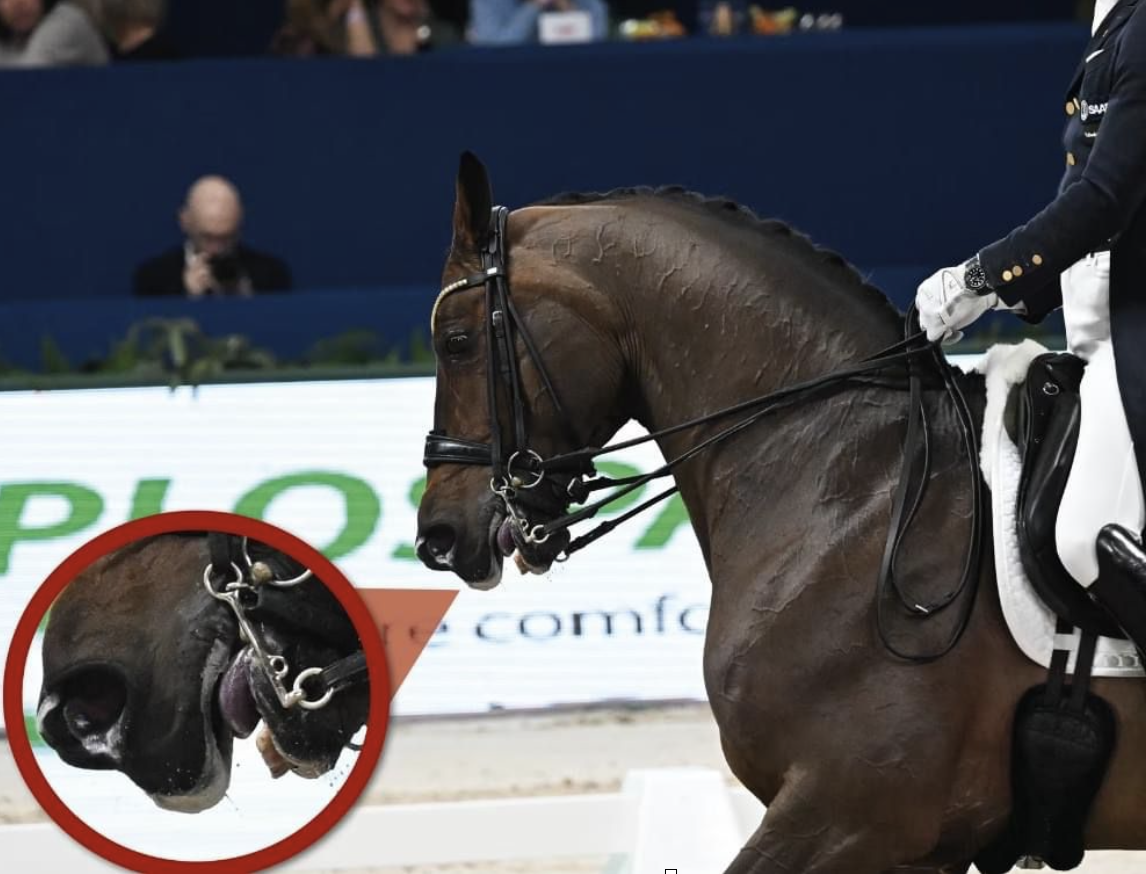
I often ask myself how we went from never having heard of the phrase Blue Tongue to it suddenly being one of the most debated topics in equestrian. Is it a case that it only just started to occur, or is it a case that it just got more frequent, or was it there all along, and we were never looking for it? My gut feeling is it might well be a case of all three of these. i.e. its been increasing in frequency and we’ve started looking for it. This is probably similar to the situation with gastric ulcers. Thirty years ago few riders had probably heard of gastric ulcers in horses. Now its one of the most common and recognised medical conditions affecting horses and gastroscopy is a common diagnostic procedure.
Why is blue tongue so common now?
If Blue Tongue is on the increase then why is that? There are lots of opinions out there including tight nosebands, being ridden behind the vertical for long periods and aggressive bits. But to be honest, at this stage, all we mostly have are opinions and theories and little hard evidence. Personally, despite spending a lot of time around horses competing from local up to Olympic level, I can’t recall seeing more than a few cases and probably just dismissed the ones I saw as being unusual and uncommon. I do however recall seeing a number of blue tongues during anaesthesia research and clinical cases back when I was at the Animal Health Trust. I asked a number of colleagues and contemporaries if they had seen Blue Tongue. Dr Sue Dyson for example said she had not seen many cases in the flesh. After I posted some questions around blue tongue last year I was contacted by a number of owners/riders who had experienced their horses developing a blue tongue. Interestingly, and surprisingly, whilst a number were in competition with reportedly snaffle bits and light contact, many of these cases were in horses in the stable or pasture with no bit or bridle on and I even had reports of it being seen in foals suckling!
Survey of riders’ experiences of seeing blue tongue
We even carried out a small survey within the Animalweb Members Group. Only 1 in 7 had ever seen an example of blue tongue firsthand. Most of these cases had been in dressage horses, but there were also reports of driving, eventing xc, pleasure riding, racing TB, racing trotters and in ridden showing. We asked what circumstances were present when the blue tongue was observed and the most common response was the horse appeared “stressed or anxious” (50% of cases) or high rein tension (43% of cases). Other reported circumstances included double-bridle, severe bit, head behind the vertical, horse pulling and high head carriage.
How do ambient lighting and other camera or phone factors affect colour in images?
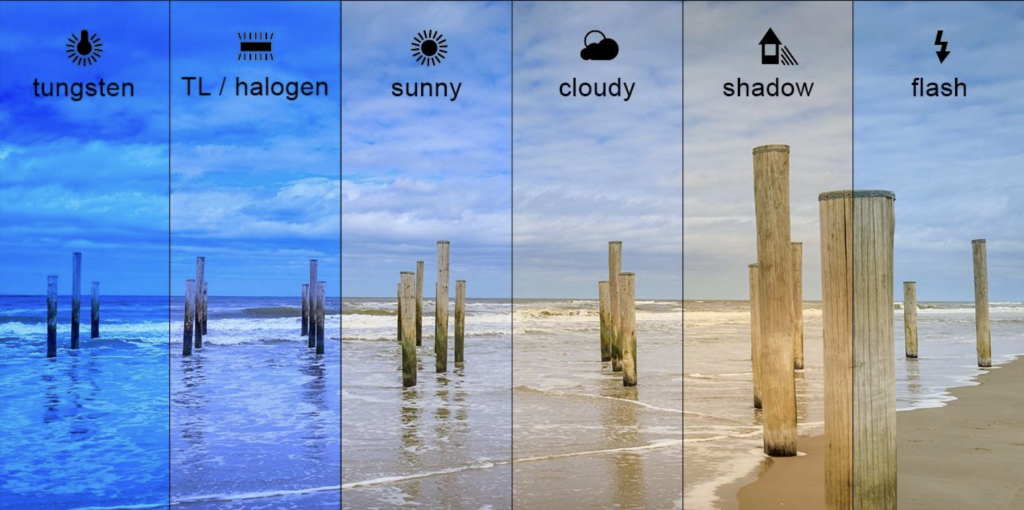
The simple answer is a tremendous amount. If photos are being taken outside the ambient light is usually more “cold” or more blue whilst evening light is usually “warmer” with yellow, orange and red being more dominant. If images are being taken indoors then the type of lighting in arenas affects how colours are seen. For example, sodium lamps are very warm. Fluorescent lights can be anything from warm to close to daylight. Similarly, LED lights can be cold, neutral or warm. Different makes and models of phones, different camera brands, different lenses can all affect the recorded colour. Not to mention other factors such as distance from the horse, angle, aperture, shutter speed, ISO setting, colour mode, white balance, etc. Bottom line? If two people took the same photo of a horses mouth at the same time using different equipment and settings the results could look very different.
How camera settings can affect colour
Manipulation of images to create blue tongues?
One other hypothesis that has been put forward for the sudden increase in blue tongues is that images are being manipulated. At present there is no evidence that this is occurring as far as I am aware although its quite easy to create such images as can bee seen below. The first image is the original whilst in the second image the blue content of the tongue has been enhanced using Photoshop.
Original image:

Photoshopped image:

Use of dyes or medications that stain the mouth blue
Another “hypothesis” is that these images are caused by something being put in the horses’ mouth that is colouring the tongue blue. This isn’t necessarily as crazy as it first sounds. The following medications and substances can turn the mouth blue:
- Methylene Blue – A dye used in medical diagnostics and as a treatment for conditions like methemoglobinemia.
- Chlorhexidine Oral Rinses (some formulations) – Can cause temporary bluish staining.
- Some Antifungal Medications (e.g., Gentian Violet) – Primarily purple, but can appear blue in some lighting.
- Certain Bismuth Compounds (e.g., Bismuth subsalicylate found in Pepto-Bismol) – Can cause a black/blue discoloration of the tongue.
- Food Dye in Medications – Some liquid or chewable medicines contain blue dye that can stain the mouth.
Administering a prohibited or banned substance into the mouth might reduce the risk of a positive test due to the delayed uptake into the circulation. However, if and its possibly a big if at this stage, the colouration is due to dyes then the whole mouth and not just the tongue would obviously appear blue.
Should riders be punished?
Many equestrians have called for punishments for riders who’s horses develop blue tongues during competition, including bans. But as we don’t know why blue tongue develops then it seems a little unfair to punish riders. It may well be idiopathic; a condition of unknown cause.
What is the most likely cause of blue tongue – blood flow restriction?
Leaving aside the use of dyes and or manipulation of photographic images, we know that when blood flow is restricted, for example when a tourniquet is used, tissues become “cyanotic” or blue coloured. This can also happen when people or animals have a systemic (whole body) problem involving the heart or heart and lungs which leads to reduced arterial oxygen. The chart below shows how the colour of blood changes from red to blueish-purple as the amount of oxygen decreases.

The most likely cause of blue tongues would, therefore, appear to be due to restriction of blood flow either into the tongue (arterial/oxygenated blood) or out of the tongue (venous/reduced oxygen) or both. If the blood flow is severely reduced or cut off completely, the tissues continue to use up the oxygen in them but as this is not being replaced the saturation drops. It could also be due to whole body oxygen starvation due to heart or respiratory disease, but this would seem highly unlikely as horses would not be able to continue to exercise and the low oxygen would be seen in other areas, such as the mucous membranes (see below).
Anatomy of the equine mouth and blood supply
In order to try and understand what may be happening, it’s helpful to look at the circulation within the head. The arterial blood supply to the head comes from the common carotid artery. The tongue, which we should remember is a muscle, is supplied primarily by the lingual artery, which originates from the external carotid artery. The sublingual artery supplies the ventral (bottom) aspect of the tongue and floor of the mouth. The tongue has an extensive vascular network which ensures rapid healing and constant oxygenation. Other parts of the lower head also have a blood supply originating from the common carotid but the gums and lips and lining of the mouth are supplied by different branches. The gingiva and oral mucosa are supplied by branches of the maxillary artery, which is also a branch of the external carotid artery. The infraorbital artery supplies the upper gingiva, the mandibular alveolar artery supplies the lower gingiva and the buccal artery supplies adjacent mucosa and cheeks.
As the gums are supplied by different arteries to the tongue, if they also become blue along with the tongue then this would indicate whole body arterial oxygen saturation reduction. Its therefore also entirely possible that the oxygen saturation within the tongue could drop but that the colouration of the gums would remain normal because they are supplied by different arteries

Source: https://pressbooks.umn.edu/largeanimalanatomy/chapter/neck-head/
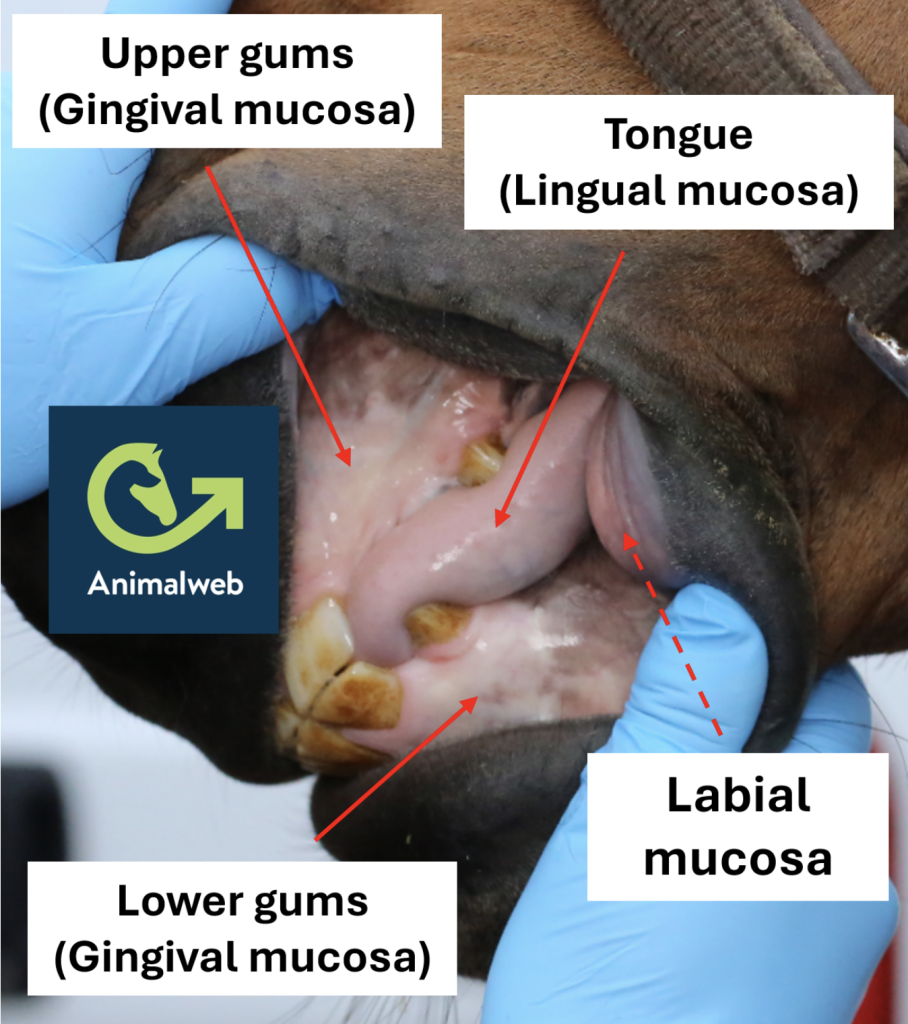
What questions should we/could we ask about blue tongue?
Below are some of the questions I’ve been thinking about. Most of these we don’t have answers for.
- Are blue tongues the result of blood flow restriction to the tongue?
- Does it cause pain?
- If it’s due to blood flow restriction, where does the restriction occur?
- Is it arterial occlusion? Is it venous occlusion? Is it both?
- Is it caused by capillary congestion?
- What is the tongues oxygen tension before, during and after development of blue tongues?
- Could blue tongues be the result of shunting of blood flow – a normal physiological process?
- Are some horses more prone to blue tongues than others?
- Is it more prevalent in some disciplines than others?
- What role does the bit play?
- What role do nosebands play?
- What role does head and neck position (HNP) play?
- What role does rein tension (force) play?
- How quickly can it develop?
- How quickly does it resolve (disappear)?
- Do horses that develop blue tongues have normal tongue vasculature?
- Is the low oxygen tension in the tongue due to systemic low oxygen tension?
- Is there damage to the nerves in or supplying the tongue?
- Are there soft tissue changes/abnormalities in these horses’ tongues?
- How reliable are photographs/video in assessing the development and or severity of cyanosis of the tongue during exercise?
- How can we measure tongue oxygenation during exercise?
- Please do contribute to this discussion. You may of course share your opinions. But facts and evidence are very welcome. And it’s important we distinguish between opinions and evidence.
- What is the role of oral conformation?
- Do blue tongues occur in wild horses?
- Do blue tongues occur in non-exercised horses?
- Once it happens does it occur more severely and or more frequently?
- Does it affect swallowing?
- Does it cause or is it caused by upper airway obstruction?
- Is it affecting the whole tongue or just the surface capillaries?
Bottom Line
My opinion at this time is that blue tongue is the most likely the result of reduced oxygen saturation in blood within the tongue. I don’t know if this is in the whole tongue or just the surface. I suspect this is most likely due to compression of the tongue due to bit type and position, noseband tightness and high rein tension. The restriction could be in the arterial supply, the venous drainage or both. I also suspect that this may be causing at least discomfort and probably pain to horses. It does appear however that blue tongue can also occur in situations where there is no bridle, bit or noseband. I don’t know how common it is, how quickly it can develop or how quickly it can resolve and whether it causes long term damage to the tongue. I don’t know how to prevent it happening. We might ban all nosebands and bits and then find it occurs in horses ridden in bitless bridles. There is therefore an urgent need for this issue to be addressed in a rapid, sensible and objective way to protect horse welfare.
TOP IMAGE: Blue Tongue. Credit: Crispin Johannsen, Licence to use image purchased by Animalweb.
