


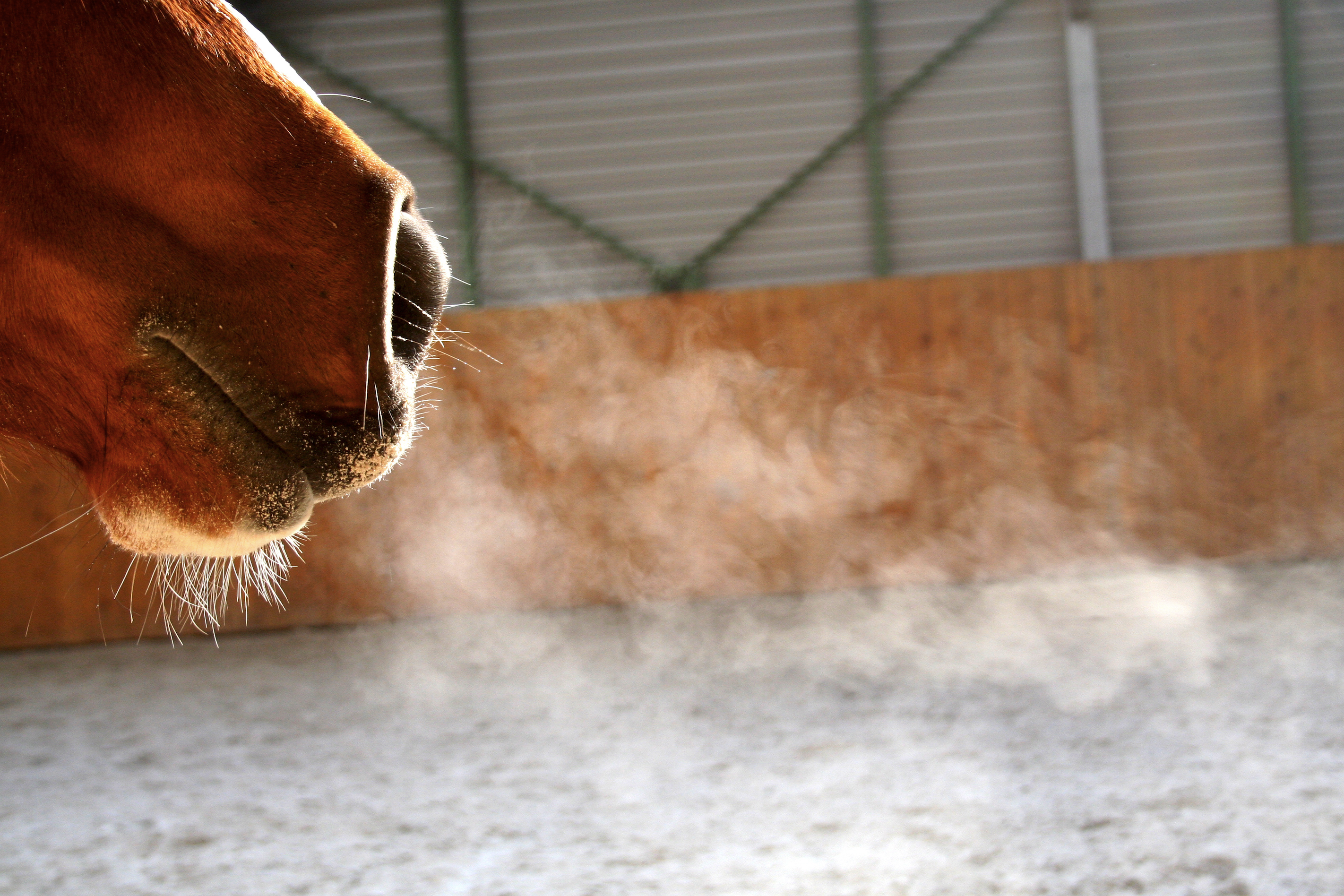
Just a reminder that with the coldest temperatures of the Winter (so far) forecast for the next few days, try to avoid canter and gallop in cold air as this leads to airway inflammation. This is especially important for any horse with equine asthma or a history of moderate to severe EIPH!
Human asthma and cold weather
Many people will be familiar with the fact that human asthma is worse in cold weather. Asthma UK has previously estimated that 4 million people in the UK (around 75% of total asthmatics) would be at risk of life-threatening attacks due to breathing in cold air due to the sudden drop in temperatures. The advice given was to avoid exercise in the cold and to wear a scarf over the nose and mouth to help warm and humidify the inspired air.
Ski-asthma and equine asthma
The effect of cold-air on human athletes is also well recognised, particularly in ice-hockey players and cross-country skiers, where it is referred to as “ski-asthma”. Horses are also commonly affected by asthma (often referred to as IAD/RAO/equine COPD/heaves). This is predominantly related to breathing in allergens (moulds, pollen, dust, etc) which lead to an inflammatory reaction, production of mucus and narrowing of the airways. However cold air acts in a different way and leads to the same effects but without the involvement of allergens through irritation of the nerves in the airways.
Studies of the effect of cold-air in horses
We have previously demonstrated that damage occurs to the airways in “healthy” horses during a slow canter breathing air around 5°C as well as during galloping. In addition, a study from North America showed that the number of Standardbred racehorses with blood in the airways (i.e EIPH) after exercise increased as the air temperature dropped. Whilst scarves may work for people and whilst some cold weather masks have been tried for horses, these are not effective.
How does cold air damage the airways?
Cold air contains less moisture than warm air. It’s why we get dew and frost – this water has “fallen out of” the air as it cools. The colder the air, the drier it is. Dry air dries the airways and is the main cause of airway injury, the inflammatory response, and asthma-like syndrome.
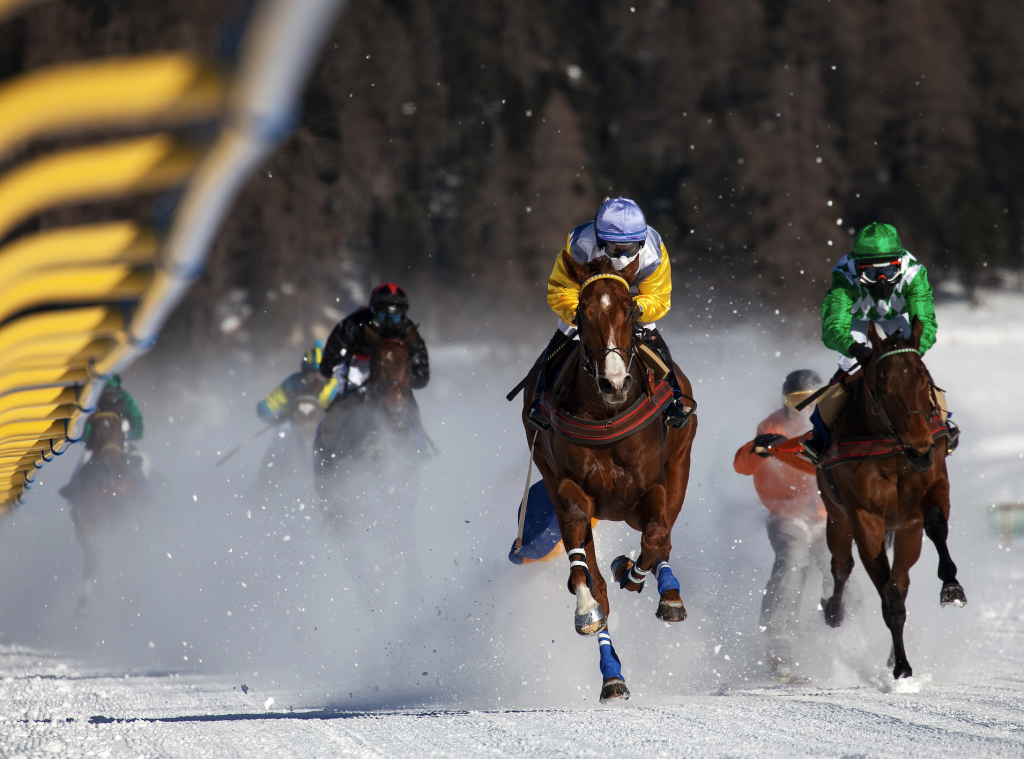
Not just thoroughbreds galloping
Just because racehorse trainers workhorses hard on cold mornings doesn’t mean it does not cause damage. In our studies, the airway showed damage after cantering very slowly at 6.6m/s (400 metres/minute) while breathing air at +5°C.
Signs to look for that your horse may be affected
If your horse coughs more after moderate-hard work in cold weather and or shows an increase in nasal discharge and or reduced exercise tolerance, then that is likely to indicate an increase in airway inflammation.
BOTTOM LINE
The best advice is to avoid fast or hard exercise on very cold mornings or days, especially if you have a horse with a history of respiratory problems.
References:
- Cold weather puts 4 million people with asthma at risk as temperatures plummet LINK
- Davis MS, Royer CM, McKenzie EC, Williamson KK, Payton M, Marlin D. Cold air-induced late-phase bronchoconstriction in horses. Equine Vet J Suppl. 2006 Aug;(36):535-9. LINK
- Davis MS, Lockard AJ, Marlin DJ, Freed AN. Airway cooling and mucosal injury during cold weather exercise. Equine Vet J Suppl. 2002 Sep;(34):413-6. LINK
- Crispe EJ, Lester GD, Robertson ID, Secombe CJ. Bar shoes and ambient temperature are risk factors for exercise-induced pulmonary haemorrhage in Thoroughbred racehorses. Equine Vet J. 2016 Jul;48(4):438-41. LINK
- Hinchcliff KW, Morley PS, Jackson MA, Brown JA, Dredge AF, O’Callaghan PA, McCaffrey JP, Slocombe RF, Clarke AF. Risk factors for exercise-induced pulmonary haemorrhage in Thoroughbred racehorses. Equine Vet J Suppl. 2010 Nov;(38):228-34. LINK
- Lapointe JM, Vrins A, McCarvill E. A survey of exercise-induced pulmonary haemorrhage in Quebec standardbred racehorses. Equine Vet J. 1994 Nov;26(6):482-5. LINK
