


Following a flurry of questions and queries from Animalweb members about Bute and growing concerns about Bute dependency, we asked the world-leading equine internal medicine vet, our own Dr Kirstie Pickles, to look into it all and explain the key points to us!
Bute Toxicity by Kirstie Pickles BVMS MSc PhD CertEIM DipECEIM FHEA MRCVS
‘Bute’, or phenylbutazone to give its full name, is one of the most frequently used drugs by horse owners and veterinary surgeons to treat equine musculoskeletal pain. It is a cheap and versatile drug available in injectable, powder and paste formulations. Despite being the first non-steroidal anti-inflammatory (NSAID) to be licenced for use in horses, it is still one of the most effective drugs for the treatment of orthopaedic pain. As well as being used for short-term pain relief, many older horses are on long-term, low dose bute to manage osteoarthritis.
Most owners are also aware that phenylbutazone use can be associated with the gastrointestinal side effects of gastric ulceration, particularly in the glandular region and right dorsal colitis. Bute can also cause kidney injury, particularly in dehydrated horses and therefore care should be given to NSAID use in sick animals.
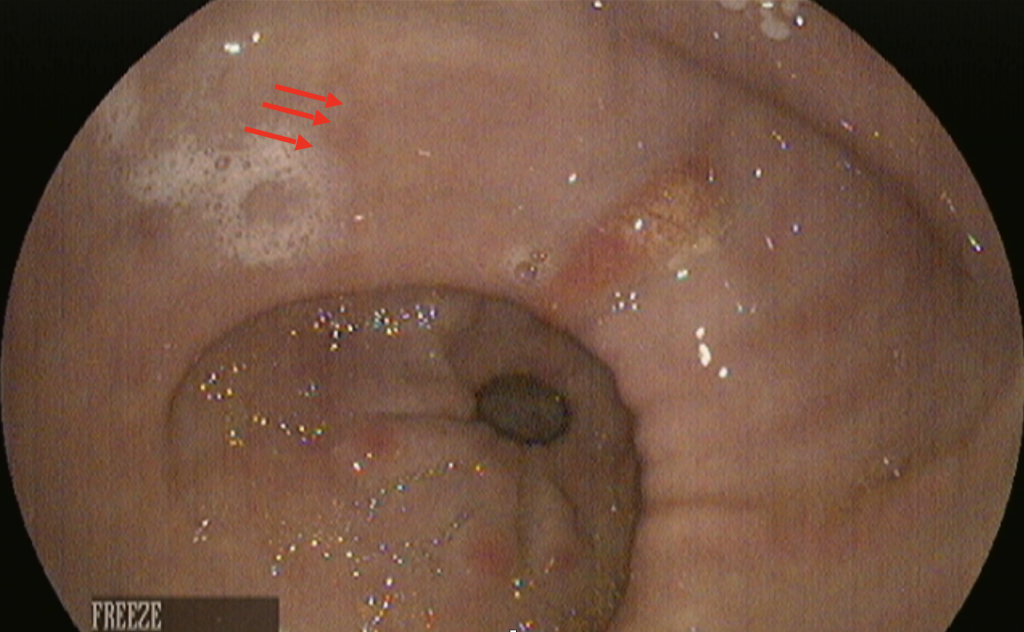
Fig 1: Gastroscopy image showing linear ulceration and reddening of the glandular mucosa (red arrows).
Bute is the NSAID most likely to induce gastrointestinal side events however, all NSAIDs, including newer products marketed as ‘safer’ alternatives due to more selective action (meloxicam, firocoxib), can be considered as potentially causing gastrointestinal (GI) adverse events. Suxibuzone (marketed Danilon) is a pro-drug of phenylbutazone and has similar clinical effects. There is some evidence that it has an improved safety profile since there is no direct gastric mucosal irritant effect however, this may have limited relevance at normal clinical doses.
Generally, chronic low-dose administration is safe, and toxicity is most often seen with acute overdosing. In my experience, bute toxicity is most often associated with the use of the oral paste when a whole syringe (12g) is given rather than a 1g turn of the dosing dial. In this scenario, horses become dull and anorexic within 6-12h and develop right dorsal colitis producing loose faeces or diarrhoea.
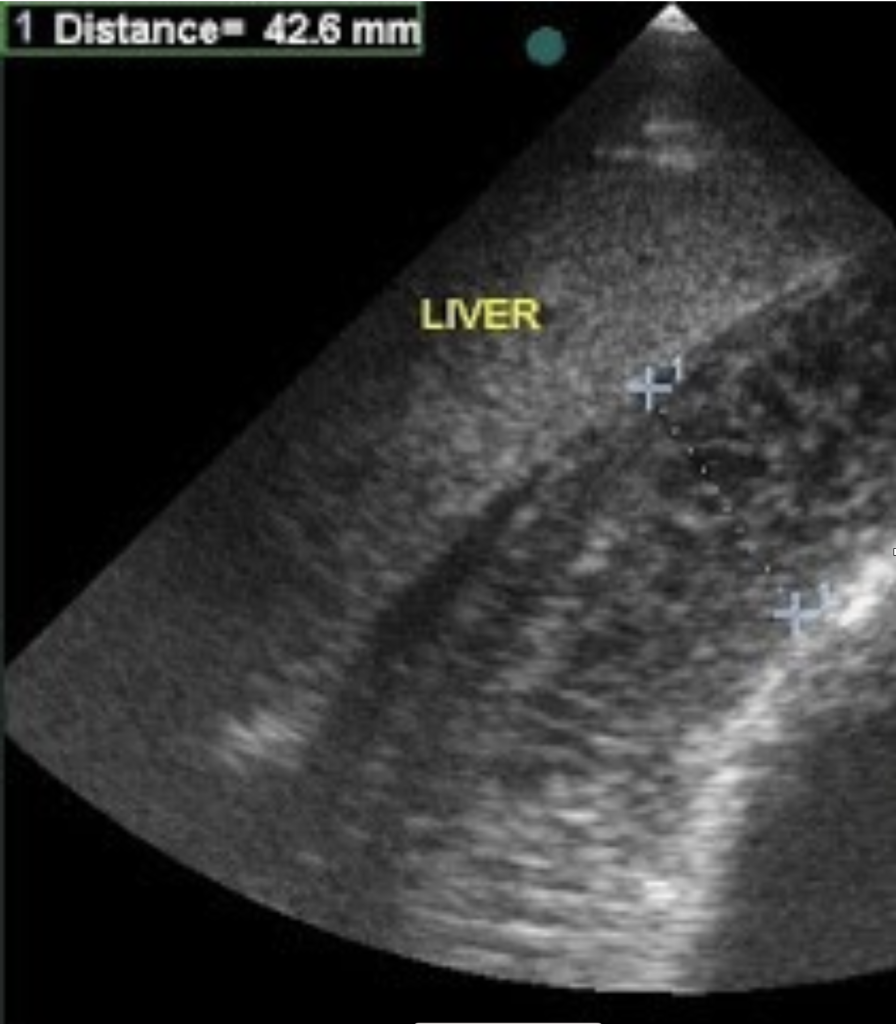
Fig 2: Ultrasound image of the liver and right dorsal colon (RDC) wall in a pony with right dorsal colitis due to bute overdosing. The RDC wall is markedly thickened at 42.6mm (shown as the distance between + signs).
GI adverse effects can also be seen when doses of bute are increased, in response to lack of effect, above the recommended range. Pain relief is not increased at dosages above the recommended dose rate, and therefore, such use increases the risk of side effects without any added clinical benefit. The risk of bute toxicity is significantly increased if used in combination with other drugs with a similar mechanism of action and therefore bute should never be given in combination with other NSAIDs or steroids. If bute, administered at the recommended dose rate, is insufficient to control pain, veterinary advice should be sought.
Summary
NSAIDs are relatively safe at recommended doses, but individual sensitivity may predispose some horses to toxicosis. Conditions that reduce blood flow to tissues and delay drug elimination, such as kidney disease, dehydration and liver disease, increase the risk of toxicity. The decision to use any medical drug should not be taken lightly and should be made after consideration of the risks and benefits of its use and in discussion with a veterinary surgeon.
