



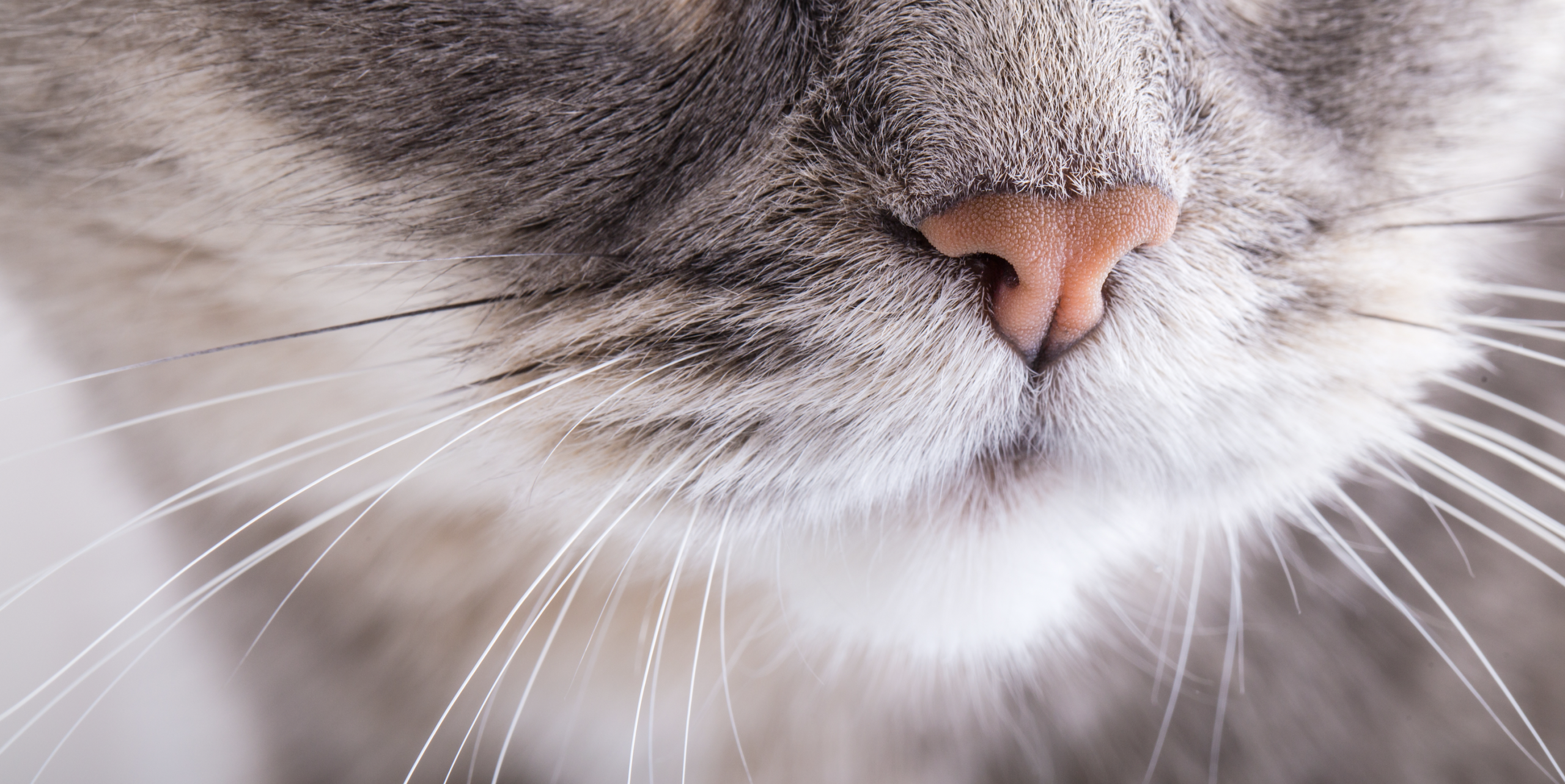
Cats possess a highly developed sense of smell, which is one of their primary senses for interacting with their environment, communicating, and surviving.
Anatomy and Physiology of Cats’ Sense of Smell
Olfactory Receptors: Cats have approximately 200 million scent receptors in their nasal cavity, compared to humans’ 5–6 million and dogs’ 220–300 million. This makes their sense of smell roughly 14–40 times more sensitive than humans’, though slightly less acute than dogs’ for certain tasks.
Vomeronasal Organ (Jacobson’s Organ): Located in the roof of the mouth, this organ is connected to the nasal cavity and specialises in detecting pheromones and other chemical signals. Cats use the Flehmen response—curling their lips, opening their mouth, and inhaling—to draw scents into this organ for detailed analysis. This is particularly useful for social and reproductive cues.
Olfactory Epithelium: The nasal cavity’s lining contains specialised cells that detect and process odours, sending signals to the brain’s olfactory bulb, which is proportionally larger in cats than in humans, reflecting their reliance on smell.
Scent Memory: Cats can retain and recall scent-based information, allowing them to recognise familiar individuals, animals, or environments over time.
Smelling Ability and Sensitivity
Detection Threshold: Cats can detect odours at concentrations far lower than humans, enabling them to identify subtle changes in their environment, such as the presence of another animal or spoiled food.
Discrimination: Cats can differentiate between a wide range of scents, including those of other cats, humans, and objects. The 2025 Tokyo University of Agriculture study demonstrated that cats spend significantly more time sniffing unfamiliar human odours (e.g., from armpits, behind ears, or between toes) compared to their owner’s odour or a clean control, indicating their ability to distinguish familiar versus unfamiliar humans.
Pheromone Detection: Cats are highly sensitive to chemical signals like pheromones, which convey information about territory, mating readiness, or stress. This is why synthetic pheromone products (e.g., Feliway) are used to calm cats or reduce territorial behaviours.
Functions of Cats’ Sense of Smell
Communication and Social Interaction
Cats mark territory by rubbing their face, scratching, or spraying urine, depositing scents from glands on their cheeks, paws, and body. These marks signal ownership or familiarity to other cats.
They identify other cats by sniffing, particularly around the head, anal area, or urine marks, to assess identity, sex, or reproductive status.
The Tokyo University study showed cats can differentiate human odours, spending 2–3 times longer sniffing unfamiliar scents (e.g., 30–40 seconds versus 10–15 seconds for owners’ scents). Face-rubbing after sniffing suggests they may mark unfamiliar objects or people to incorporate them into their territory.
Hunting and Food Selection
Cats rely on smell to locate prey, even when it’s out of sight. Their olfactory sensitivity allows them to detect faint traces of animal odours.
They assess food quality through smell, preferring food at room temperature (mimicking fresh prey) to maximize odour detection. A cat refusing food may indicate a loss of smell due to illness.
Navigation and Environmental Awareness
Cats use scent to map their territory, recognizing familiar areas and detecting intruders or changes (e.g., new furniture or people).
Outdoor cats rely on smell to navigate large areas, returning to familiar scent-marked locations.
Human Interaction
Cats may use scent to gauge a person’s emotional state, as human odours can vary with stress, fear, or illness. This aligns with prior studies showing cats adjust behaviour based on human emotional cues.
In UK households (8.4 million with cats, 3.2 million with both cats and dogs), cats’ sensitivity to owner odours can influence bonding or reactions to visitors. For example, a cat may be more cautious around strangers due to unfamiliar scents.
Practical Applications for Cat Owners
Cats may react to new household scents (e.g., cleaning products, guests, or other pets), potentially causing stress or marking behaviours.
In multi-pet households, cats and dogs may compete for scent dominance, leading to territorial conflicts.
Health Implications: Owners should watch for reduced sniffing or appetite, as these may indicate nasal blockages or infections, common in UK cats due to damp climates. A diminished sense of smell can signal health issues like upper respiratory infections (common in cats), dental disease, or aging-related decline. In the UK, where veterinary costs rose by 6% in 2023 (PDSA data), owners should monitor changes in sniffing or appetite, as these may indicate treatable conditions.
Litter Box/Tray Management: Cats’ sensitivity to smell means they prefer clean litter boxes. Strong-smelling litter or cleaning agents can deter use, leading to behavioural issues.
Introducing New Pets or People: Gradual scent introduction (e.g., swapping bedding between cats or letting a cat sniff a visitor’s item) can reduce stress in the 3.2 million UK households with multiple pets.
Stress Reduction: Pheromone diffusers like Feliway mimic natural cat scents, calming cats in stressful situations (e.g., vet visits or moving homes).
Comparison to Dogs
While dogs have an even higher number of scent receptors (up to 300 million) and are often considered superior in olfactory tasks like tracking, cats’ sense of smell is still highly refined for their needs. Cats are more selective, focusing on close-range scent detection for social and territorial purposes, whereas dogs excel in long-range tracking.
Comparison to Horses
Both species use smell for communication and social recognition, but cats focus on close-range territorial and social cues, while horses leverage smell for long-range survival and herd dynamics. Cats’ scent marking is more individualised (e.g. claiming objects), while horses’ scent use supports group cohesion and environmental awareness.
