


Hot on the heels of Dr Kieran O’Brien’s fantastic webinar: Medicating Eyes, we bring you this clear guide with the best practice for medicating your horse’s eyes.
Eye disease is common in horses, and vets almost always give owners medication to administer to the eye/s. But many owners struggle with the technique and resistance from their horse.
Here are Dr Kieran’s tips for success every time!
Getting it right!
Often a horse appears not to respond to eye treatment because the owner hasn’t been able to administer the medication properly.
The main problems are having no assistance, poor compliance from the horse, poor application technique, and insufficient dose frequency.
However, when owners are taught how to medicate their horse’s eyes effectively, vets see a far better outcome in the horse’s condition.
Mastering the correct approach is the key.
What you’ll use
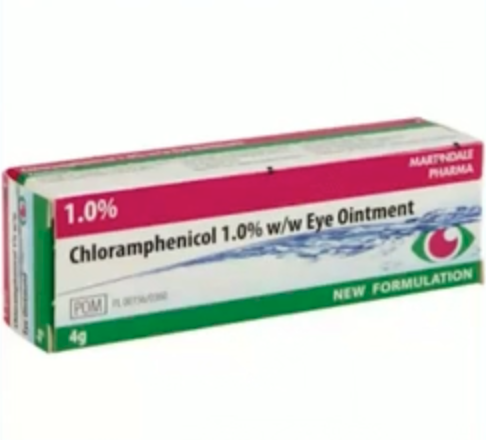
From an owner’s point of view, you will either use a topical eye ointment or topical eye drops. Chloramphenicol is one of the most used drugs, both for people and animals.
There are positives and negatives to both medications. Overall, ointment is the easiest to apply, and its thick, oily formulation means your horse’s tears won’t wash it away quickly.
But using the correct technique is crucial for your horse’s eye health and recovery!
Restraining your horse’s head
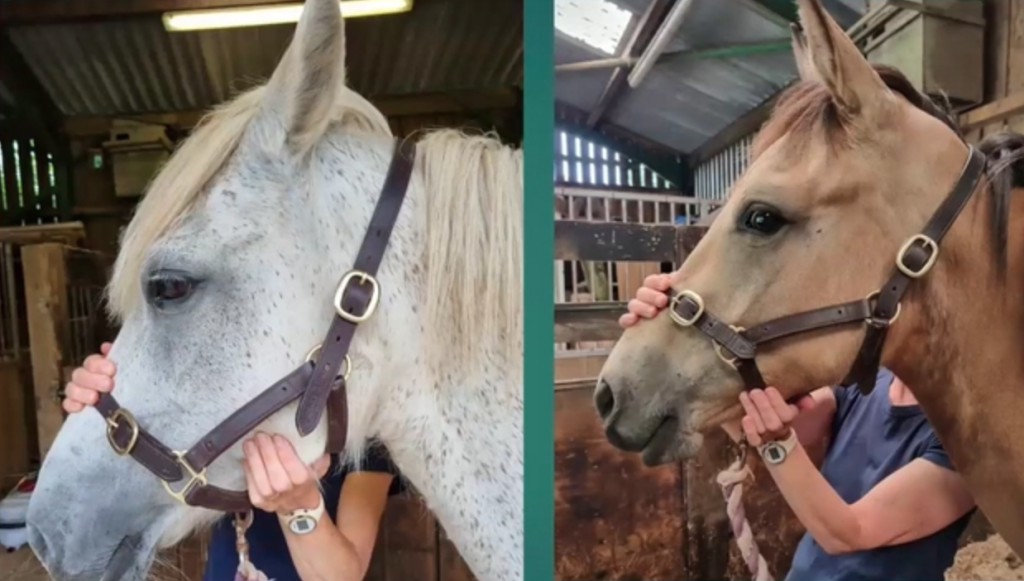
Start by getting someone to help you! It makes a HUGE difference!
- Ask them to stand on the opposite side of the horse to the eye you are treating.
- Tell them to place one hand above the head, on your horse’s nose, and the other hand under the head.
- This will hold your horse’s head still.
Or, if there’s no one around, use the single-handed technique!
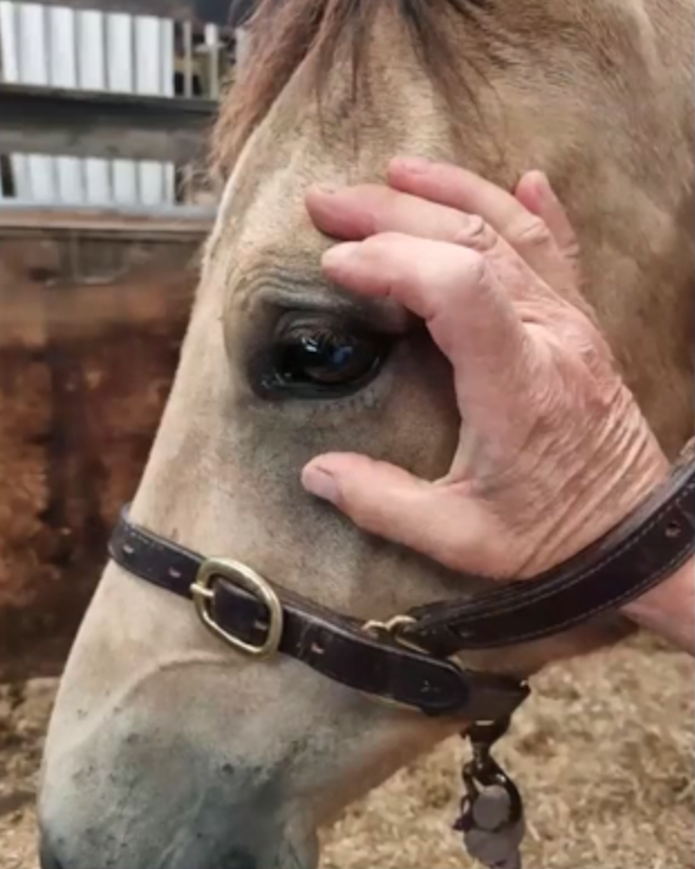
- Adjust your horse’s headcollar so it is snug (tighter than normal).
- Slide one hand inside the headcollar. This gives you good control because if the horse moves his head, your hand moves with it.
- For even greater control, drop your horse’s lead rope onto the floor, and stand on it. This way your horse can’t lift its head too high.
Where to administer the treatment

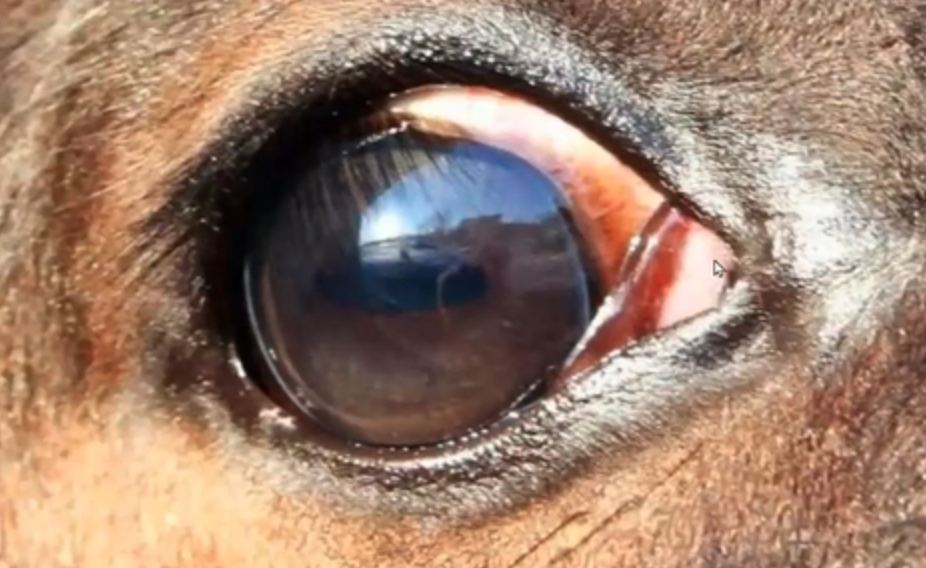
You need to put the medication into the conjunctival sac of your horse’s eye. This is the space between the lower lid and the eye.
To make application easier, it helps to make that space bigger.
We do this by pulling the eyelid out slightly and pushing the eyeball back slightly. Ideally without touching the eye because this will avoid a blink response which may upset the horse and make it difficult to administer the drug.
How to apply the medication
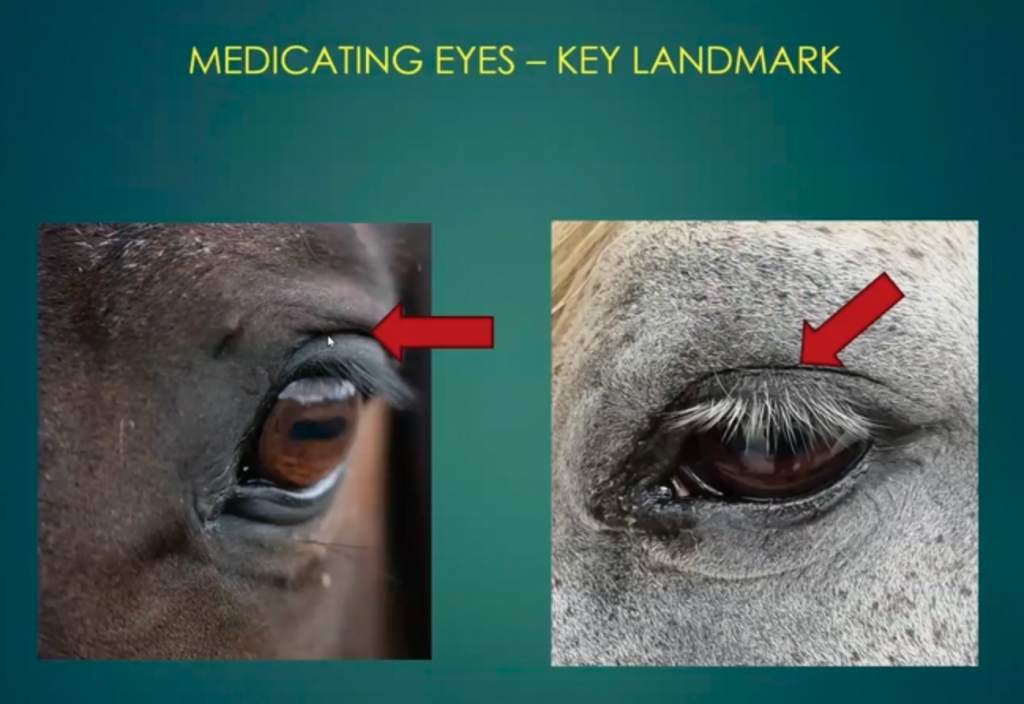
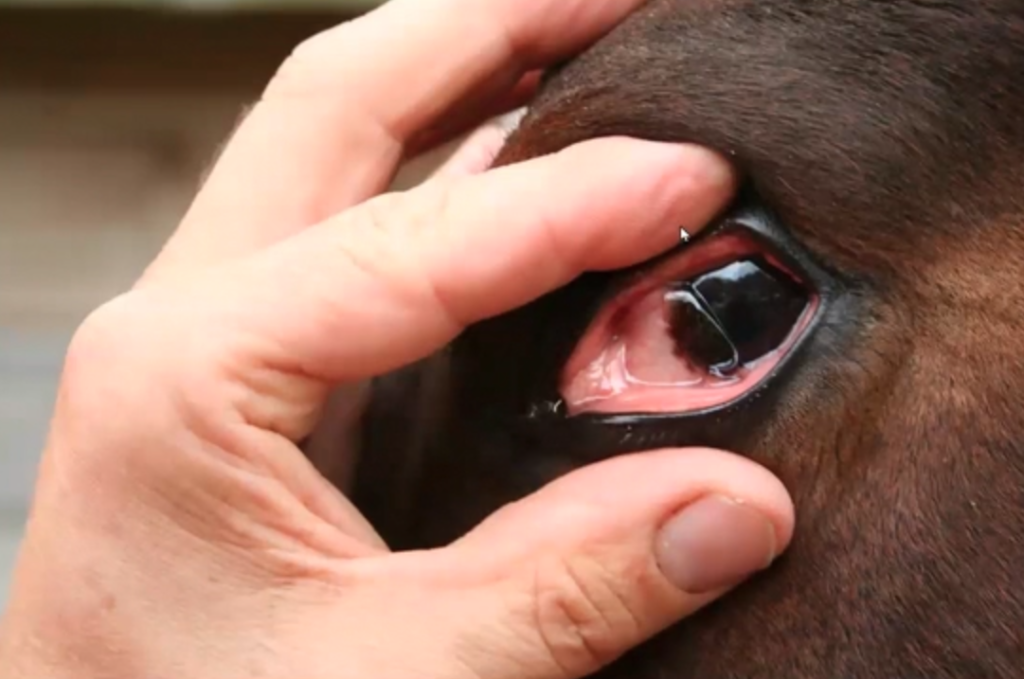
- Taking one hand, put your index finger into (not above) the deep skin fold on your horse’s upper eyelid. Ensure your index finger is positioned far enough along the skin fold – it should lie about three-quarters of the way along the upper eyelid.
- Next, push up the upper eyelid while gently pushing back the eyeball – don’t worry, there is plenty of space behind the eyeball because a horse’s eye socket is huge!
- Be aware: the ‘third eyelid’ often comes across at this point. You need to get the medication behind this third eyelid.
- Then, at the same time, use your thumb (from the same hand) to gently pull down the lower eyelid.
- This will expose a large pink area where you can put the medication.
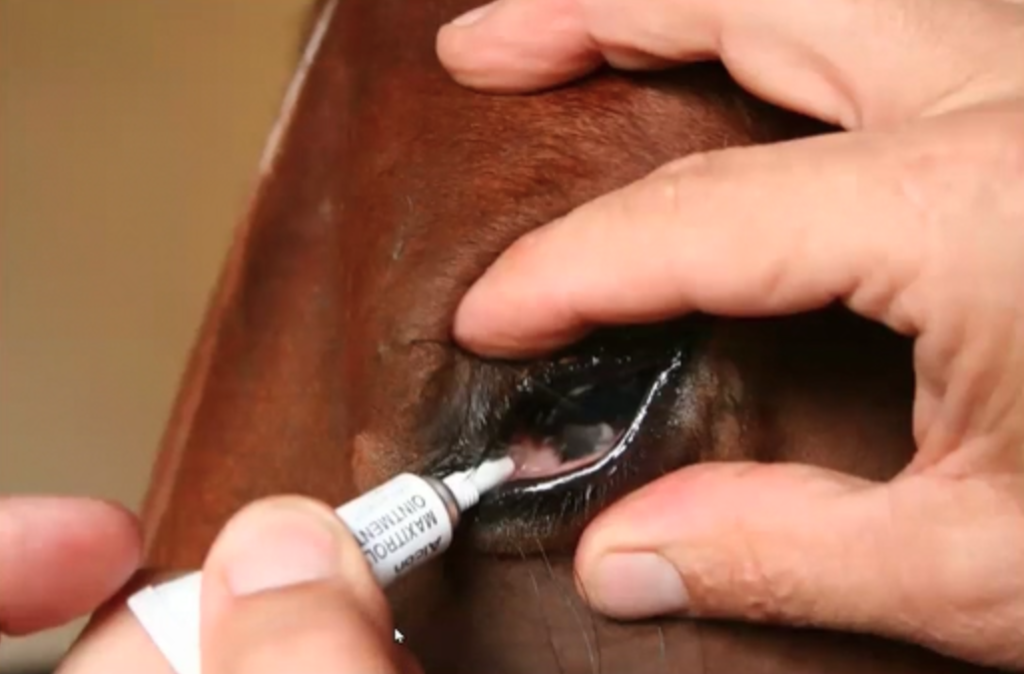
- Use your other hand to administer the ointment or drops. If you wish, you can rest this hand on your horse’s nose for stability.
- Then close the eyelids together and give the eye a little rub to disperse the drug.
- Repeat on the other eye, if needed.
- You’re done!
Things to remember!
- Make sure your fingers aren’t too far away – you almost want to touch the eyelashes.
- You need to push the eyeball back.
- You must open the eye wide enough.
- Try not to touch the eye.
Tips for ointment
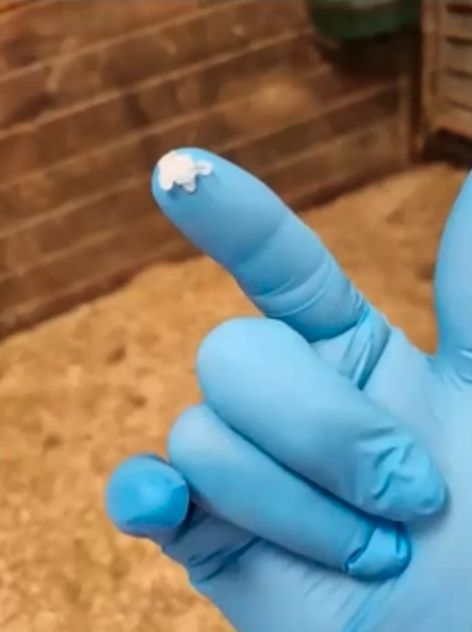
- Warm the ointment. When it’s cold, ointment exits the tube in a long string which can sometimes pull away completely from the eye when you withdraw the tube. Warm it in your pocket, so it’s a bit runny and drops out in a blob.
- Use your fingertip rather than a tube applicator. Ideally wear a surgical glove, or ensure your fingertip is very clean and without long nails. Pull the glove tight around the end of your finger so there are no wrinkles. Squeeze some ointment onto the tip of your finger, then place it into the corner of your horse’s eye.
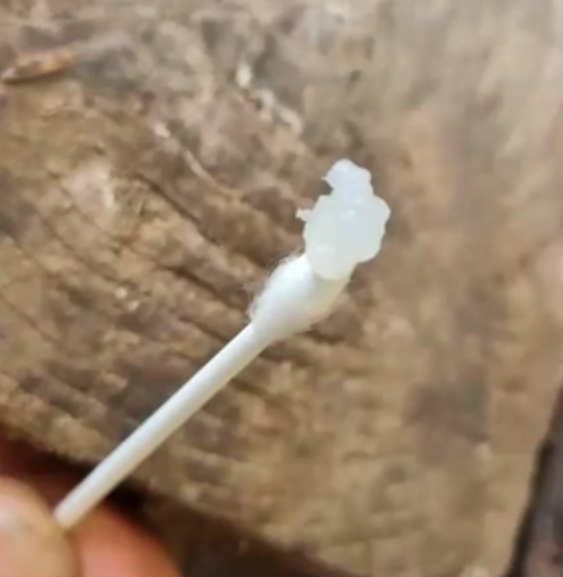
- Alternatively, use a cotton bud. Squeeze the ointment onto the end of the bud, then place it into the corner of your horse’s eye.
Tips for eye drops
Humans can tilt their heads back to make use of gravity when administering eye drops. This isn’t possible with horses which is why eye drops are difficult to use, and often only applied in hospital situations.
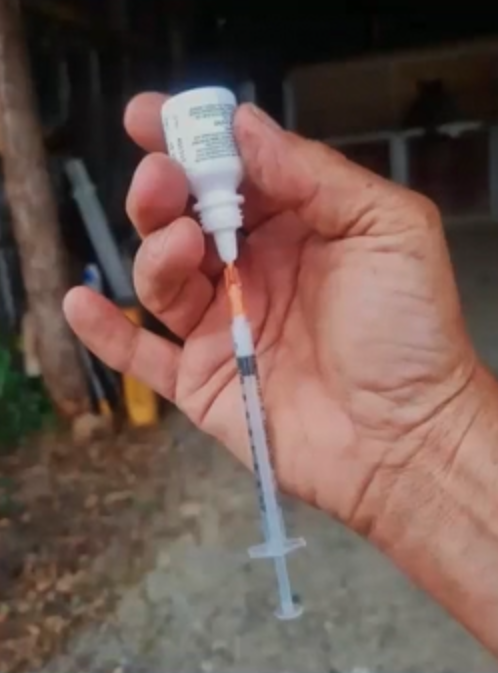
Instead, using a syringe can work extremely well since there is no reliance on gravity.
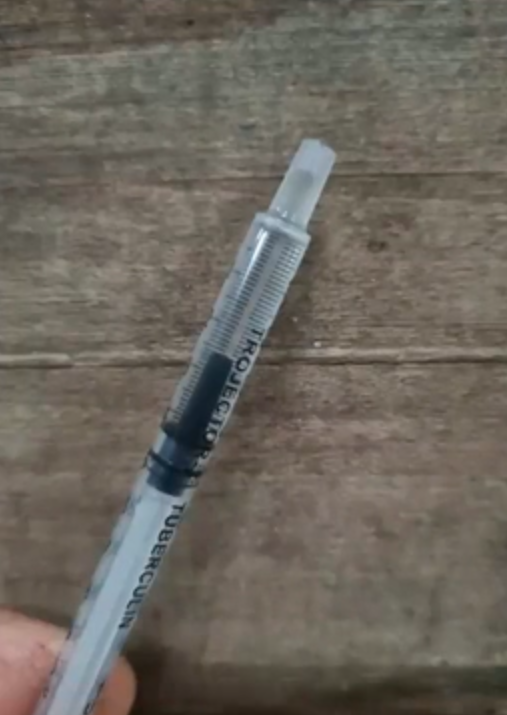
- Get a 1 millilitre (mL) syringe.
- Take up 0.1-0.2mL of liquid from the prescribed bottle of eye drops.
- Remove the needle from the syringe.
- Then push the liquid into the eye from any angle.
Frequency of application
For most conditions, two or three times a day is enough. But try to make the intervals as close to 12 hours as possible.
Even better, do it every 8 hours. And aim to give the last treatment of the day before you go to bed, if your horse lives close by.
Some ointments are available in more long-activating formulations. The drug used is a very slow-release version which is cleared very slowly from the eye. This is ideal for simple fly-related conjunctivitis.
Remember!
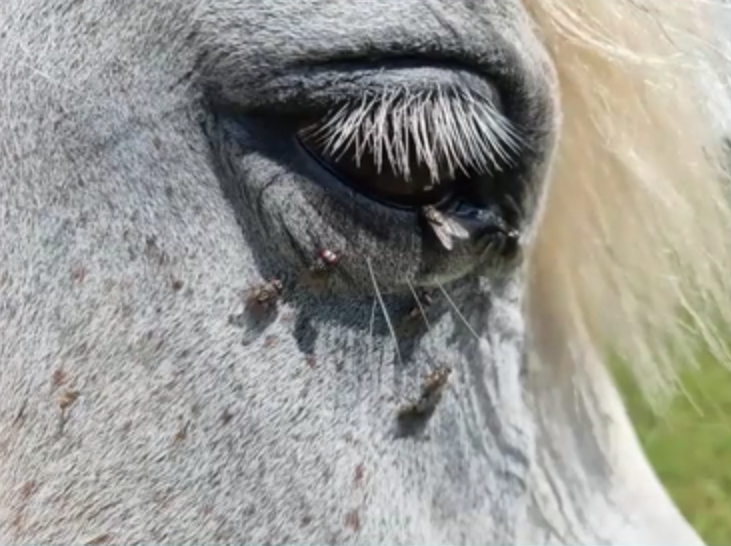
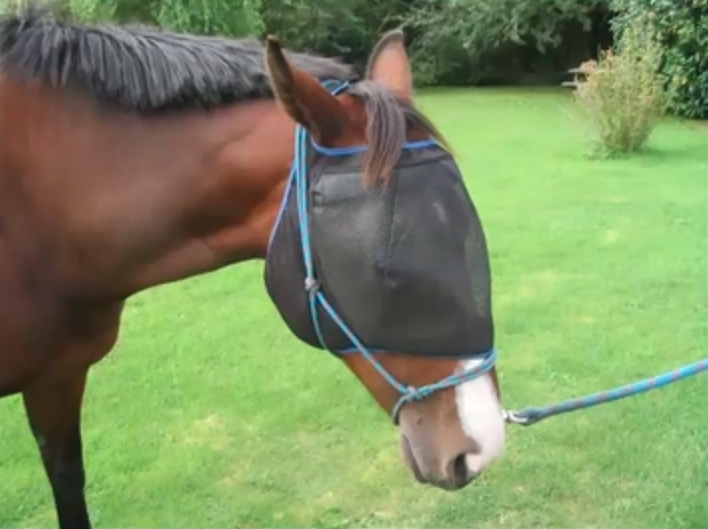
Flies are attracted to eye discharge. In the summer months, use fly protection, such as a fly mask. Or keep your horse inside during the day until dusk, which will also protect their painful eye/s from bright light.
Take-home messages
- Speak with your vet first!
- Good patient compliance is key – get someone to help.
- Good technique is essential – master this guide.
- Keep your vet updated on the progress.
Most importantly, always seek veterinary advice BEFORE starting treatment. Even if it’s just a phone call.
Watch the webinar – Medicating Eyes by Dr Kieran O’Brien here.
Then claim your CPD Certificate – Medicating Equine Eyes By Dr Kieran O’Brien!
